
Humanities & Social Sciences
A Confucian theory of power
by Sungmoon Kim
Description
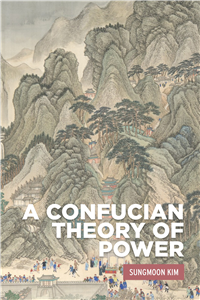
In the book's lead essay, Sungmoon Kim offers a comprehensive analysis of Confucian power. Through a blend of philosophical, political, and historical analysis, Kim challenges the dominant idea that Confucianism is primarily centred on virtue ethics. Instead, he argues that Confucianism perceives power through the prism of responsibility. Kim not only traces this perspective throughout history but also demonstrates its relevance to contemporary society. He contrasts this Confucian perspective with Western political theory's view of power as control.
Political theorists and philosophers will offer essay responses to Sungmoon Kim's provocation, offering a dialogue approach to provide a comprehensive analysis of the Confucian conception of power.
More Information
Rights Information
Albania, Algeria, Angola, Argentina, Armenia, Australia, Austria, Bahrain, Belgium, Belize, Benin, Bolivia, Bosnia and Herzegovina, Botswana, Brazil, Bulgaria, Burkina Faso, Burundi, Cameroon, Canada, Cape Verde, Central African Republic, Chad, Chile, China, Colombia, Comoros, Congo [DRC], Congo, Republic of the, Costa Rica, Ivory Coast, Croatia, Czech Republic, Denmark, Djibouti, Ecuador, Egypt, El Salvador, Equatorial Guinea, Eritrea, Estonia, Ethiopia, Faroe Islands, Finland, France, French Guiana, Gabon, Gambia, Georgia, Germany, Ghana, Greece, Guatemala, Guinea, Guinea-Bissau, Guyana, Honduras, Hongkong, Hungary, Iceland, India, Indonesia, Iran, Iraq, Ireland, Israel, Italy, Japan, Jordan, Kazakhstan, Kenya, Kuwait, Latvia, Lebanon, Lesotho, Liberia, Libya, Lithuania, Luxembourg, Macau, China, Macedonia [FYROM], Madagascar, Malawi, Malaysia, Mali, Malta, Mauritania, Mauritius, Mayotte, Mexico, Mongolia, Montenegro, Morocco, Mozambique, Namibia, Netherlands, New Zealand, Nicaragua, Niger, Nigeria, Norway, Oman, Pakistan, Panama, Paraguay, Peru, Philippines, Poland, Portugal, Puerto Rico, Qatar, Reunion, Romania, Russia, Rwanda, Saint Helena, Sao Tome and Principe, Saudi Arabia, Senegal, Serbia, Seychelles, Sierra Leone, Singapore, Slovakia, Slovenia, Somalia, South Africa, South Korea, Spain, Sri Lanka, Sudan, Suriname, Swaziland, Sweden, Switzerland, Syria, Taiwan, Tanzania, Thailand, Timor-Leste, Togo, Tokelau, Tunisia, Turkey, Uganda, Ukraine, United Arab Emirates, United Kingdom, United States, Uruguay, Venezuela, Vietnam, Western Sahara, Yemen, Zambia, Zimbabwe, South Sudan, Cyprus, Palestine, Bangladesh, Cambodia, Liechtenstein, Azerbaijan, Jamaica, Kyrgyzstan, Dominican Republic, Myanmar, Monaco
Endorsements
Confucianism is commonly understood as a philosophical, ethical, and political tradition that centers around virtue. Little attention, however, has been paid to the idea of power in the Confucian context-what it means, how it should be exercised, and how it is to be conceptualized in contemporary philosophical terms. This book provides a comprehensive philosophical analysis of power in the Confucian political tradition from both historical and normative standpoints. It investigates how power was conceptualized from the perspective of virtue politics, generating two competing accounts of power (i.e., political power and moral power), and how the Confucians' struggles with the ruler's political power led them to transform moral power into an active exercise of responsibility that defies a simple causal reasoning. The account of Confucian power as responsibility can explain why ideas that lie at the heart of the Western political tradition, such as the separation of powers, were given far less attention in Confucian political theory while inviting us to rethink meritorious government and active citizenship in the contemporary East Asian context that is increasingly troubled by structural injustice. It shows that the liability and active dimension of Confucian power as responsibility undergirds "responsibility meritocracy" and "Confucian active citizenship," respectively, thus providing a fresh perspective on the debate between democrats and meritocrats.
Reviews
Confucianism is commonly understood as a philosophical, ethical, and political tradition that centers around virtue. Little attention, however, has been paid to the idea of power in the Confucian context-what it means, how it should be exercised, and how it is to be conceptualized in contemporary philosophical terms. This book provides a comprehensive philosophical analysis of power in the Confucian political tradition from both historical and normative standpoints. It investigates how power was conceptualized from the perspective of virtue politics, generating two competing accounts of power (i.e., political power and moral power), and how the Confucians' struggles with the ruler's political power led them to transform moral power into an active exercise of responsibility that defies a simple causal reasoning. The account of Confucian power as responsibility can explain why ideas that lie at the heart of the Western political tradition, such as the separation of powers, were given far less attention in Confucian political theory while inviting us to rethink meritorious government and active citizenship in the contemporary East Asian context that is increasingly troubled by structural injustice. It shows that the liability and active dimension of Confucian power as responsibility undergirds "responsibility meritocracy" and "Confucian active citizenship," respectively, thus providing a fresh perspective on the debate between democrats and meritocrats.
Author Biography
Sungmoon Kim is Chair Professor of Political Philosophy at the City University of Hong Kong
 Trusted Partner

Manchester University Press
Manchester University Press is a leading UK publisher known for excellent research in the humanities and social sciences.
View all titlesBibliographic Information
- Publisher Manchester University Press
- Publication Date April 2026
- Orginal LanguageEnglish
- ISBN/Identifier 9781526182661 / 1526182661
- Publication Country or regionUnited Kingdom
- FormatPrint PDF
- Pages224
- ReadershipGeneral/trade; College/higher education; Professional and scholarly
- Publish StatusPublished
- Dimensions234 X 156 mm
- Biblio NotesDerived from Proprietary 6349
- SeriesCritical Powers
- Reference Code16941
Thank you for proceeding with this offer.
Manchester University Press has chosen to review this offer before it proceeds.
You will receive an email update that will bring you back to complete the process.
You can also check the status in the My Offers area
Manchester University Press has chosen to review this offer before it proceeds.
You will receive an email update that will bring you back to complete the process.
You can also check the status in the My Offers area

Please wait while the payment is being prepared.
Do not close this window.

(c) Copyright 2026 - Frankfurter Buchmesse GmbH. All Right Reserved