
Humanities & Social Sciences
Description
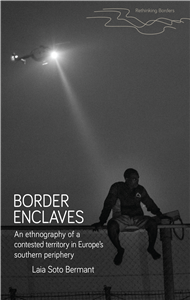
Border enclaves examines the Spanish enclave of Melilla as a prism for understanding Europe's contemporary dislocations. Based on over a decade of ethnographic research, it explores how borders are enforced, contested and inhabited in a city suspended between Africa and Europe, colonial legacies and modern regimes. Through a polyphonic narrative following smugglers, migrants, teachers and politicians, it reveals how everyday practices and symbolic performances shape life in the enclave. Selective visibility-who is seen or erased-structures authority and exclusion.
Situating Melilla within broader processes like Spain's colonial history and Europe's border restructuring, the book argues that its fragmented sovereignties and external dependencies make it a paradigmatic site for grasping Europe's precarious margins. It calls for an ethnographic lens attuned to dislocation as both lived experience and analytic tool.
More Information
Rights Information
Albania, Algeria, Angola, Argentina, Armenia, Australia, Austria, Bahrain, Belgium, Belize, Benin, Bolivia, Bosnia and Herzegovina, Botswana, Brazil, Bulgaria, Burkina Faso, Burundi, Cameroon, Canada, Cape Verde, Central African Republic, Chad, Chile, China, Colombia, Comoros, Congo [DRC], Congo, Republic of the, Costa Rica, Ivory Coast, Croatia, Czech Republic, Denmark, Djibouti, Ecuador, Egypt, El Salvador, Equatorial Guinea, Eritrea, Estonia, Ethiopia, Faroe Islands, Finland, France, French Guiana, Gabon, Gambia, Georgia, Germany, Ghana, Greece, Guatemala, Guinea, Guinea-Bissau, Guyana, Honduras, Hongkong, Hungary, Iceland, India, Indonesia, Iran, Iraq, Ireland, Israel, Italy, Japan, Jordan, Kazakhstan, Kenya, Kuwait, Latvia, Lebanon, Lesotho, Liberia, Libya, Lithuania, Luxembourg, Macau, China, Macedonia [FYROM], Madagascar, Malawi, Malaysia, Mali, Malta, Mauritania, Mauritius, Mayotte, Mexico, Mongolia, Montenegro, Morocco, Mozambique, Namibia, Netherlands, New Zealand, Nicaragua, Niger, Nigeria, Norway, Oman, Pakistan, Panama, Paraguay, Peru, Philippines, Poland, Portugal, Puerto Rico, Qatar, Reunion, Romania, Russia, Rwanda, Saint Helena, Sao Tome and Principe, Saudi Arabia, Senegal, Serbia, Seychelles, Sierra Leone, Singapore, Slovakia, Slovenia, Somalia, South Africa, South Korea, Spain, Sri Lanka, Sudan, Suriname, Swaziland, Sweden, Switzerland, Syria, Taiwan, Tanzania, Thailand, Timor-Leste, Togo, Tokelau, Tunisia, Turkey, Uganda, Ukraine, United Arab Emirates, United Kingdom, United States, Uruguay, Venezuela, Vietnam, Western Sahara, Yemen, Zambia, Zimbabwe, South Sudan, Cyprus, Palestine, Bangladesh, Cambodia, Liechtenstein, Azerbaijan, Jamaica, Kyrgyzstan, Dominican Republic, Myanmar, Monaco
Endorsements
Border enclaves examines the Spanish enclave of Melilla as a prism through which to understand the dislocations of contemporary Europe. Drawing on more than a decade of ethnographic research, it traces how borders are enforced, contested and inhabited in a city suspended between Africa and Europe, colonial legacies and present-day border regimes. Melilla emerges not simply as a fortified frontier but as a dislocated space where sovereignty, belonging and mobility are constantly negotiated. Through a polyphonic narrative that follows interlocutors as diverse as smugglers, migrants, teachers, street children and local politicians, the book reveals how everyday practices, illicit economies and symbolic performances converge to shape life in the enclave. It demonstrates how selective visibility-who is seen, counted, or erased-structures both political authority and social exclusion. At the same time, it situates Melilla within wider regional and global processes: Spain's colonial history in North Africa, the restructuring of Europe's external borders, the collapse of informal economies and the emergence of new economies of control. The book argues that Melilla's dependence on external resources, coupled with its fragmented sovereignties and zones of exception, makes it a paradigmatic site for understanding the precarious geographies of Europe's margins. By foregrounding ambiguity, contradiction, and coexistence, it calls for an ethnographic practice attentive to dislocation as both lived experience and analytic lens.
Reviews
Border enclaves examines the Spanish enclave of Melilla as a prism through which to understand the dislocations of contemporary Europe. Drawing on more than a decade of ethnographic research, it traces how borders are enforced, contested and inhabited in a city suspended between Africa and Europe, colonial legacies and present-day border regimes. Melilla emerges not simply as a fortified frontier but as a dislocated space where sovereignty, belonging and mobility are constantly negotiated. Through a polyphonic narrative that follows interlocutors as diverse as smugglers, migrants, teachers, street children and local politicians, the book reveals how everyday practices, illicit economies and symbolic performances converge to shape life in the enclave. It demonstrates how selective visibility-who is seen, counted, or erased-structures both political authority and social exclusion. At the same time, it situates Melilla within wider regional and global processes: Spain's colonial history in North Africa, the restructuring of Europe's external borders, the collapse of informal economies and the emergence of new economies of control. The book argues that Melilla's dependence on external resources, coupled with its fragmented sovereignties and zones of exception, makes it a paradigmatic site for understanding the precarious geographies of Europe's margins. By foregrounding ambiguity, contradiction, and coexistence, it calls for an ethnographic practice attentive to dislocation as both lived experience and analytic lens.
Author Biography
Dr. Laia Soto Bermant is a social anthropologist and Kone Research Fellow at the University of Helsinki
 Trusted Partner

Manchester University Press
Manchester University Press is a leading UK publisher known for excellent research in the humanities and social sciences.
View all titlesBibliographic Information
- Publisher Manchester University Press
- Publication Date May 2026
- Orginal LanguageEnglish
- ISBN/Identifier 9781526190635 / 152619063X
- Publication Country or regionUnited Kingdom
- FormatPrint PDF
- Pages240
- ReadershipGeneral/trade; College/higher education; Professional and scholarly
- Publish StatusPublished
- Dimensions234 X 156 mm
- Biblio NotesDerived from Proprietary 6534
- SeriesRethinking Borders
- Reference Code17724
Thank you for proceeding with this offer.
Manchester University Press has chosen to review this offer before it proceeds.
You will receive an email update that will bring you back to complete the process.
You can also check the status in the My Offers area
Manchester University Press has chosen to review this offer before it proceeds.
You will receive an email update that will bring you back to complete the process.
You can also check the status in the My Offers area

Please wait while the payment is being prepared.
Do not close this window.

(c) Copyright 2026 - Frankfurter Buchmesse GmbH. All Right Reserved