
Humanities & Social Sciences
Diplomatic training
Histories, geographies, politics
by Ruth Craggs, Jonathan Harris, Fiona McConnell
Description
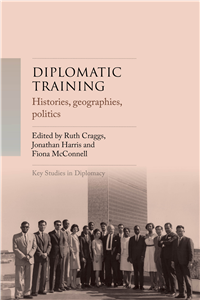
Despite the essential role diplomatic training plays in the everyday workings of international relations, international law and in the various multilateral organisations, this practice has received little critical attention in the humanities, social and political sciences. Bringing together detailed accounts of the histories, development and contemporary practices of diplomatic training with insights from key practitioners, this edited collection places training centrally within our understanding of international relations. It argues that diplomatic training both reflects and reproduces hegemonic power relations, whilst at the same time offering opportunities to contest them, and imagine alternative futures. The book includes a substantive introduction, nine full-length chapters from a range of disciplinary and regional perspectives drawing on archival research, oral history, interviews, and ethnographic methods, and four 'interventions': reflection pieces from trainers and directors of training programmes. It offers a globe-spanning, interdisciplinary account of the politics of diplomatic training and appeals to both scholarly and practitioner audiences.
More Information
Rights Information
Albania, Algeria, Angola, Argentina, Armenia, Australia, Austria, Bahrain, Belgium, Belize, Benin, Bolivia, Bosnia and Herzegovina, Botswana, Brazil, Bulgaria, Burkina Faso, Burundi, Cameroon, Canada, Cape Verde, Central African Republic, Chad, Chile, China, Colombia, Comoros, Congo [DRC], Congo, Republic of the, Costa Rica, Ivory Coast, Croatia, Czech Republic, Denmark, Djibouti, Ecuador, Egypt, El Salvador, Equatorial Guinea, Eritrea, Estonia, Ethiopia, Faroe Islands, Finland, France, French Guiana, Gabon, Gambia, Georgia, Germany, Ghana, Greece, Guatemala, Guinea, Guinea-Bissau, Guyana, Honduras, Hongkong, Hungary, Iceland, India, Indonesia, Iran, Iraq, Ireland, Israel, Italy, Japan, Jordan, Kazakhstan, Kenya, Kuwait, Latvia, Lebanon, Lesotho, Liberia, Libya, Lithuania, Luxembourg, Macau, China, Macedonia [FYROM], Madagascar, Malawi, Malaysia, Mali, Malta, Mauritania, Mauritius, Mayotte, Mexico, Mongolia, Montenegro, Morocco, Mozambique, Namibia, Netherlands, New Zealand, Nicaragua, Niger, Nigeria, Norway, Oman, Pakistan, Panama, Paraguay, Peru, Philippines, Poland, Portugal, Puerto Rico, Qatar, Reunion, Romania, Russia, Rwanda, Saint Helena, Sao Tome and Principe, Saudi Arabia, Senegal, Serbia, Seychelles, Sierra Leone, Singapore, Slovakia, Slovenia, Somalia, South Africa, South Korea, Spain, Sri Lanka, Sudan, Suriname, Swaziland, Sweden, Switzerland, Syria, Taiwan, Tanzania, Thailand, Timor-Leste, Togo, Tokelau, Tunisia, Turkey, Uganda, Ukraine, United Arab Emirates, United Kingdom, United States, Uruguay, Venezuela, Vietnam, Western Sahara, Yemen, Zambia, Zimbabwe, South Sudan, Cyprus, Palestine, Bangladesh, Cambodia, Liechtenstein, Azerbaijan, Jamaica, Kyrgyzstan, Dominican Republic, Myanmar, Monaco
Endorsements
This collection provides the first book-length critical engagement with diplomatic training. Despite the essential role diplomatic training plays in the everyday workings of international relations, international law and in the various multilateral organisations, this practice has received little critical attention in the humanities, social and political sciences. Bringing together detailed accounts of the histories, development and contemporary practices of diplomatic training with insights from key practitioners, this edited collection places training centrally within our understanding of international relations. Across the chapters, the book demonstrates that diplomatic training both reflects and reproduces hegemonic power relations, whilst at the same time offering opportunities to contest them and imagine alternative futures. Bringing together insights from practitioners of diplomatic training alongside chapters exploring the practice from a range of disciplinary perspectives, the book provides an essential insight into the history, geography and politics of diplomatic training as it expanded throughout the twentieth century and as it is conducted today. Through these diverse insights, the book asks us to recognise the central role of diplomatic training in making and remaking the profession and practice of diplomacy, and with it, international society as a whole. The book will be of interest to interdisciplinary scholars of diplomacy, diplomatic training practitioners, and academics in the field of history, politics, International Relations and geography.
Reviews
This collection provides the first book-length critical engagement with diplomatic training. Despite the essential role diplomatic training plays in the everyday workings of international relations, international law and in the various multilateral organisations, this practice has received little critical attention in the humanities, social and political sciences. Bringing together detailed accounts of the histories, development and contemporary practices of diplomatic training with insights from key practitioners, this edited collection places training centrally within our understanding of international relations. Across the chapters, the book demonstrates that diplomatic training both reflects and reproduces hegemonic power relations, whilst at the same time offering opportunities to contest them and imagine alternative futures. Bringing together insights from practitioners of diplomatic training alongside chapters exploring the practice from a range of disciplinary perspectives, the book provides an essential insight into the history, geography and politics of diplomatic training as it expanded throughout the twentieth century and as it is conducted today. Through these diverse insights, the book asks us to recognise the central role of diplomatic training in making and remaking the profession and practice of diplomacy, and with it, international society as a whole. The book will be of interest to interdisciplinary scholars of diplomacy, diplomatic training practitioners, and academics in the field of history, politics, International Relations and geography.
Author Biography
Ruth Craggs is a Lecturer in Cultural and Historical Geography at King's College, London; ;
 Trusted Partner

Manchester University Press
Manchester University Press is a leading UK publisher known for excellent research in the humanities and social sciences.
View all titlesBibliographic Information
- Publisher Manchester University Press
- Publication Date February 2026
- Orginal LanguageEnglish
- ISBN/Identifier 9781526188762 / 1526188767
- Publication Country or regionUnited Kingdom
- FormatPrint PDF
- Pages264
- ReadershipGeneral/trade; College/higher education; Professional and scholarly
- Publish StatusPublished
- Dimensions234 X 156 mm
- Biblio NotesDerived from Proprietary 6467
- SeriesKey Studies in Diplomacy
- Reference Code17452
Thank you for proceeding with this offer.
Manchester University Press has chosen to review this offer before it proceeds.
You will receive an email update that will bring you back to complete the process.
You can also check the status in the My Offers area
Manchester University Press has chosen to review this offer before it proceeds.
You will receive an email update that will bring you back to complete the process.
You can also check the status in the My Offers area

Please wait while the payment is being prepared.
Do not close this window.

(c) Copyright 2026 - Frankfurter Buchmesse GmbH. All Right Reserved