
The Arts
Description
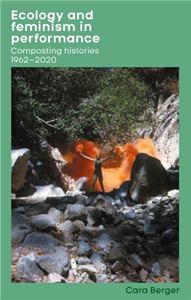
This book provides a vital new history of feminist performance through an ecological lens. It argues that from the 1960s to the present, artists have used performance to challenge the linked oppression of women and nature. Proposing 'composting' as a new method for writing feminist history, the study moves beyond linear narratives to trace regenerative connections between generations of practitioners. It provides sustained analysis of genres from land art to postdramatic theatre, re-evaluating the work of canonical figures while examining how contemporary artists continue to address these urgent themes. By placing ecofeminism in dialogue with feminist new materialism, queer ecology, and transecological thought, this study demonstrates how performance has been a crucial site for imagining more just and sustainable futures in an age of environmental crisis.
More Information
Rights Information
Albania, Algeria, Angola, Argentina, Armenia, Australia, Austria, Bahrain, Belgium, Belize, Benin, Bolivia, Bosnia and Herzegovina, Botswana, Brazil, Bulgaria, Burkina Faso, Burundi, Cameroon, Canada, Cape Verde, Central African Republic, Chad, Chile, China, Colombia, Comoros, Congo [DRC], Congo, Republic of the, Costa Rica, Ivory Coast, Croatia, Czech Republic, Denmark, Djibouti, Ecuador, Egypt, El Salvador, Equatorial Guinea, Eritrea, Estonia, Ethiopia, Faroe Islands, Finland, France, French Guiana, Gabon, Gambia, Georgia, Germany, Ghana, Greece, Guatemala, Guinea, Guinea-Bissau, Guyana, Honduras, Hongkong, Hungary, Iceland, India, Indonesia, Iran, Iraq, Ireland, Israel, Italy, Japan, Jordan, Kazakhstan, Kenya, Kuwait, Latvia, Lebanon, Lesotho, Liberia, Libya, Lithuania, Luxembourg, Macau, China, Macedonia [FYROM], Madagascar, Malawi, Malaysia, Mali, Malta, Mauritania, Mauritius, Mayotte, Mexico, Mongolia, Montenegro, Morocco, Mozambique, Namibia, Netherlands, New Zealand, Nicaragua, Niger, Nigeria, Norway, Oman, Pakistan, Panama, Paraguay, Peru, Philippines, Poland, Portugal, Puerto Rico, Qatar, Reunion, Romania, Russia, Rwanda, Saint Helena, Sao Tome and Principe, Saudi Arabia, Senegal, Serbia, Seychelles, Sierra Leone, Singapore, Slovakia, Slovenia, Somalia, South Africa, South Korea, Spain, Sri Lanka, Sudan, Suriname, Swaziland, Sweden, Switzerland, Syria, Taiwan, Tanzania, Thailand, Timor-Leste, Togo, Tokelau, Tunisia, Turkey, Uganda, Ukraine, United Arab Emirates, United Kingdom, United States, Uruguay, Venezuela, Vietnam, Western Sahara, Yemen, Zambia, Zimbabwe, South Sudan, Cyprus, Palestine, Bangladesh, Cambodia, Liechtenstein, Azerbaijan, Jamaica, Kyrgyzstan, Dominican Republic, Myanmar, Monaco
Endorsements
From land art to postdramatic theatre, feminist performance has consistently challenged the anti-ecological ideologies that underpin Western modernity. Charting a course from the 1960s, when artists first began to intertwine ecological concerns with feminist critique, to the urgent environmental crises of our time, this study proposes 'composting' as a powerful new method for navigating this complex history. This approach conceives of feminist history not as a linear progression of waves, but as a regenerative process in which past ideas are broken down to nourish present-day practices. Sifting through the foundational performances of artists such as Judy Chicago, Ana Mendieta, Rachel Rosenthal and Carolee Schneemann, the study analyses how this rich material provides the fertile ground for contemporary practitioners. It traces how these early experiments with embodiment, more-than-human kinship, and the ideological linkage of woman and nature are, for example, reconfigured in the decolonial politics of Rebecca Belmore, give rise to the queer ecologies in Annie Sprinkle and Beth Stephens, and are metabolised in the trans performances of Tosh Basco (boychild). By placing ecofeminism in dialogue with feminist new materialism, queer ecology, and transecological thought, this study demonstrates how performance has been a crucial site for imagining more just and sustainable futures in an age of environmental crisis.
Reviews
From land art to postdramatic theatre, feminist performance has consistently challenged the anti-ecological ideologies that underpin Western modernity. Charting a course from the 1960s, when artists first began to intertwine ecological concerns with feminist critique, to the urgent environmental crises of our time, this study proposes 'composting' as a powerful new method for navigating this complex history. This approach conceives of feminist history not as a linear progression of waves, but as a regenerative process in which past ideas are broken down to nourish present-day practices. Sifting through the foundational performances of artists such as Judy Chicago, Ana Mendieta, Rachel Rosenthal and Carolee Schneemann, the study analyses how this rich material provides the fertile ground for contemporary practitioners. It traces how these early experiments with embodiment, more-than-human kinship, and the ideological linkage of woman and nature are, for example, reconfigured in the decolonial politics of Rebecca Belmore, give rise to the queer ecologies in Annie Sprinkle and Beth Stephens, and are metabolised in the trans performances of Tosh Basco (boychild). By placing ecofeminism in dialogue with feminist new materialism, queer ecology, and transecological thought, this study demonstrates how performance has been a crucial site for imagining more just and sustainable futures in an age of environmental crisis.
Author Biography
Cara Berger is a Senior Lecturer in Theatre and Performance at the University of Manchester
 Trusted Partner

Manchester University Press
Manchester University Press is a leading UK publisher known for excellent research in the humanities and social sciences.
View all titlesBibliographic Information
- Publisher Manchester University Press
- Publication Date May 2026
- Orginal LanguageEnglish
- ISBN/Identifier 9781526152473 / 1526152479
- Publication Country or regionUnited Kingdom
- FormatPrint PDF
- Pages240
- ReadershipGeneral/trade
- Publish StatusPublished
- Dimensions216 X 138 mm
- Biblio NotesDerived from Proprietary 5272
- SeriesWomen, Theatre and Performance
- Reference Code13338
Thank you for proceeding with this offer.
Manchester University Press has chosen to review this offer before it proceeds.
You will receive an email update that will bring you back to complete the process.
You can also check the status in the My Offers area
Manchester University Press has chosen to review this offer before it proceeds.
You will receive an email update that will bring you back to complete the process.
You can also check the status in the My Offers area

Please wait while the payment is being prepared.
Do not close this window.

(c) Copyright 2026 - Frankfurter Buchmesse GmbH. All Right Reserved