
Description
By examining the PMU's self-positioning as a pillar of Iraq's defence infrastructure, this book offers a critical perspective on the prospects for Security Sector Reform (SSR) and highlights the limitations of externally driven Disarmament, Demobilisation, and Reintegration (DDR) efforts. It speaks to scholars of Iraq and the Middle East, as well as diplomats, security actors, and SSR practitioners. The book is also a valuable teaching resource for undergraduate and postgraduate courses on conflict, security, identity politics, terrorism, and peacebuilding. Its unique fieldwork methodology offers guidance for researchers engaging with armed non-state and para-state actors in post-conflict settings. Altogether, the book addresses a strong academic and policy demand for evidence-based analysis of the PMU's complex identity - offering a flexible framework for studying hybrid security actors with transnational connections and domestic ambitions.
More Information
Rights Information
Albania, Algeria, Angola, Argentina, Armenia, Australia, Austria, Bahrain, Belgium, Belize, Benin, Bolivia, Bosnia and Herzegovina, Botswana, Brazil, Bulgaria, Burkina Faso, Burundi, Cameroon, Canada, Cape Verde, Central African Republic, Chad, Chile, China, Colombia, Comoros, Congo [DRC], Congo, Republic of the, Costa Rica, Ivory Coast, Croatia, Czech Republic, Denmark, Djibouti, Ecuador, Egypt, El Salvador, Equatorial Guinea, Eritrea, Estonia, Ethiopia, Faroe Islands, Finland, France, French Guiana, Gabon, Gambia, Georgia, Germany, Ghana, Greece, Guatemala, Guinea, Guinea-Bissau, Guyana, Honduras, Hongkong, Hungary, Iceland, India, Indonesia, Iran, Iraq, Ireland, Israel, Italy, Japan, Jordan, Kazakhstan, Kenya, Kuwait, Latvia, Lebanon, Lesotho, Liberia, Libya, Lithuania, Luxembourg, Macau, China, Macedonia [FYROM], Madagascar, Malawi, Malaysia, Mali, Malta, Mauritania, Mauritius, Mayotte, Mexico, Mongolia, Montenegro, Morocco, Mozambique, Namibia, Netherlands, New Zealand, Nicaragua, Niger, Nigeria, Norway, Oman, Pakistan, Panama, Paraguay, Peru, Philippines, Poland, Portugal, Puerto Rico, Qatar, Reunion, Romania, Russia, Rwanda, Saint Helena, Sao Tome and Principe, Saudi Arabia, Senegal, Serbia, Seychelles, Sierra Leone, Singapore, Slovakia, Slovenia, Somalia, South Africa, South Korea, Spain, Sri Lanka, Sudan, Suriname, Swaziland, Sweden, Switzerland, Syria, Taiwan, Tanzania, Thailand, Timor-Leste, Togo, Tokelau, Tunisia, Turkey, Uganda, Ukraine, United Arab Emirates, United Kingdom, United States, Uruguay, Venezuela, Vietnam, Western Sahara, Yemen, Zambia, Zimbabwe, South Sudan, Cyprus, Palestine, Bangladesh, Cambodia, Liechtenstein, Azerbaijan, Jamaica, Kyrgyzstan, Dominican Republic, Myanmar, Monaco
Endorsements
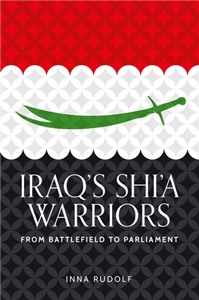
Celebrated by Iraqis for their contribution to the war against the Islamic State, Iraq's Popular Mobilisation Units (PMU), also known as al-Hashd al-Sha'bi, now regard themselves as entitled to co-shaping not only the government decision-making process, but also the very nature of Iraqi statehood. Recognised as a state-sanctioned paramilitary umbrella since November 2016, the PMU has translated its contributions on the frontlines into political leverage. Trading their uniforms for tailored suits, PMU figures contested the May 2018 elections, which brought many of the paramilitary's loyalists into Iraq's parliament. Despite their comparatively poor performance at the ballot box in 2021, those rebranded militants captured lucrative ministerial portfolios and have remained key power brokers. Their continued sway over Iraq's contested state and institutions raises the question of how such a broad array of hybrid auxiliary forces has consolidated its position and reaped the benefits of alliance with the country's ruling elites. To provide an answer, this book examines how the PMU and their affiliates have worked to generate legitimacy within Iraq's political, religious and civic fields. In doing so, the author highlights the agency of state-allied auxiliary forces, which, regardless of domestic or foreign backing, often pursue independent strategies grounded in local interests. In light of the crumbling Axis of Resistance - marked by Hamas October 7 attacks, Assad's downfall in Syria, and the weakening of Iranian allies like Lebanon's Hezbollah - this book shows how even the hardline PMU factions have come to value alignment with a state-sanctioned entity bearing stronger patriotic credentials.
Reviews
Celebrated by Iraqis for their contribution to the war against the Islamic State, Iraq's Popular Mobilisation Units (PMU), also known as al-Hashd al-Sha'bi, now regard themselves as entitled to co-shaping not only the government decision-making process, but also the very nature of Iraqi statehood. Recognised as a state-sanctioned paramilitary umbrella since November 2016, the PMU has translated its contributions on the frontlines into political leverage. Trading their uniforms for tailored suits, PMU figures contested the May 2018 elections, which brought many of the paramilitary's loyalists into Iraq's parliament. Despite their comparatively poor performance at the ballot box in 2021, those rebranded militants captured lucrative ministerial portfolios and have remained key power brokers. Their continued sway over Iraq's contested state and institutions raises the question of how such a broad array of hybrid auxiliary forces has consolidated its position and reaped the benefits of alliance with the country's ruling elites. To provide an answer, this book examines how the PMU and their affiliates have worked to generate legitimacy within Iraq's political, religious and civic fields. In doing so, the author highlights the agency of state-allied auxiliary forces, which, regardless of domestic or foreign backing, often pursue independent strategies grounded in local interests. In light of the crumbling Axis of Resistance - marked by Hamas October 7 attacks, Assad's downfall in Syria, and the weakening of Iranian allies like Lebanon's Hezbollah - this book shows how even the hardline PMU factions have come to value alignment with a state-sanctioned entity bearing stronger patriotic credentials.
Author Biography
Inna Rudolf is a Senior Research Fellow at the International Centre for the Study of Radicalisation (ICSR) and a postdoctoral Research Fellow at the Centre for the Study of Divided Societies in the Department of War Studies, King's College London
 Trusted Partner

Manchester University Press
Manchester University Press is a leading UK publisher known for excellent research in the humanities and social sciences.
View all titlesBibliographic Information
- Publisher Manchester University Press
- Publication Date April 2026
- Orginal LanguageEnglish
- ISBN/Identifier 9781526193063 / 152619306X
- Publication Country or regionUnited Kingdom
- FormatPrint PDF
- Pages304
- ReadershipGeneral/trade; College/higher education; Professional and scholarly
- Publish StatusPublished
- Dimensions234 X 156 mm
- Biblio NotesDerived from Proprietary 6589
- SeriesIdentities and Geopolitics in the Middle East
- Reference Code17953
Thank you for proceeding with this offer.
Manchester University Press has chosen to review this offer before it proceeds.
You will receive an email update that will bring you back to complete the process.
You can also check the status in the My Offers area
Manchester University Press has chosen to review this offer before it proceeds.
You will receive an email update that will bring you back to complete the process.
You can also check the status in the My Offers area

Please wait while the payment is being prepared.
Do not close this window.

(c) Copyright 2026 - Frankfurter Buchmesse GmbH. All Right Reserved