
Description
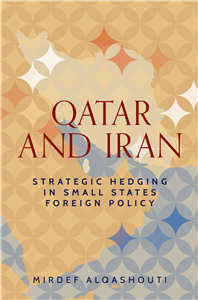
How was the 2017 Qatar Blockade crisis shaped by the history of diplomatic relations between Qatar and Iran? What foreign policy strategies has Qatar adopted in response to this crisis? How can we better conceptualise the limits of the relations between Qatar and Iran?
This book examines the evolving nature of Qatar and Iran's diplomatic relations. Using historical analysis and first-hand accounts of high-level officials from both countries, especially in the aftermath of the 2017 Qatar Blockade crisis, it reveals a multifaceted and dynamic interaction between Qatar and Iran extending beyond politics into the realms of economics, tourism and culture. This book provides insights on the strategies small states implement in international relations, as well as contributes to understandings of geopolitics in the Middle East.
More Information
Rights Information
Albania, Algeria, Angola, Argentina, Armenia, Australia, Austria, Bahrain, Belgium, Belize, Benin, Bolivia, Bosnia and Herzegovina, Botswana, Brazil, Bulgaria, Burkina Faso, Burundi, Cameroon, Canada, Cape Verde, Central African Republic, Chad, Chile, China, Colombia, Comoros, Congo [DRC], Congo, Republic of the, Costa Rica, Ivory Coast, Croatia, Czech Republic, Denmark, Djibouti, Ecuador, Egypt, El Salvador, Equatorial Guinea, Eritrea, Estonia, Ethiopia, Faroe Islands, Finland, France, French Guiana, Gabon, Gambia, Georgia, Germany, Ghana, Greece, Guatemala, Guinea, Guinea-Bissau, Guyana, Honduras, Hongkong, Hungary, Iceland, India, Indonesia, Iran, Iraq, Ireland, Israel, Italy, Japan, Jordan, Kazakhstan, Kenya, Kuwait, Latvia, Lebanon, Lesotho, Liberia, Libya, Lithuania, Luxembourg, Macau, China, Macedonia [FYROM], Madagascar, Malawi, Malaysia, Mali, Malta, Mauritania, Mauritius, Mayotte, Mexico, Mongolia, Montenegro, Morocco, Mozambique, Namibia, Netherlands, New Zealand, Nicaragua, Niger, Nigeria, Norway, Oman, Pakistan, Panama, Paraguay, Peru, Philippines, Poland, Portugal, Puerto Rico, Qatar, Reunion, Romania, Russia, Rwanda, Saint Helena, Sao Tome and Principe, Saudi Arabia, Senegal, Serbia, Seychelles, Sierra Leone, Singapore, Slovakia, Slovenia, Somalia, South Africa, South Korea, Spain, Sri Lanka, Sudan, Suriname, Swaziland, Sweden, Switzerland, Syria, Taiwan, Tanzania, Thailand, Timor-Leste, Togo, Tokelau, Tunisia, Turkey, Uganda, Ukraine, United Arab Emirates, United Kingdom, United States, Uruguay, Venezuela, Vietnam, Western Sahara, Yemen, Zambia, Zimbabwe, South Sudan, Cyprus, Palestine, Bangladesh, Cambodia, Liechtenstein, Azerbaijan, Jamaica, Kyrgyzstan, Dominican Republic, Myanmar, Monaco
Endorsements
The 2017 Qatar Blockade crisis exposed weaknesses in the small Gulf state's reliance on its traditional partners. The closure of the land border with Saudi Arabia, for example, led to supply shortages, while the closure of much of the airspace surrounding Qatar created difficulties for one of the world's largest airlines, Qatar Airways. During this time, Iran stepped up to provide relief to the embattled small state. This book examines the rationales underpinning Qatar's strategic diplomatic engagement with Iran. It reveals a multifaceted, dynamic, and historical interaction between Qatar and Iran that extends beyond politics into the realms of economics, tourism and culture. It forwards the concept of proactive strategic hedging as an assertive foreign policy stance that Qatar has employed with Iran since the 1980s but has increased after the 2017 crisis. The study also finds that Qatar's deliberate efforts to fortify its relations with Iran contrasts markedly with the assertive dominion practiced by the Kingdom of Saudi Arabia. This diplomatic strategy represents a cautious and nuanced approach to statecraft, with profound repercussions for Qatar's agency within the Gulf region. This book bases its findings on qualitative content analysis of scholarly treatises, policy annals and grey literature as well as interviews with high-ranking officials, diplomats and academics from both nations. Theoretically, these findings provide insights into how small states practice their strategies in similar geopolitical contexts.
Reviews
The 2017 Qatar Blockade crisis exposed weaknesses in the small Gulf state's reliance on its traditional partners. The closure of the land border with Saudi Arabia, for example, led to supply shortages, while the closure of much of the airspace surrounding Qatar created difficulties for one of the world's largest airlines, Qatar Airways. During this time, Iran stepped up to provide relief to the embattled small state. This book examines the rationales underpinning Qatar's strategic diplomatic engagement with Iran. It reveals a multifaceted, dynamic, and historical interaction between Qatar and Iran that extends beyond politics into the realms of economics, tourism and culture. It forwards the concept of proactive strategic hedging as an assertive foreign policy stance that Qatar has employed with Iran since the 1980s but has increased after the 2017 crisis. The study also finds that Qatar's deliberate efforts to fortify its relations with Iran contrasts markedly with the assertive dominion practiced by the Kingdom of Saudi Arabia. This diplomatic strategy represents a cautious and nuanced approach to statecraft, with profound repercussions for Qatar's agency within the Gulf region. This book bases its findings on qualitative content analysis of scholarly treatises, policy annals and grey literature as well as interviews with high-ranking officials, diplomats and academics from both nations. Theoretically, these findings provide insights into how small states practice their strategies in similar geopolitical contexts.
Author Biography
Mirdef AlQashouti is a career diplomat and fellow in Think tanks
 Trusted Partner

Manchester University Press
Manchester University Press is a leading UK publisher known for excellent research in the humanities and social sciences.
View all titlesBibliographic Information
- Publisher Manchester University Press
- Publication Date December 2026
- Orginal LanguageEnglish
- ISBN/Identifier 9781526191816 / 1526191814
- Publication Country or regionUnited Kingdom
- FormatPrint PDF
- Pages200
- ReadershipCollege/higher education; Professional and scholarly
- Publish StatusPublished
- Dimensions234 X 156 mm
- Biblio NotesDerived from Proprietary 6560
- SeriesIdentities and Geopolitics in the Middle East
- Reference Code17807
Thank you for proceeding with this offer.
Manchester University Press has chosen to review this offer before it proceeds.
You will receive an email update that will bring you back to complete the process.
You can also check the status in the My Offers area
Manchester University Press has chosen to review this offer before it proceeds.
You will receive an email update that will bring you back to complete the process.
You can also check the status in the My Offers area

Please wait while the payment is being prepared.
Do not close this window.

(c) Copyright 2026 - Frankfurter Buchmesse GmbH. All Right Reserved