
Humanities & Social Sciences
The right in Latin America
by Ariel Goldstein
Description
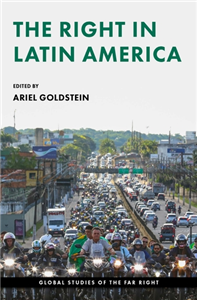
This book provides an in-depth analysis of the rise and influence of both radical and mainstream right-wing movements across Latin America. Through country-specific case studies, it explores the evolution of these groups and their impact on politics, culture, and governance, highlighting key figures and strategies shaping the political landscape in the region.
More Information
Rights Information
Albania, Algeria, Angola, Argentina, Armenia, Australia, Austria, Bahrain, Belgium, Belize, Benin, Bolivia, Bosnia and Herzegovina, Botswana, Brazil, Bulgaria, Burkina Faso, Burundi, Cameroon, Canada, Cape Verde, Central African Republic, Chad, Chile, China, Colombia, Comoros, Congo [DRC], Congo, Republic of the, Costa Rica, Ivory Coast, Croatia, Czech Republic, Denmark, Djibouti, Ecuador, Egypt, El Salvador, Equatorial Guinea, Eritrea, Estonia, Ethiopia, Faroe Islands, Finland, France, French Guiana, Gabon, Gambia, Georgia, Germany, Ghana, Greece, Guatemala, Guinea, Guinea-Bissau, Guyana, Honduras, Hongkong, Hungary, Iceland, India, Indonesia, Iran, Iraq, Ireland, Israel, Italy, Japan, Jordan, Kazakhstan, Kenya, Kuwait, Latvia, Lebanon, Lesotho, Liberia, Libya, Lithuania, Luxembourg, Macau, China, Macedonia [FYROM], Madagascar, Malawi, Malaysia, Mali, Malta, Mauritania, Mauritius, Mayotte, Mexico, Mongolia, Montenegro, Morocco, Mozambique, Namibia, Netherlands, New Zealand, Nicaragua, Niger, Nigeria, Norway, Oman, Pakistan, Panama, Paraguay, Peru, Philippines, Poland, Portugal, Puerto Rico, Qatar, Reunion, Romania, Russia, Rwanda, Saint Helena, Sao Tome and Principe, Saudi Arabia, Senegal, Serbia, Seychelles, Sierra Leone, Singapore, Slovakia, Slovenia, Somalia, South Africa, South Korea, Spain, Sri Lanka, Sudan, Suriname, Swaziland, Sweden, Switzerland, Syria, Taiwan, Tanzania, Thailand, Timor-Leste, Togo, Tokelau, Tunisia, Turkey, Uganda, Ukraine, United Arab Emirates, United Kingdom, United States, Uruguay, Venezuela, Vietnam, Western Sahara, Yemen, Zambia, Zimbabwe, South Sudan, Cyprus, Palestine, Bangladesh, Cambodia, Liechtenstein, Azerbaijan, Jamaica, Kyrgyzstan, Dominican Republic, Myanmar, Monaco
Endorsements
Faces of the radical and mainstream right in Latin America offer a compelling analysis of the evolving political landscape across the region, where both radical and mainstream right-wing movements are reshaping governance and social dynamics. This book provides an in-depth analysis of the rise and influence of both movements across Latin America. Through country-specific case studies, it explores the evolution of these groups and their impact on politics, culture, and governance, highlighting key figures and strategies shaping the political landscape in the region. Exploring case studies from Brazil, Argentina, Mexico, and beyond, The right in Latin America examines how diverse right-wing movements - ranging from nationalist currents to radical extremism - are impacting Latin American societies. By highlighting the ideological, historical, and political shifts within these groups, the book unpacks how right-wing actors consolidate power, form strategic alliances, and influence both national and transnational agendas. Each chapter delves into the unique characteristics and influence of the right in a specific country, illuminating the interactions between traditional conservative politics and more radical factions. This essential volume captures the varied and complex forces shaping the region's future, offering readers a nuanced understanding of the right-wing surge across Latin America.
Reviews
Faces of the radical and mainstream right in Latin America offer a compelling analysis of the evolving political landscape across the region, where both radical and mainstream right-wing movements are reshaping governance and social dynamics. This book provides an in-depth analysis of the rise and influence of both movements across Latin America. Through country-specific case studies, it explores the evolution of these groups and their impact on politics, culture, and governance, highlighting key figures and strategies shaping the political landscape in the region. Exploring case studies from Brazil, Argentina, Mexico, and beyond, The right in Latin America examines how diverse right-wing movements - ranging from nationalist currents to radical extremism - are impacting Latin American societies. By highlighting the ideological, historical, and political shifts within these groups, the book unpacks how right-wing actors consolidate power, form strategic alliances, and influence both national and transnational agendas. Each chapter delves into the unique characteristics and influence of the right in a specific country, illuminating the interactions between traditional conservative politics and more radical factions. This essential volume captures the varied and complex forces shaping the region's future, offering readers a nuanced understanding of the right-wing surge across Latin America.
Author Biography
Ariel Goldstein is a Researcher at CONICET (National Scientific and Technical Research Council) and Professor of Political Science at the University of Buenos Aires (UBA) and the Argentine University of Enterprise (UADE).
 Trusted Partner

Manchester University Press
Manchester University Press is a leading UK publisher known for excellent research in the humanities and social sciences.
View all titlesBibliographic Information
- Publisher Manchester University Press
- Publication Date November 2025
- Orginal LanguageEnglish
- ISBN/Identifier 9781526173409 / 1526173409
- Publication Country or regionUnited Kingdom
- FormatPrint PDF
- Pages256
- ReadershipCollege/higher education; Professional and scholarly
- Publish StatusPublished
- Dimensions234 X 156 mm
- Biblio NotesDerived from Proprietary 5659
- SeriesGlobal Studies of the Far Right
- Reference Code14845
Thank you for proceeding with this offer.
Manchester University Press has chosen to review this offer before it proceeds.
You will receive an email update that will bring you back to complete the process.
You can also check the status in the My Offers area
Manchester University Press has chosen to review this offer before it proceeds.
You will receive an email update that will bring you back to complete the process.
You can also check the status in the My Offers area

Please wait while the payment is being prepared.
Do not close this window.

(c) Copyright 2026 - Frankfurter Buchmesse GmbH. All Right Reserved