
The Arts
Wartime cinema, Englishness and propaganda
Michael Powell and the ‘Pressburger Touch’
by Ina Habermann
Description
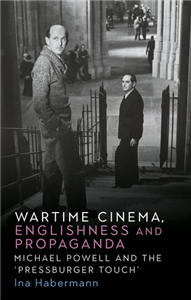
This book provides a fresh analysis of the wartime work of Michael Powell and Emeric Pressburger and their team 'the Archers'. It argues that in their earlier work, Powell and Pressburger should be seen as middlebrow storytellers whose stories explore national identity in times of war. Their wartime work is discussed in four phases: While the first phase covers their contributions to the 'phoney war', the second traces their engagement with the 'people's war'. The third phase sees the Archers move beyond propaganda, towards memodramas of Englishness, cross-cultural alliances and quests for spiritual modernity. The fourth phase dramatizes post-war preoccupations with an increasing focus on memory and trauma. Following up these thematic concerns, the conclusion is devoted to Pressburger's later work, including his two published novels Killing a Mouse on Sunday and The Glass Pearls.
More Information
Rights Information
Albania, Algeria, Angola, Argentina, Armenia, Australia, Austria, Bahrain, Belgium, Belize, Benin, Bolivia, Bosnia and Herzegovina, Botswana, Brazil, Bulgaria, Burkina Faso, Burundi, Cameroon, Canada, Cape Verde, Central African Republic, Chad, Chile, China, Colombia, Comoros, Congo [DRC], Congo, Republic of the, Costa Rica, Ivory Coast, Croatia, Czech Republic, Denmark, Djibouti, Ecuador, Egypt, El Salvador, Equatorial Guinea, Eritrea, Estonia, Ethiopia, Faroe Islands, Finland, France, French Guiana, Gabon, Gambia, Georgia, Germany, Ghana, Greece, Guatemala, Guinea, Guinea-Bissau, Guyana, Honduras, Hongkong, Hungary, Iceland, India, Indonesia, Iran, Iraq, Ireland, Israel, Italy, Japan, Jordan, Kazakhstan, Kenya, Kuwait, Latvia, Lebanon, Lesotho, Liberia, Libya, Lithuania, Luxembourg, Macau, China, Macedonia [FYROM], Madagascar, Malawi, Malaysia, Mali, Malta, Mauritania, Mauritius, Mayotte, Mexico, Mongolia, Montenegro, Morocco, Mozambique, Namibia, Netherlands, New Zealand, Nicaragua, Niger, Nigeria, Norway, Oman, Pakistan, Panama, Paraguay, Peru, Philippines, Poland, Portugal, Puerto Rico, Qatar, Reunion, Romania, Russia, Rwanda, Saint Helena, Sao Tome and Principe, Saudi Arabia, Senegal, Serbia, Seychelles, Sierra Leone, Singapore, Slovakia, Slovenia, Somalia, South Africa, South Korea, Spain, Sri Lanka, Sudan, Suriname, Swaziland, Sweden, Switzerland, Syria, Taiwan, Tanzania, Thailand, Timor-Leste, Togo, Tokelau, Tunisia, Turkey, Uganda, Ukraine, United Arab Emirates, United Kingdom, United States, Uruguay, Venezuela, Vietnam, Western Sahara, Yemen, Zambia, Zimbabwe, South Sudan, Cyprus, Palestine, Bangladesh, Cambodia, Liechtenstein, Azerbaijan, Jamaica, Kyrgyzstan, Dominican Republic, Myanmar, Monaco
Endorsements
This book provides a fresh analysis of the wartime work of Michael Powell and Emeric Pressburger and their team 'the Archers'. It argues that in their earlier work, Powell and Pressburger should be seen as middlebrow storytellers whose stories explore national identity in times of war. The complexity of the Archers' negotiation of identity is largely due to the contribution of Emeric Pressburger, the Hungarian-Jewish immigrant scriptwriter. Situating the Archers' work in the context of the British media, propaganda and wartime cinema, the book offers innovative, detailed, and carefully contextualized readings of ten films made between 1938 and 1947. These films have the 'Pressburger Touch' (similar to the 'Lubitsch Touch'), a Continental flavour due to techniques of paradox and inversion, ellipsis, characteristic play with language and imagery, ironically romantic gestures and an element of whimsy, deployed by Pressburger to explore national identity in a context of transnational exchange and cultural translation. Powell and Pressburger's wartime work is discussed in four phases: While the first phase covers their contributions to the 'phoney war', the second traces their engagement with the 'people's war'. The third phase sees the Archers move beyond propaganda, towards memodramas of Englishness, cross-cultural alliances and quests for spiritual modernity. The fourth phase dramatizes post-war preoccupations with an increasing focus on memory and trauma. Following up these thematic concerns, the conclusion is devoted to Pressburger's later work, including his two published novels Killing a Mouse on Sunday and The Glass Pearls.
Reviews
This book provides a fresh analysis of the wartime work of Michael Powell and Emeric Pressburger and their team 'the Archers'. It argues that in their earlier work, Powell and Pressburger should be seen as middlebrow storytellers whose stories explore national identity in times of war. The complexity of the Archers' negotiation of identity is largely due to the contribution of Emeric Pressburger, the Hungarian-Jewish immigrant scriptwriter. Situating the Archers' work in the context of the British media, propaganda and wartime cinema, the book offers innovative, detailed, and carefully contextualized readings of ten films made between 1938 and 1947. These films have the 'Pressburger Touch' (similar to the 'Lubitsch Touch'), a Continental flavour due to techniques of paradox and inversion, ellipsis, characteristic play with language and imagery, ironically romantic gestures and an element of whimsy, deployed by Pressburger to explore national identity in a context of transnational exchange and cultural translation. Powell and Pressburger's wartime work is discussed in four phases: While the first phase covers their contributions to the 'phoney war', the second traces their engagement with the 'people's war'. The third phase sees the Archers move beyond propaganda, towards memodramas of Englishness, cross-cultural alliances and quests for spiritual modernity. The fourth phase dramatizes post-war preoccupations with an increasing focus on memory and trauma. Following up these thematic concerns, the conclusion is devoted to Pressburger's later work, including his two published novels Killing a Mouse on Sunday and The Glass Pearls.
Author Biography
Ina Habermann is Professor of English Literature at the University of Basel
 Trusted Partner

Manchester University Press
Manchester University Press is a leading UK publisher known for excellent research in the humanities and social sciences.
View all titlesBibliographic Information
- Publisher Manchester University Press
- Publication Date September 2025
- Orginal LanguageEnglish
- ISBN/Identifier 9781526179500 / 1526179504
- Publication Country or regionUnited Kingdom
- FormatPrint PDF
- Pages352
- ReadershipGeneral/trade
- Publish StatusPublished
- Dimensions216 X 138 mm
- Biblio NotesDerived from Proprietary 6221
- Reference Code16480
Thank you for proceeding with this offer.
Manchester University Press has chosen to review this offer before it proceeds.
You will receive an email update that will bring you back to complete the process.
You can also check the status in the My Offers area
Manchester University Press has chosen to review this offer before it proceeds.
You will receive an email update that will bring you back to complete the process.
You can also check the status in the My Offers area

Please wait while the payment is being prepared.
Do not close this window.

(c) Copyright 2026 - Frankfurter Buchmesse GmbH. All Right Reserved