Your Search Results

      • Trusted Partner
        The Arts
        June 2023

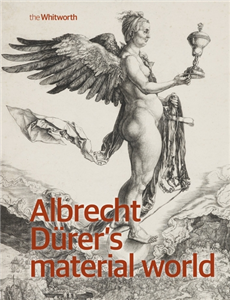
        Albrecht Dürer’s material world

        by Edward H. Wouk, Jennifer Spinks

        The painter and printmaker Albrecht Dürer is one of the most important figures of the German Renaissance. This book accompanies the first major exhibition of the Whitworth art gallery's outstanding Dürer collection in over half a century. It offers a new perspective on Dürer as an intense observer of the worlds of manufacture, design and trade that fill his graphic art. Artworks and artefacts examined here expose understudied aspects of Dürer's art and practice, including his attentive examination of objects of daily domestic use, his involvement in economies of local manufacture and exchange, the microarchitectures of local craft and, finally, his attention to cultures of natural and philosophical inquiry and learning.

      • Trusted Partner
        The Arts
        June 2023

        Albrecht Dürer’s material world

        by Edward H. Wouk, Jennifer Spinks

        The painter and printmaker Albrecht Dürer is one of the most important figures of the German Renaissance. This book accompanies the first major exhibition of the Whitworth art gallery's outstanding Dürer collection in over half a century. It offers a new perspective on Dürer as an intense observer of the worlds of manufacture, design and trade that fill his graphic art. Artworks and artefacts examined here expose understudied aspects of Dürer's art and practice, including his attentive examination of objects of daily domestic use, his involvement in economies of local manufacture and exchange, the microarchitectures of local craft and, finally, his attention to cultures of natural and philosophical inquiry and learning.

      • Trusted Partner
        The Arts
        July 2025

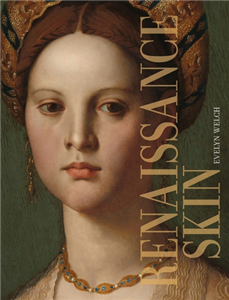
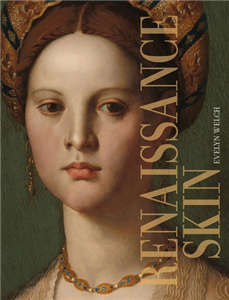
        Renaissance skin

        by Evelyn Welch

        A magnificently illustrated study of skin in Renaissance Europe. People in the Renaissance saw skin differently from how we do today. The Europe of 1500 to 1700 was a world of humours, and skin - the clothing of the body - was thought to be dangerously porous. In this landmark book, Evelyn Welch explores Renaissance skin as a bodily surface, as physical matter and as a generator of new knowledge. Ranging across anatomy, surgery and sausage making, she reveals how skin was managed by physicians as well as by glovemakers, butchers and parchment makers. How did people protect their health in a changing global environment, one where the air itself could be pathogenic? How did they see their bodies in a world where there was suddenly a multiplicity of skin colours and decorations? Addressing these questions and more, Welch show us what happens when you see skin differently, either in the marketplace, where men and women from far-away lands were put on display, or under the microscope. In doing so, she reveals that the past had a distinctive and very different way of understanding bodily experiences.

      • Trusted Partner
        The Arts
        June 2023

        Albrecht Dürer’s material world

        by Edward H. Wouk, Jennifer Spinks

        The painter and printmaker Albrecht Dürer is one of the most important figures of the German Renaissance. This book accompanies the first major exhibition of the Whitworth art gallery's outstanding Dürer collection in over half a century. It offers a new perspective on Dürer as an intense observer of the worlds of manufacture, design and trade that fill his graphic art. Artworks and artefacts examined here expose understudied aspects of Dürer's art and practice, including his attentive examination of objects of daily domestic use, his involvement in economies of local manufacture and exchange, the microarchitectures of local craft and, finally, his attention to cultures of natural and philosophical inquiry and learning.

      • Trusted Partner
        The Arts
        January 2025

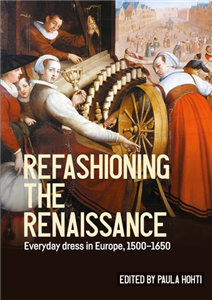
        Refashioning the Renaissance

        Everyday dress in Europe, 1500–1650

        by Paula Hohti

        How did ordinary men and women dress in early modern Europe? What fabrics and garments formed the essential elements of fashion for artisans and shopkeepers? Did they rely on affordable alternatives to the silks, jewellery, and decorations favoured by the wealthy elite? Or did those with modest means find innovative ways to express their fashion sense? This book provides new perspectives on early modern clothing and fashion history byinvestigating the consumption and meaning of fashionable clothing and accessories among the 'popular' classes. Through a close examination of the materials, craftsmanship and cultural significance of fashion items owned by and available to a broad group of consumers, it challenges conventional assumptions that the everyday dress of ordinary families was limited to a narrow selection of garments made of coarse textiles, often produced at home and resistant to change.

      • Trusted Partner
        The Arts
        July 2025

        Renaissance skin

        by Evelyn Welch

        A magnificently illustrated study of skin in Renaissance Europe. People in the Renaissance saw skin differently from how we do today. The Europe of 1500 to 1700 was a world of humours, and skin - the clothing of the body - was thought to be dangerously porous. In this landmark book, Evelyn Welch explores Renaissance skin as a bodily surface, as physical matter and as a generator of new knowledge. Ranging across anatomy, surgery and sausage making, she reveals how skin was managed by physicians as well as by glovemakers, butchers and parchment makers. How did people protect their health in a changing global environment, one where the air itself could be pathogenic? How did they see their bodies in a world where there was suddenly a multiplicity of skin colours and decorations? Addressing these questions and more, Welch show us what happens when you see skin differently, either in the marketplace, where men and women from far-away lands were put on display, or under the microscope. In doing so, she reveals that the past had a distinctive and very different way of understanding bodily experiences.

      Subscribe to our

      newsletter