Your Search Results

      • Trusted Partner
        The Arts
        April 2007

        Visual culture in Spain and Mexico

        by Anny Brooksbank-Jones, Chantal Hamil

        Visual culture in Spain and Mexico analyses films, paintings and museum exhibitions to show how aspects of hispanic visual culture 'manage' or 'mediate' risk, as articulated stylistically and ideologically in the visual artefact. The book is divided into six chapters plus an Introduction. The first three chapters deal with Mexico or more accurately aspects of life in Mexico City; the other three with Spain or more precisely with the Basque Country and aspects of cultural appropriation which include but also exceed Basque cultural politics. The book is at one and the same time a fine set of specific, detailed essays on visual cultural artefacts and their histories/modes of consumption and reception, and a broader meditation on the role of visual culture in an age increasingly characterised by doom-laden analyses of global panics, pandemics and jihads. The study also reflects the continuing hybridization of Hispanic Studies into the eclecticism of Cultural and Visual Studies, and the re-siting of well known cultural objects and institutions - such as the Guggenheim and Picasso's Guernica - into new frames of reference, generating new approaches, ideas and modes of understanding. ;

      • Trusted Partner
        Art & design styles: from c 1960
        May 2014

        Performative monuments

        The rematerialisation of public art

        by Mechtild Widrich

        This book answers one of the most puzzling questions in contemporary art: how did performance artists of the '60s and '70s, famous for their opposition both to lasting art and the political establishment, become the foremost monument builders of the '80s, '90s and today? Not by selling out, nor by making self-undermining monuments. This book argues that the centrality of performance to monuments and indeed public art in general rests not on its ephemerality or anti-authoritarian rhetoric, but on its power to build interpersonal bonds both personal and social. Specifically, the survival of body art in photographs that cross time and space to meet new audiences makes it literally into a monument. The argument of the book spans art in Austria, the former Yugoslavia, and Germany: Valie Export, Peter Weibel and the Viennese Actionists (working in Austria and abroad), Marina Abramovic, Sanja Ivecovic and Braco Dimitrijevic (working in Yugoslavia and abroad), and Joseph Beuys and Jochen Gerz (working in Germany and abroad). These artists began by critiquing monumentality in authoritarian public space, and expanded the models developed on the streets of Vienna, Munich, Rome, Belgrade and Zagreb to participatory monuments that delegate political authority to the audience. Readers interested in contemporary art, politics, photography and performance will find in this book new facts and arguments for their interconnection.

      • Trusted Partner
        The Arts
        December 2013

        Simulating the marvellous

        Psychology - surrealism - postmodernism

        by David Lomas

        Simulating the marvellous presents important new research on Surrealism and the culture from which it arose. Offering fresh interpretations of Surrealist art and literature based around the theme of simulation, the book shows, in the late nineteenth and early twentieth centuries, that the notion of simulation arose in a number of discrete contexts, in relation to hysteria and war neuroses; more broadly it shadows the emergence of our concept of 'the unconscious'. Acknowledging simulation's relevance to Surrealism, this book argues, radically alters our understanding of the Surrealists' project and the terms in which one gauges its success or failure. It leads one to question the naïve assumption that automatic writing or drawing represent an authentic outpouring of the unconscious and gives renewed significance to a figure such as Salvador Dalí who embraced simulation and made it the basis of his art and aesthetic. Resonances are also explored with postmodern theory and art practice, around the themes of simulation and the simulacrum.It also points to one of the ways in which Surrealism chimes with a core preoccupation of contemporary art and theory. Written accessibly, and ranging across many of the core ideas of Surrealism, David Lomas balances coverage of both Surrealist art and literature, looking at such figures as Dalì, Eluard, Masson, Desnos, Brouillet, Picasso, Tanning and Janet, as well as Glenn Brown, Douglas Gordon and Sarah Lucas. The book will interest not only art historians and theorists, but also students and those with a general interest in Surrealism. ;

      • Trusted Partner
        The Arts
        September 2016

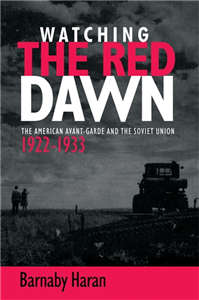
        Watching the red dawn

        The American avant-garde and the Soviet Union

        by Barnaby Haran

        This book offers the first sustained examination of the cultural relations of the American and Soviet avant-gardes in a period of major transformation. From the formation of the USSR in 1922 until its recognition by the American government, American avant-garde artists, writers and designers watched the 'Red Dawn' with fascination, enthusiastically reporting on its post-revolutionary cultural developments in articles and books, and brought these works to an American audience in ground-breaking exhibitions. Americans also emulated and adapted aspects of Soviet culture, as in the case of the New Playwrights Theatre, a group that mixed Russian avant-garde theatrical techniques with jazz, vaudeville and slapstick comedy in plays about strikes and racial injustice. Figures discussed include Louis Lozowick, Jane Heap, Frederick Kiesler, Ralph Steiner, John dos Passos, Margaret Bourke-White and Langston Hughes. Watching the red dawn takes an innovative interdisciplinary approach, considering these developments in architecture, theatre, film, photography and literature, and will be invaluable for students and specialists in these subject areas. It provides a new perspective on American avant-garde culture of the inter-war years. ;

      • Trusted Partner
        Lifestyle, Sport & Leisure
        February 2018

        Sport and modernism in the visual arts in Europe, c. 1909–39

        by Bernard Vere

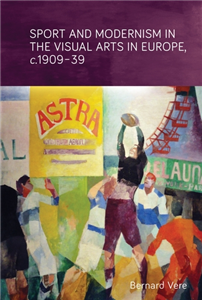
        This book highlights sport as one of the key inspirations for an international range of modernist artists. Sport emerged as a corollary of the industrial revolution and developed into a prominent facet of modernity as it spread across Europe at the turn of the twentieth century. It was celebrated by modernists both for its spectacle and for the suggestive ways in which society could be remodelled on dynamic, active and rational lines. Artists included sport themes in a wide variety of media and frequently referenced it in their own writings. Sport was also political, most notably under fascist and Soviet regimes, but also in democratic countries, and the works produced by modernists engage with various ideologies. This book provides new readings of aspects of a number of avant-garde movements, including Italian futurism, cubism, German expressionism, Le Corbusier's architecture, Soviet constructivism, Italian rationalism and the Bauhaus.

      • Trusted Partner
        Lifestyle, Sport & Leisure
        February 2018

        Sport and modernism in the visual arts in Europe, c. 1909–39

        by Bernard Vere

        This book highlights sport as one of the key inspirations for an international range of modernist artists. Sport emerged as a corollary of the industrial revolution and developed into a prominent facet of modernity as it spread across Europe at the turn of the twentieth century. It was celebrated by modernists both for its spectacle and for the suggestive ways in which society could be remodelled on dynamic, active and rational lines. Artists included sport themes in a wide variety of media and frequently referenced it in their own writings. Sport was also political, most notably under fascist and Soviet regimes, but also in democratic countries, and the works produced by modernists engage with various ideologies. This book provides new readings of aspects of a number of avant-garde movements, including Italian futurism, cubism, German expressionism, Le Corbusier's architecture, Soviet constructivism, Italian rationalism and the Bauhaus.

      • Trusted Partner
        History of art & design styles: from c 1900 -
        December 2016

        Almost nothing

        Observations on precarious practices in contemporary art

        by Series edited by Amelia Jones, Marsha Meskimmon, Anna Dezeuze

        What does an assemblage made out of crumpled newspaper have in common with an empty room in which the lights go on and off every five seconds? This book argues that they are both examples of a 'precarious' art that flourished from the late 1950s to the first decade of the twenty-first century, in light of a growing awareness of the individual's fragile existence in capitalist society. Focusing on comparative case studies drawn from European, North and South American practices, this study maps out a network of similar concerns and practices, while outlining its evolution from the 1960s to the beginning of the twenty-first century. This book will provide students and amateurs of contemporary art and culture with new insights into contemporary art practices and the critical issues that they raise concerning the material status of the art object, the role of the artist in society, and the relation between art and everyday life.

      • Trusted Partner
        The Arts
        June 2017

        The synthetic proposition

        Conceptualism and the political referent in contemporary art

        by Amelia Jones, Marsha Meskimmon, Nizan Shaked

        The synthetic proposition examines the impact of Civil Rights, Black Power, the student, feminist and sexual-liberty movements on conceptualism and its legacies in the United States between the late 1960s and the 1990s. It focuses on the turn to political reference in practices originally concerned with abstract ideas, as articulated by Joseph Kosuth, and traces key strategies in contemporary art to the reciprocal influences of conceptualism and identity politics: movements that have so far been historicised as mutually exclusive. The book demonstrates that while identity-based strategies were particular, their impact spread far beyond the individuals or communities that originated them. It offers a study of Adrian Piper, David Hammons, Renée Green, Mary Kelly, Martha Rosler, Silvia Kolbowski, Daniel Joseph Martinez, Lorna Simpson, Hans Haacke, Andrea Fraser and Charles Gaines. By turning to social issues, these artists analysed the conventions of language, photography, moving image, installation and display.

      • Trusted Partner
        The Arts
        June 2017

        The synthetic proposition

        Conceptualism and the political referent in contemporary art

        by Amelia Jones, Marsha Meskimmon, Nizan Shaked

        The synthetic proposition examines the impact of Civil Rights, Black Power, the student, feminist and sexual-liberty movements on conceptualism and its legacies in the United States between the late 1960s and the 1990s. It focuses on the turn to political reference in practices originally concerned with abstract ideas, as articulated by Joseph Kosuth, and traces key strategies in contemporary art to the reciprocal influences of conceptualism and identity politics: movements that have so far been historicised as mutually exclusive. The book demonstrates that while identity-based strategies were particular, their impact spread far beyond the individuals or communities that originated them. It offers a study of Adrian Piper, David Hammons, Renée Green, Mary Kelly, Martha Rosler, Silvia Kolbowski, Daniel Joseph Martinez, Lorna Simpson, Hans Haacke, Andrea Fraser and Charles Gaines. By turning to social issues, these artists analysed the conventions of language, photography, moving image, installation and display.

      • Trusted Partner
        The Arts
        February 2017

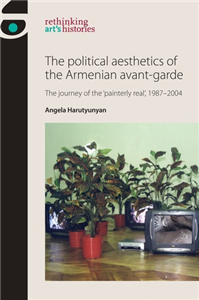
        The political aesthetics of the Armenian avant-garde

        The journey of the ‘painterly real', 1987–2004

        by Amelia Jones, Marsha Meskimmon, Angela Harutyunyan

      • Trusted Partner
        The Arts
        February 2017

        The political aesthetics of the Armenian avant-garde

        The journey of the ‘painterly real', 1987–2004

        by Amelia Jones, Marsha Meskimmon, Angela Harutyunyan

      • Trusted Partner
        The Arts
        December 2015

        Otherwise

        Imagining queer feminist art histories

        by Amelia Jones, Amelia Jones, Erin Silver, Marsha Meskimmon

        Otherwise: Imagining queer feminist art histories is the first publication to address queer feminist politics, methods and theories in relation to the visual arts, including new media, installation and performance art. Despite the crucial contribution of considerations of 'queer' to feminism in other disciplines of the humanities, and the strong impact of feminist art history on queer visual theory, a visible and influential queer feminist art history has remained elusive. This book fills the gap by offering a range of essays by key North American and European scholars, both emerging and renowned, who address the historiographic and political questions arising from the relationship between art history and queer theory in order to help map exclusions and to offer models of a new queer feminist art historical or curatorial approach. ;

      • Trusted Partner
        The Arts
        September 2012

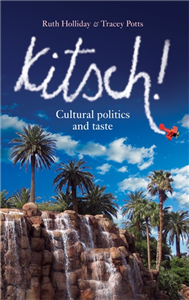
        Kitsch!

        Cultural politics and taste

        by Ruth Holliday, Tracey Potts

        From bottle gardens, the bachelor pad and Batman to designer gnomes and monogamy spray, this book uses a diverse range of objects to explore the changing significance of kitsch. With its unique approach to its subject, Kitsch! Cultural politics and taste promises to advance debates in cultural studies and sociology around taste, while providing an invaluable introduction for students and interested readers. Kitsch! examines how the idea of kitsch is mobilised - progressively, as bad taste, as camp and as cool - to inform notions of identity and sensibility. Where most studies proceed from the kitsch object, this book takes the moment of aesthetic judgement as its starting point and attempts to identify the ideological work performed by the category itself. The book poses the strongest challenge to those who argue that taste is democratised in contemporary culture, offering ample evidence that judgements of taste have shifted ground rather than relaxed. Above all, the story of kitsch proposed by the authors is intended to disturb kitsch's reputation as the source of a ready-made sensibility and politics. Kitsch has a history and not, as it has been supposed, an essence and is consequently the site of love, hate, joy, exasperation, irony, nausea and all of the twisted possibilities between. ;

      • Trusted Partner
        The Arts
        May 2014

        Performative monuments

        The rematerialisation of public art

        by Mechtild Widrich, Amelia Jones, Marsha Meskimmon

        This book answers one of the most puzzling questions in contemporary art: how did performance artists of the '60s and '70s, famous for their opposition both to lasting art and the political establishment, become the foremost monument builders of the '80s, '90s and today? Not by selling out, nor by making self-undermining monuments. This book argues that the centrality of performance to monuments and indeed public art in general rests not on its ephemerality or anti-authoritarian rhetoric, but on its power to build interpersonal bonds both personal and social. Specifically, the survival of body art in photographs that cross time and space to meet new audiences makes it literally into a monument. The argument of the book spans art in Austria, the former Yugoslavia, and Germany: Valie Export, Peter Weibel and the Viennese Actionists (working in Austria and abroad), Marina Abramovic, Sanja Ivecovic and Braco Dimitrijevic (working in Yugoslavia and abroad), and Joseph Beuys and Jochen Gerz (working in Germany and abroad). These artists began by critiquing monumentality in authoritarian public space, and expanded the models developed on the streets of Vienna, Munich, Rome, Belgrade and Zagreb to participatory monuments that delegate political authority to the audience. Readers interested in contemporary art, politics, photography and performance will find in this book new facts and arguments for their interconnection. ;

      • Trusted Partner
        The Arts
        September 2012

        Kitsch!

        Cultural politics and taste

        by Ruth Holliday, Tracey Potts

        From bottle gardens, the bachelor pad and Batman to designer gnomes and monogamy spray, this book uses a diverse range of objects to explore the changing significance of kitsch. With its unique approach to its subject, Kitsch! Cultural politics and taste promises to advance debates in cultural studies and sociology around taste, while providing an invaluable introduction for students and interested readers. Kitsch! examines how the idea of kitsch is mobilised - progressively, as bad taste, as camp and as cool - to inform notions of identity and sensibility. Where most studies proceed from the kitsch object, this book takes the moment of aesthetic judgement as its starting point and attempts to identify the ideological work performed by the category itself. The book poses the strongest challenge to those who argue that taste is democratised in contemporary culture, offering ample evidence that judgements of taste have shifted ground rather than relaxed. ;

      • Trusted Partner
        The Arts
        November 2010

        After the Event

        New perspectives on art history

        by Amelia Jones, Charles Merewether, John Potts, Marsha Meskimmon

        The event occurs in and over time; the aftermath concerns the traces, which are frozen into images, objects, re-presentations. Traditionally, art history is written in the aftermath as representational. A different perspective on the visual arts is opened up when scholars insist on exploring the status of the event itself, allowing temporality to remain in place. By focusing on the event, recognition of the complex character of the traces becomes all the more evident, challenging the singularity of representation itself. This book opens up debates on art history and theory to a broad range of perspectives, offering fresh approaches to art history and media culture alongside diverse investigations into cross-cultural and non-Western art practices. The essays draw together a wide and regionally diverse range of scholars from numerous areas, including film and documentary studies, philosophy, intellectual and cultural history, media theory and performance studies, as well as art history and theory. ;

      • Trusted Partner
        The Arts
        January 2016

        Material relations

        Domestic interiors and middle–class families in England, 1850–1910

        by Jane Hamlet, Christopher Breward, Bill Sherman

        Material relations, now available in paperback, tells the story of nineteenth- and early twentieth-century middle-class families by exploring the domestic spaces they inhabited and the material goods they prized. By opening the doors of the house, the book sheds new light on aspects of family life including love, marriage, sex, childhood and death. Historians have argued that as the nineteenth century waned, domestic spaces became increasingly private. Material relations challenges this, contending that domestic space created a complex series of family intimacies. Drawing upon novels, advice manuals and magazines, alongside sources for everyday use such as diaries, autobiographies, sale catalogues and inventories, wills and photographs, this fascinating book will be of particular interest to scholars and students of modern history, English literature, cultural studies, social geography, history of art and history of design. ;

      • Trusted Partner
        The Arts
        November 2013

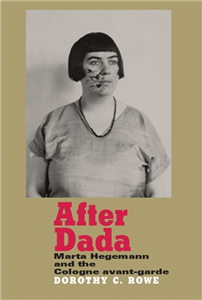
        After Dada

        Marta Hegemann and the Cologne avant-garde

        by Dorothy Rowe

        What happened in 1920s Cologne 'after Dada'? Whilst most standard accounts of Cologne Dada simply stop with Max Ernst's departure from the city for a new life as a surrealist in Paris, this book reveals the untold stories of the Cologne avant-garde that prospered after Dada but whose legacies have been largely forgotten or neglected. It focuses on the little-known Magical Realist painter Marta Hegemann (1894-1970). By re-inserting her into the histories of avant-garde modernism, a fuller picture of the gendered networks of artistic and cultural exchange within Weimar Germany can be revealed. This book embeds her activities as an artist within a gendered network of artistic exchange and influence in which Ernst continues to play a vital role amongst many others including his first wife, art critic Lou Straus-Ernst; photographers August Sander and Hannes Flach; artists Angelika Fick, Heinrich Hoerle, Willy Fick and the Cologne Progressives and visitors such as Kurt Schwitters and Katherine Dreier. The book offers a significant addition to research on Weimar visual culture and will be invaluable to students and specialists in the field. ;

      Subscribe to our

      newsletter