
Humanities & Social Sciences
November 2019


1 Introduction: The importance of cartoons caricature and satirical art in imperial contexts, Richard Scully & Andrekos Varnava PART ONE: High Imperialism and Colonialism 2 Courting the Colonies: Linley Sambourne, Punch, and Imperial Allegory, Robert Dingley & Richard Scully 3 'Master Jonathan" in Cuba: A Case Study in Colonial Bildungskarikatur, Albert D. Pionke & Frederick Whiting 4 'The International Siamese Twins': The Iconography of Anglo-American Inter-Imperialism, Stephen Tufnell 5 'Every Dog (No Distinction of Color) Has His Day': Thomas Nast and the Colonization of the American West, Fiona Halloran PART TWO: The Critique of Empire and the Context of Decolonization - 6 The Making of Harmony and War, from New Year Pictures to Propaganda Cartoons during China's Second Sino-Japanese War, Shaoqian Zhang 7 David Low and India, David Lockwood 8 Between imagined and 'real': Sarikhan's al-Masri Effendi: cartoons in the first half of the 1930s, Keren Zdafee 9 The Iconography of Decolonization in the Cartoons of the Suez Crisis, 1956, Stefanie Wichhart 10 Punch and the Cyprus Emergency, 1955-9, Andrekos Varnava & Casey Raeside PART THREE: Ambiguities of Empire - 11 Outrage and Imperialism, Confusion and Indifference: Punch and the Armenian Massacres of 1894-6, Leslie Rogne Schumacher 12 Ambiguities in the fight waged by the socialist satirical review Der Wahre Jacob against militarism and imperialism, Jean-Claude Gardes 13 The 'Confounded Socialists' and the 'Commonwealth Co-operative Society': Cartoons and British Imperialism during the Attlee Labour Government, Charlotte Riley 14 Australian cartoonists at the end of Empire: no more 'Australia for the White Man', David Olds & Robert Phiddian Index
 Trusted Partner

Marie Duval: maverick Victorian cartoonist offers the first critical appraisal of the work of Marie Duval (Isabelle Émilie de Tessier [1847-1890]), one of the most unusual, pioneering and visionary cartoonists of the later nineteenth century. It discusses key themes and practices of Duval's vision and production, relative to the wider historic social, cultural and economic environments in which her work was made, distributed and read, identifing Duval as an exemplary radical practitioner. The book interrogates the relationships between the practices and the forms of print, story-telling, drawing and stage performance. It focuses on the creation of new types of cultural work by women and highlights the style of Duval's drawings relative to both the visual conventions of theatre production and the significance of the visualisation of amateurism and vulgarity. Marie Duval: maverick Victorian cartoonist establishes Duval as a unique but exemplary figure in a transformational period of the nineteenth century.
Trusted Partner

Marie Duval: maverick Victorian cartoonist offers the first critical appraisal of the work of Marie Duval (Isabelle Émilie de Tessier [1847-1890]), one of the most unusual, pioneering and visionary cartoonists of the later nineteenth century. It discusses key themes and practices of Duval's vision and production, relative to the wider historic social, cultural and economic environments in which her work was made, distributed and read, identifing Duval as an exemplary radical practitioner. The book interrogates the relationships between the practices and the forms of print, story-telling, drawing and stage performance. It focuses on the creation of new types of cultural work by women and highlights the style of Duval's drawings relative to both the visual conventions of theatre production and the significance of the visualisation of amateurism and vulgarity. Marie Duval: maverick Victorian cartoonist establishes Duval as a unique but exemplary figure in a transformational period of the nineteenth century.
Trusted Partner

Marie Duval: maverick Victorian cartoonist offers the first critical appraisal of the work of Marie Duval (Isabelle Émilie de Tessier [1847-1890]), one of the most unusual, pioneering and visionary cartoonists of the later nineteenth century. It discusses key themes and practices of Duval's vision and production, relative to the wider historic social, cultural and economic environments in which her work was made, distributed and read, identifing Duval as an exemplary radical practitioner. The book interrogates the relationships between the practices and the forms of print, story-telling, drawing and stage performance. It focuses on the creation of new types of cultural work by women and highlights the style of Duval's drawings relative to both the visual conventions of theatre production and the significance of the visualisation of amateurism and vulgarity. Marie Duval: maverick Victorian cartoonist establishes Duval as a unique but exemplary figure in a transformational period of the nineteenth century.
Trusted Partner

Nineteenth-century women illustrators and cartoonists provides an in-depth analysis of fifteen women illustrators of the later nineteenth and early twentieth centuries: Jemima Blackburn, Eleanor Vere Boyle, Marianne North, Amelia Francis Howard-Gibbon, Mary Ellen Edwards, Edith Hume, Alice Barber Stephens, Florence and Adelaide Claxton, Marie Duval, Amy Sawyer, Eleanor Fortescue Brickdale, Pamela Colman Smith and Olive Allen Biller. The chapters consider these women's illustrations in the areas of natural history, periodicals and books, as well as their cartoons and caricatures. Using diverse critical approaches, the volume brings to light the works and lives of these important women illustrators and challenges the hegemony of male illustrators and cartoonists in nineteenth-century visual and print culture.
Trusted Partner

Nineteenth-century women illustrators and cartoonists provides an in-depth analysis of fifteen women illustrators of the later nineteenth and early twentieth centuries: Jemima Blackburn, Eleanor Vere Boyle, Marianne North, Amelia Francis Howard-Gibbon, Mary Ellen Edwards, Edith Hume, Alice Barber Stephens, Florence and Adelaide Claxton, Marie Duval, Amy Sawyer, Eleanor Fortescue Brickdale, Pamela Colman Smith and Olive Allen Biller. The chapters consider these women's illustrations in the areas of natural history, periodicals and books, as well as their cartoons and caricatures. Using diverse critical approaches, the volume brings to light the works and lives of these important women illustrators and challenges the hegemony of male illustrators and cartoonists in nineteenth-century visual and print culture.
Trusted Partner

Marie Duval: maverick Victorian cartoonist offers the first critical appraisal of the work of Marie Duval (Isabelle Émilie de Tessier, 1847-1890), one of the most unusual, pioneering and visionary cartoonists of the later nineteenth century. It discusses key themes and practices of Duval's vision and production, relative to the wider historic social, cultural and economic environments in which her work was made, distributed and read, identifing Duval as an exemplary radical practitioner. The book interrogates the relationships between the practices and the forms of print, story-telling, drawing and stage performance. It focuses on the creation of new types of cultural work by women and highlights the style of Duval's drawings relative to both the visual conventions of theatre production and the significance of the visualisation of amateurism and vulgarity. Marie Duval: maverick Victorian cartoonist establishes Duval as a unique but exemplary figure in a transformational period of the nineteenth century.
Trusted Partner
This is the first major study of Britain's pioneering graphic satirist, Sir Francis Carruthers Gould (1844-1925), the first staff political cartoonist on a daily newspaper in Britain, and the first of his kind to be knighted. Written by the distinguished media historian, Colin Seymour-Ure, it is essential reading for anyone interested in cartoons, caricature and illustration and will also be welcomed by students of history, politics and the media. It examines Gould's career in Fleet Street until his retirement after the First World War. It also discusses his illustrations for magazines and books and there is an analysis of his use of symbolism and literary allusion to lampoon such eminent politicians as Gladstone and Joseph Chamberlain. As Lord Baker says in his Foreword, this book is 'a major contribution to our knowledge of British cartooning.'
Trusted Partner

Nineteenth-century women illustrators and cartoonists provides an in-depth analysis of fifteen women illustrators of the later nineteenth and early twentieth centuries: Jemima Blackburn, Eleanor Vere Boyle, Marianne North, Amelia Francis Howard-Gibbon, Mary Ellen Edwards, Edith Hume, Alice Barber Stephens, Florence and Adelaide Claxton, Marie Duval, Amy Sawyer, Eleanor Fortescue Brickdale, Pamela Colman Smith and Olive Allen Biller. The chapters consider these women's illustrations in the areas of natural history, periodicals and books, as well as their cartoons and caricatures. Using diverse critical approaches, the volume brings to light the works and lives of these important women illustrators and challenges the hegemony of male illustrators and cartoonists in nineteenth-century visual and print culture.
Trusted Partner
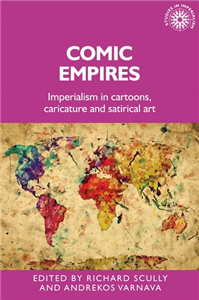
Comic empires is a unique collection of new research exploring the relationship between imperialism and political cartoons, caricature, and satirical art. Edited by leading scholars across both fields (and with contributions from contexts as diverse as Egypt, Australia, the United States, and China, as well as Europe) the volume provides new perspectives on well-known events, and illuminates little-known players in the 'great game' of empire in modern times. Some of the finest comic art of the period is deployed as evidence, and examined seriously, in its own right, for the first time. Accessible to students of history at all levels, Comic empires is a major addition to the world-leading 'Studies in Imperialism' series, as well as standing alone as an innovative and significant contribution to the ever-growing international field of comics studies.
Trusted Partner

Comic empires is a unique collection of new research exploring the relationship between imperialism and political cartoons, caricature, and satirical art. Edited by leading scholars across both fields (and with contributions from contexts as diverse as Egypt, Australia, the United States, and China, as well as Europe) the volume provides new perspectives on well-known events, and illuminates little-known players in the 'great game' of empire in modern times. Some of the finest comic art of the period is deployed as evidence, and examined seriously, in its own right, for the first time. Accessible to students of history at all levels, Comic empires is a major addition to the world-leading 'Studies in Imperialism' series, as well as standing alone as an innovative and significant contribution to the ever-growing international field of comics studies.
Trusted Partner
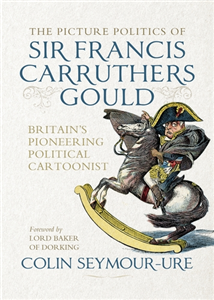
This is the first major study of Britain's pioneering graphic satirist, Sir Francis Carruthers Gould (1844-1925), the first staff political cartoonist on a daily newspaper in Britain, and the first of his kind to be knighted. Written by the distinguished media historian, Colin Seymour-Ure, it is essential reading for anyone interested in cartoons, caricature and illustration and will also be welcomed by students of history, politics and the media. It examines Gould's career in Fleet Street until his retirement after the First World War. It also discusses his illustrations for magazines and books and there is an analysis of his use of symbolism and literary allusion to lampoon such eminent politicians as Gladstone and Joseph Chamberlain. As Lord Baker says in his Foreword, this book is 'a major contribution to our knowledge of British cartooning.'

