Your Search Results

      • Trusted Partner
        The Arts
        October 2025

        Fashion in theory

        Historicization, subjectivity and practice

        by Marco Pecorari

        For Spring Summer 2020, Gucci showed a collection questioning identity politics and capitalism. Rather than the usual explanation of the material, shapes or inspirations behind the collection, the press release handed out at the show quoted the philosopher Michel Foucault and questioned the very nature of fashion itself. Gucci's press release reflects the popularization of critical theory in public discourse and fashion in particular. Philosophers, activists and academics are increasingly recruited to collaborate with luxury brands, and main-stream fashion brands have begun to adopt a discourse about politics and critical thinking using, in their communication, concepts such as "resistance", "gender fluidity", "national identity" or "cultural heritage" without accompanying these discourses with any form of political engagement or activism. Based on this intellectualization of the fashion industry and the recent proliferation of critical theory in fashion education, this book stresses the importance of rethinking the relationship between fashion and theory. Drawing together eleven chapters and four conversations by and with philosophers, cultural theorists, historians, anthropologists, activists, performers and designers, the book investigates both the theorization of fashion and the ways in which fashion offers a useful landscape in understanding the current state of critical theory today.

      • Trusted Partner
        Humanities & Social Sciences
        January 2023

        Political and sartorial styles

        Britain and its colonies in the long nineteenth century

        by Kevin Morrison

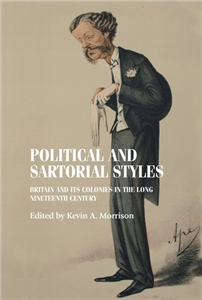
        Starting with the premise that clothing is political and that analysing clothing can enhance understanding of political style, this collection explores the relationships among political theory, dress, and self-presentation during a period in which imperial and colonial empires assumed their modern form. Organised under three thematic clusters, the volume's chapters range from an analysis of the uniforms worn by West India regiments stationed in the Caribbean to the smock frock donned by rural agricultural labourers, and from the self-presentations of members of parliament, political thinkers, and imperial administrators to the dress of characters and caricatures in novels, paintings, and political cartoon. With its interdisciplinary approach, the book will appeal to nineteenth-century cultural and social historians and literary critics as well as advanced undergraduate and postgraduate students whose research and teaching interests include gender, politics, material culture, and imperialism.

      Subscribe to our

      newsletter