Your Search Results

      • Trusted Partner
        Literature & Literary Studies
        February 1980

        The Jew of Malta

        Christopher Marlowe

        by N. Bawcutt

        Thorough annotation and commentary. Emphasis on the political, historical and religious allusions in the play. Presented in a clear and lucid form. ;

      • Trusted Partner
        Literature & Literary Studies
        September 1990

        Sir Thomas More

        By Anthony Munday and others

        by Vittorio Gabrieli, Giorgio Melchiori

        The best edition of the play in print. Gives a radical re-examination of the manuscript, and relates step by step to the process by which the play acquired its final form. Accounts for every single word and mark found in the manuscript - reproduces rejected or alternative passages at the end of the text. Includes a detailed discussion of the authorship and date of the original text and so-called additions. Particularly important now as the play feeds into the present speculation concerning Shakespeare's Catholic roots. ;

      • Trusted Partner
        Literature & Literary Studies
        August 1996

        Poetaster

        Ben Jonson

        by Tom Cain

        Set in Ancient Rome, "Poetaster" offers one of the first and most subtle statements in English of the Augustan cultural ideal. Jonson contrasts Augustus' wise rule with an English polity dominated (like the stage) by malice, intrigue and envy. This text examines these different strands so skilfully interwoven by Jonson, and argues for a reassessment of "Poetaster" as one of the most ideologically interesting of all early modern plays. The accompanying explanatory notes guide the reader through the personal and political illusions which gave the play its immediate satirical impact. ;

      • Trusted Partner
        Literature & Literary Studies
        October 1997

        Endymion

        John Lyly

        by David Bevington

        Full and comprehensive commentary. Solid and scholarly introduction. A welcome edition to this renouned series . ;

      • Trusted Partner
        Literature & Literary Studies
        March 1999

        Bussy D'Ambois

        By George Chapman

        by N. S. Brooke

        Revels stuff. . . .|This Edition of George Chapman's tragedy differs from all other modern editions in being primarily based on the Quarto of 1607 in preference to the much revised Quarto of 1641. N. S. Brooke believes that the earlier text gives a more certain indication of Chapman's intentions and he has supported this view in an introduction and by a bibliographical and critical study of the play. The divergence between the texts of 1607 and 1641 are set out clearly in this volume, which includes the usual textual and critical apparatus found in the Revels series. ;

      • Trusted Partner
        Literature & Literary Studies
        June 2017

        Women Beware Women

        By Thomas Middleton

        by J.R. Mulryne, David Bevington

      • Trusted Partner
        Plays, playscripts
        November 2015

        Dr Faustus: The A- and B- texts (1604, 1616)

        A parallel-text edition

        by David Bevington, Eric Rasmussen

        Dr. Faustus is one of the jewels of early modern English drama, and is still widely performed today. Interestingly, the play has come down to the contemporary audience in two distinct versions that have become known as the 'A' and the 'B' texts. David Bevington and Eric Rasmussen, who edited the original Revels edition over twenty years ago (and are two of the most eminent editors currently working), have hit upon the fascinating idea of presenting both texts on facing pages. This allows readers to compare the two 'versions', the 'A' text which is the one closest to Marlowe, and the longer 'B' text with additions by Samuel Rowley; in this unique edition, the reader is made aware of the changing tastes of audiences, the stage history of the play, and of just how intricate 'editing' a play can be. With a concise and illuminating introduction, and relevant notes and images, this Revels Student Edition of the 'A' and 'B' texts of Dr. Faustus will prove to be an enthralling document, and an excellent edition for student and theatre-goer alike.

      • Trusted Partner
        Plays, playscripts
        November 2015

        Pap with an Hatchet by John Lyly

        An annotated, modern-spelling edition

        by Leah Scragg

        The first fully annotated, modern-spelling edition of Lyly's Pap with an Hatchet, this volume in the Revels Plays Companion Library series opens a window on the most neglected item in the Lylian canon. A response to a series of late sixteenth-century anti-episcopalian pamphlets issued under the pseudonym 'Martin Marprelate', Pap with an Hatchet seeks to beat Martin at his own game, employing all the devices deployed in the tracts to deride and subvert the Martinist position. Written in a racy, colloquial style, and at variance in its format with twenty-first century printing conventions, the pamphlet has remained difficult to access for the modern reader, and it is this barrier to a fuller understanding that the present edition has been designed to overcome. Re-edited from the earliest witnesses, brought into line with contemporary printing practice, richly annotated, and equipped with a substantial introduction, it enables a new insight into the witty interaction between the work and the Martinist tracts, the care underlying its composition, and the relish that Lyly brought to his task.

      • Trusted Partner
        Plays, playscripts
        November 2015

        Pap with an Hatchet by John Lyly

        An annotated, modern-spelling edition

        by Leah Scragg

        The first fully annotated, modern-spelling edition of Lyly's Pap with an Hatchet, this volume in the Revels Plays Companion Library series opens a window on the most neglected item in the Lylian canon. A response to a series of late sixteenth-century anti-episcopalian pamphlets issued under the pseudonym 'Martin Marprelate', Pap with an Hatchet seeks to beat Martin at his own game, employing all the devices deployed in the tracts to deride and subvert the Martinist position. Written in a racy, colloquial style, and at variance in its format with twenty-first century printing conventions, the pamphlet has remained difficult to access for the modern reader, and it is this barrier to a fuller understanding that the present edition has been designed to overcome. Re-edited from the earliest witnesses, brought into line with contemporary printing practice, richly annotated, and equipped with a substantial introduction, it enables a new insight into the witty interaction between the work and the Martinist tracts, the care underlying its composition, and the relish that Lyly brought to his task.

      • Trusted Partner
        Plays, playscripts
        August 2012

        The Tide Tarrieth No Man

        by George Wapull

        by Peter Happe

        This volume is a photographic facsimile from the copy of the play by George Wapull in the Harry Ransom Centre.It was originally printed in 1576 by Hugh Jackson, and is one of only five extant copies. The introduction discusses the place of this play in Jackson's output, including two other interludes printed by him shortly afterwards. Besides compositorial practice and some irregularities, it addresses the identity of the author, historical detail about the surviving copies, and the editorial contribution of John Payne Collier. The text is rich in stage directions and aspects of performance are discussed including the doubling scheme for four players and the active role of the Vice. The play was written at a time when interludes designed for small acting troupes were popular and exhibited remarkable theatrical expertise. The intellectual context is considered, and in particular the place of this play among the considerable number of surviving interludes from London which focus upon wealth and its abuses and other matters of economic importance at the time.

      • Trusted Partner
        Literature & Literary Studies
        November 2017

        As You Like It

        by Jim Bulman, Robert Shaughnessy

        This book examines the modern performance history of one of Shakespeare's best-loved and most enduring comedies, and one that has given opportunities for generations of theatre-makers and theatre-goers to explore the pleasures of pastoral, gender masquerade and sexual ambiguity. Powered by Shakespeare's greatest female comic role, the play invites us into a deeply English woodland that has also been richly imagined as a space of dreams. The study retrieves the untold stories of stage productions in Britain, France and Germany, which include Royal Shakespeare Company productions starring Vanessa Redgrave, Eileen Atkins and Juliet Stevenson, the ground-breaking all-male productions at the National Theatre in 1967 and by Cheek by Jowl in 1992, and the versions directed by Jacques Copeau in Paris in 1934, and by Peter Stein in Berlin in 1977. It also addresses the four major screen versions of the play, ranging from Paul Czinner's 1936 film to Kenneth Branagh's seventy years later.

      • Trusted Partner
        Literature & Literary Studies
        November 2017

        As You Like It

        by Jim Bulman, Robert Shaughnessy

        This book examines the modern performance history of one of Shakespeare's best-loved and most enduring comedies, and one that has given opportunities for generations of theatre-makers and theatre-goers to explore the pleasures of pastoral, gender masquerade and sexual ambiguity. Powered by Shakespeare's greatest female comic role, the play invites us into a deeply English woodland that has also been richly imagined as a space of dreams. The study retrieves the untold stories of stage productions in Britain, France and Germany, which include Royal Shakespeare Company productions starring Vanessa Redgrave, Eileen Atkins and Juliet Stevenson, the ground-breaking all-male productions at the National Theatre in 1967 and by Cheek by Jowl in 1992, and the versions directed by Jacques Copeau in Paris in 1934, and by Peter Stein in Berlin in 1977. It also addresses the four major screen versions of the play, ranging from Paul Czinner's 1936 film to Kenneth Branagh's seventy years later.

      • Trusted Partner
        Literature & Literary Studies
        November 2017

        As You Like It

        by Jim Bulman, Robert Shaughnessy

        This book examines the modern performance history of one of Shakespeare's best-loved and most enduring comedies, and one that has given opportunities for generations of theatre-makers and theatre-goers to explore the pleasures of pastoral, gender masquerade and sexual ambiguity. Powered by Shakespeare's greatest female comic role, the play invites us into a deeply English woodland that has also been richly imagined as a space of dreams. The study retrieves the untold stories of stage productions in Britain, France and Germany, which include Royal Shakespeare Company productions starring Vanessa Redgrave, Eileen Atkins and Juliet Stevenson, the ground-breaking all-male productions at the National Theatre in 1967 and by Cheek by Jowl in 1992, and the versions directed by Jacques Copeau in Paris in 1934, and by Peter Stein in Berlin in 1977. It also addresses the four major screen versions of the play, ranging from Paul Czinner's 1936 film to Kenneth Branagh's seventy years later.

      • Trusted Partner
        Plays, playscripts
        November 2016

        The Tragedy of Antigone, The Theban Princesse

        by Thomas May

        by Edited by Matteo Pangallo. Series edited by Paul Dean

        Thomas May's The Tragedy of Antigone (1631), edited by Matteo Pangallo, is the first English treatment of the story made famous by Sophocles. This edition contains a facsimile of the copy held at the Beinecke Library of Yale University, making the play commercially available for the first time since its original publication. The extensive introduction discusses, among other things, the ownership history of existing copies and their marginal annotations, and of the play's topical political implications in the light of May's wavering between royalist and republican sympathies. Writing during the contentious early years of Charles I's reign, May used Sophocles' Antigone to explore the problems of just rule and justified rebellion. He also went beyond the scope of the original, adding content from a wide range of other classical and contemporary plays, poems and other sources, including Shakespeare's Romeo and Juliet and Macbeth. This volume will be essential reading for advanced students, researchers and teachers of early English drama and seventeenth-century political history.

      • Trusted Partner
        Literature & Literary Studies
        February 2018

        All Fools

        By George Chapman

        by Charles Edelman, David Bevington

        Of all the poets Francis Meres names in his famous Palladis Tamia, Wits Treasury (1598), just two rate a mention as being both 'our best for tragedy' and 'the best poets for comedy': William Shakespeare and George Chapman. All Fools, written in 1599, is the only Elizabethan comedy based directly on the plays of Terence. By taking episodes and characters from two brilliant works, The Self-Tormenter and The Brothers, Chapman creates something that is distinctly Elizabethan while remaining faithful to the spirit of the great Roman master. In this edition, an extensive introduction and commentary show how Chapman combines the literary and theatrical traditions of ancient Rome with everyday life in his own time to fashion a sparkling and innovative comedy that will delight audiences today as much as it did those of 1599.

      • Trusted Partner
        Plays, playscripts
        January 2007

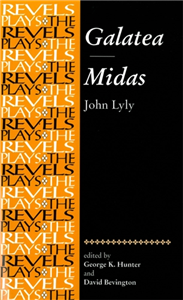
        Galatea and midas

        John Lyly

        by Edited by George Hunter and David Bevington

        Galatea and Midas are two of John Lyly's most engaging plays. Lyly took up the story of two young women, Galatea (or Gallathea) and Phillida who are dressed up in male clothes by their fathers so that they can avoid the requirement of the god Neptune that every year 'the fairest and chastest virgin in all the country' be sacrificed to a sea-monster. Hiding together in the forest, the two maidens fall in love, each supposing the other to be a young man. Galatea has become the subject of considerable feminist critical study in recent years. Midas (1590) uses mythology in quite a different way, dramatising two stories about King Midas in such a way as to fashion a satire of King Philip of Spain (and of any tyrant like him) for colossal greediness and folly. In the wake of the defeat of Philip's Armada fleet and its attempted invasion of England in 1588, this satire was calculated to win the approval of Queen Elizabeth and her court.

      • Trusted Partner
        Plays, playscripts
        September 2014

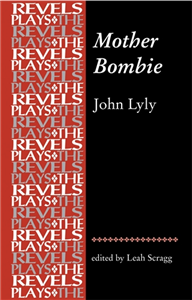
        Mother Bombie

        John Lyly

        by Leah Scragg

        Mother Bombie is unique among Lyly's comedies in its urban setting and focus upon middle and lower class concerns. The play turns on the tissue of misconceptions surrounding the efforts of four fathers to secure socially advantageous marriages for their heirs, and the determination of their young servants to exploit their masters' misguided aspirations for their own advantage. A theatrical success in its own day, the play is of particular interest to twenty-first century criticism for its focus upon those situated on the margins of the social group, notably Mother Bombie herself, thought by some to be a witch, and the two simpletons whose marital prospects lie at the heart of the action. This fully annotated, modern-spelling edition of the play, now available in paperback, is re-edited from the earliest witnesses; the quartos of 1594 and 1598, and incorporates the songs first published by Blount in his collected edition of Lyly's works in 1632

      • Trusted Partner
        Plays, playscripts
        October 2004

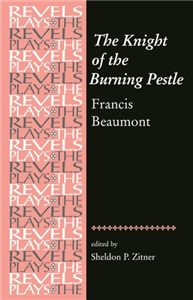
        The Knight of the Burning Pestle

        Francis Beaumont

        by Sheldon P. Zitner

        This play is a celebration of London life and theatre in which Francis Beaumont's comic genius is given free rein. A grocer, his wife and their two apprentices attending the theatre in holiday mood interrupt and finally replace a fatuous love comedy with their own heart's desire: exotic spectacle and sound English sentiment. This edition presents an accurate modern-spelling text, with full historical and critical introduction and a detailed commentary. The introduction analyses the character of Beaumont's wit and his unsentimental critique of society and of society's stage image. It also places 'The Knight' in the contexts of Jacobean comedy and the work of the children's theatrical troupes. An appendix on the songs and a concern for details of production make this edition especially useful to actors and directors, as well as students of Renaissance drama.

      Subscribe to our

      newsletter