Your Search Results

      • Trusted Partner
        Humanities & Social Sciences
        May 2018

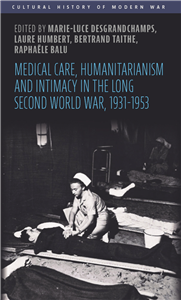
        The Korean War in Britain

        Citizenship, selfhood and forgetting

        by Grace Huxford, Penny Summerfield

        The Korean War in Britain explores the social and cultural impact of the Korean War (1950-53) on Britain. Coming just five years after the ravages of the Second World War, Korea was a deeply unsettling moment in post-war British history. From allegations about American use of 'germ' warfare to anxiety over Communist use of 'brainwashing' and treachery at home, the Korean War precipitated a series of short-lived panics in 1950s Britain. But by the time of its uneasy ceasefire in 1953, the war was becoming increasingly forgotten. Using Mass Observation surveys, letters, diaries and a wide range of under-explored contemporary material, this book charts the war's changing position in British popular imagination and asks how it became known as the 'Forgotten War'. It explores the war in a variety of viewpoints - conscript, POW, protester and veteran - and is essential reading for anyone interested in Britain's Cold War past.

      • Trusted Partner
        Humanities & Social Sciences
        January 2019

        The Korean War in Britain

        Citizenship, selfhood and forgetting

        by Grace Huxford, Penny Summerfield

        The Korean War in Britain explores the social and cultural impact of the Korean War (1950-53) on Britain. Coming just five years after the ravages of the Second World War, Korea was a deeply unsettling moment in post-war British history. From allegations about American use of 'germ' warfare to anxiety over Communist use of 'brainwashing' and treachery at home, the Korean War precipitated a series of short-lived panics in 1950s Britain. But by the time of its uneasy ceasefire in 1953, the war was becoming increasingly forgotten. Using Mass Observation surveys, letters, diaries and a wide range of under-explored contemporary material, this book charts the war's changing position in British popular imagination and asks how it became known as the 'Forgotten War'. It explores the war in a variety of viewpoints - conscript, POW, protester and veteran - and is essential reading for anyone interested in Britain's Cold War past.
      • Trusted Partner
        Business, Economics & Law
        July 2025

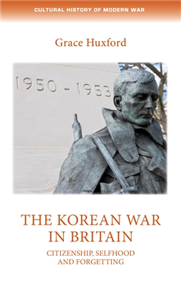
        Medical care, humanitarianism and intimacy in the long Second World War, 1931-1953

        by Marie-Luce Desgrandchamps, Laure Humbert, Bertrand Taithe, Raphaƫle Balu

        This book offers a micro-global history of humanitarianism and medical care during the 'long' Second World War, which challenges the traditional and Eurocentric chronological boundaries of 1939/1945. It takes as its starting point the Japanese invasion of Manchuria in 1931, which led to the progressive dislocation of the League of Nations, with the Japanese, German and Soviet departures in the 1930s. It ends with the termination of the Korean War in 1953, and the subsequent dismantlement of the first United Coalition and UN Peace enforcement operation. It considers the slow, messy and ambivalent transformation of humanitarian actors' relations to the suffering of distant others through a study of humanitarian encounters, practices, spaces and affects. Paying close attention to a variety of actors, such as French colonial doctors, Swiss ICRC delegates, Egyptian relief workers, Chinese-style physicians, Peruvian and Ecuadorian nurses or American member of the Unitarian Service Committee, the book provides a more holistic story of humanitarianism.

      Subscribe to our

      newsletter