Your Search Results

      • Trusted Partner
        Humanities & Social Sciences
        April 2020

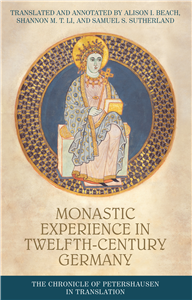
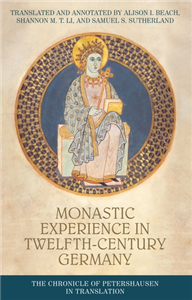
        Monastic experience in twelfth-century Germany

        The Chronicle of Petershausen in translation

        by Alison I. Beach, Shannong Li, Samuel Sutherland

        Monastic experience in twelfth-century Germany provides a rare window on to monastery life in the tumultuous world of twelfth-century Swabia. From its founding in 992 through the great fire that ravaged it in 1159 and beyond, Petershausen weathered countless external attacks and internal divisions. Supra-regional clashes between emperors and popes played out at the most local level. Monks struggled against overreaching bishops. Reformers introduced new and unfamiliar customs. Tensions erupted into violence within the community. Through it all the anonymous chronicler struggled to find meaning amid conflict and forge connections to a shared past, enlivening his narrative with colorful anecdotes - sometimes amusing, sometimes disturbing. Translated into English for the first time, this fascinating text is an essential source for the lived experience of medieval monasticism.
      • Trusted Partner
        Humanities & Social Sciences
        February 2026

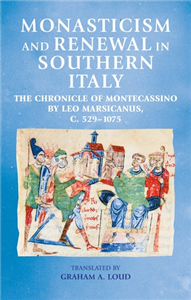
        Monasticism and renewal in southern Italy

        The Chronicle of Montecassino by Leo Marsicanus, c. 529–1075

        by Graham Loud

        The chronicle of Leo Marsicanus recounts the history of the abbey of Montecassino from its foundation by St. Benedict in the sixth-century up to 1075. It presents a detailed and compelling story of tribulation and renewal, with the abbey twice destroyed and abandoned in the early Middle Ages and then rebuilt. It concludes with an informative account of the building and dedication of the new abbey church by Abbot Desiderius in 1066-71. The chronicle is also a key source for the more general history of southern Italy in the early Middle Ages, and of the conquest of the region by the Normans during the eleventh century. In addition, Montecassino was one of the great intellectual centres of western Christendom and a major contributor to the reform movement within the Church during the later eleventh century. Leo's chronicle is a crucial witness to that role.

      Subscribe to our

      newsletter