Your Search Results

      • Trusted Partner
        Business, Economics & Law
        November 2019

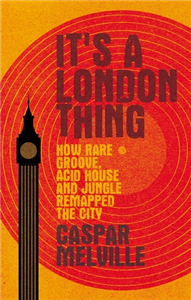
        It's a London thing

        How rare groove, acid house and jungle remapped the city

        by Caspar Melville, Peter Martin

        This book tells the history of the London black music culture that emerged in post-colonial London at the end of the twentieth century; the people who made it, the racial and spatial politics of its development and change, and the part it played in founding London's precious, embattled multiculture. It conceives of the linked scenes around black music in London, from ska, reggae and soul in the 1970s, to rare groove and rave in the 1980s and jungle and its offshoots in the 1990s, to dubstep and grime of the 2000s, as demonstrating enough common features to be thought of as one musical culture, an Afro-diasporic continuum. Core to this idea is that this dance culture has been ignored in history and cultural theory and that it should be thought of as a powerful and internationally significant form of popular art.

      • Trusted Partner
        Literature: history & criticism
        September 1999

        Beginning Postmodernism

        by Tim Woods

        The first volume of Manchester University Press' 'Beginnings' series, which is based on Peter Barry's critically aclaimed bestseller, Beginning theoryThis brilliant digest offers a clear, step-by-step introduction to postmodernism on every discourse a. . . .

      • Trusted Partner
        Humanities & Social Sciences
        January 2016

        The story of Alderley

        Living with the Edge

        by A. J. N. W. Prag

        In 1953 the schoolboy Alan Garner rediscovered a wooden shovel originally found in the Alderley copper mines in 1875. In 1991 he presented it to the Manchester Museum in the University of Manchester: this - and the discovery of a hoard of over 500 Roman coins - inspired the creation of the Alderley Edge Landscape Project, a multi-disciplinary research programme of the Museum and the National Trust, who own of most of the Edge, that aimed to study the entire history of Alderley, from geology to entomology, mining to oral history. No other village has enjoyed such a comprehensive study of its story: the list of chapter-headings reads like a roll-call of everything you ever wanted to know about this or any place. The book concludes with Alan Garner's retelling of the famous legend of the sleeping king, setting a familiar tale told him by his grandfather in a whole other world of prehistoric ritual and sacrifice. ;

      • Trusted Partner
        Cultural studies
        November 2015

        Performing Englishness

        Identity and politics in a contemporary folk resurgence

        by Trish Winter, Simon Keegan-Phipps

        Performing Englishness examines the growth in popularity and profile of the English folk arts in the first decade of the twenty-first century. In the only study of its kind, the authors explore how the folk resurgence speaks to a broader explosion of interest in the subject of English national and cultural identity. Combining approaches from British cultural studies and ethnomusicology, the book draws on ethnographic fieldwork, interviews with central figures of the resurgence and close analysis of music and dance as well as visual and discursive sources. Its presentation of the English case study calls for a rethinking of concepts such as revival and indigeneity. It will be of interest to students and scholars in cultural studies, ethnomusicology and related disciplines.

      • Trusted Partner
        Cultural studies
        November 2015

        Performing Englishness

        Identity and politics in a contemporary folk resurgence

        by Trish Winter, Simon Keegan-Phipps

        Performing Englishness examines the growth in popularity and profile of the English folk arts in the first decade of the twenty-first century. In the only study of its kind, the authors explore how the folk resurgence speaks to a broader explosion of interest in the subject of English national and cultural identity. Combining approaches from British cultural studies and ethnomusicology, the book draws on ethnographic fieldwork, interviews with central figures of the resurgence and close analysis of music and dance as well as visual and discursive sources. Its presentation of the English case study calls for a rethinking of concepts such as revival and indigeneity. It will be of interest to students and scholars in cultural studies, ethnomusicology and related disciplines.

      • Trusted Partner
        Popular culture
        July 2015

        Experimental British television

        by Martin Hargreaves

        Throughout its history, British television has found a place, if only in its margins, for programmes that consciously worked to expand the boundaries of television aesthetics. Even in the present climate of increased academic interest in television history, its experimental tradition has generally either been approached generically or been lost within the assumption that television is simply a mass medium. Avaible for the first time in paperback, Experimental British television uncovers the history of experimental television, bringing back forgotten programmes in addition to looking at relatively more privileged artists or programme strands from fresh perspectives. The book therefore goes against the grain of dominant television studies, which tends to place the medium within the flow of the 'everyday', in order to scrutinise those productions that attempted to make more serious interventions within the medium.

      • Trusted Partner
        Humanities & Social Sciences
        April 2010

        The flâneur and his city

        Patterns of daily life in Paris 1815–1851

        by Richard D. E. Burton, Mike Thompson

        The book provides a 'flâneur's eye view' of Parisian life in the first half of the nineteenth century: dress, cafés and restaurants, but also shops and passages, the omnibus, bals publics and carnival. The author provides general conclusions about the private and public spheres in 'le vieux Paris'. Like the flâneur, the author concentrates less on factual information for its own sake - which may be found in the secondary works cited in the text and footnotes - than on the 'semiological' or anthropological significance of the cultural forms in question. Links are drawn between cultural institutions and class relations in pre-1850 Paris, with particular emphasis on cultural inequality, on the persistence of cross-class contacts, and the growing differences between classes as reflected in behaviour and attitudes. ;

      • Trusted Partner
        Popular culture
        July 2013

        The naval war film

        Genre, history and national cinema

        by Jonathan Rayner

        This book undertakes a unique, coherent and comprehensive consideration of the depiction of naval warfare in the cinema. The films under discussion encompass all areas of naval operations in war, and highlight varying institutional and aesthetic responses to navies and the sea in popular culture. The examination of these films centres on their similarities to and differences from the conventions of the war genre and seeks to determine whether the distinctive characteristics of naval film narratives justify their categorisation as a separate genre or sub-genre in popular cinema. The explicit factual bases and drama-documentary style of many key naval films, such as In Which We Serve, They Were Expendable and Das Boot, also requires the consideration of these films as texts for popular historical transmission. Their frequent reinforcement of establishment views of the past, which derives from their conservative ideological position towards national and naval culture, makes these films key texts for the consideration of national cinemas as purveyors of contemporary history as popularly conceived by filmmakers and received by audiences.

      • Trusted Partner
        Popular culture
        July 2013

        The naval war film

        Genre, history and national cinema

        by Jonathan Rayner

        This book undertakes a unique, coherent and comprehensive consideration of the depiction of naval warfare in the cinema. The films under discussion encompass all areas of naval operations in war, and highlight varying institutional and aesthetic responses to navies and the sea in popular culture. The examination of these films centres on their similarities to and differences from the conventions of the war genre and seeks to determine whether the distinctive characteristics of naval film narratives justify their categorisation as a separate genre or sub-genre in popular cinema. The explicit factual bases and drama-documentary style of many key naval films, such as In Which We Serve, They Were Expendable and Das Boot, also requires the consideration of these films as texts for popular historical transmission. Their frequent reinforcement of establishment views of the past, which derives from their conservative ideological position towards national and naval culture, makes these films key texts for the consideration of national cinemas as purveyors of contemporary history as popularly conceived by filmmakers and received by audiences.

      • Trusted Partner
        Popular culture
        July 2012

        The naval war film

        Genre, history and national cinema

        by Jonathan Rayner

        This book undertakes a unique, coherent and comprehensive consideration of the depiction of naval warfare in the cinema. The films under discussion encompass all areas of naval operations in war, and highlight varying institutional and aesthetic responses to navies and the sea in popular culture. The examination of these films centres on their similarities to and differences from the conventions of the war genre and seeks to determine whether the distinctive characteristics of naval film narratives justify their categorisation as a separate genre or sub-genre in popular cinema. The explicit factual bases and drama-documentary style of many key naval films, such as In Which We Serve, They Were Expendable and Das Boot, also requires the consideration of these films as texts for popular historical transmission. Their frequent reinforcement of establishment views of the past, which derives from their conservative ideological position towards national and naval culture, makes these films key texts for the consideration of national cinemas as purveyors of contemporary history as popularly conceived by filmmakers and received by audiences.

      • Trusted Partner
        Humanities & Social Sciences
        March 2007

        The naval war film

        Genre, history and national cinema

        by Jonathan Rayner

        This book undertakes a unique, coherent and comprehensive consideration of the depiction of naval warfare in the cinema. The films under discussion encompass all areas of naval operations in war, and highlight varying institutional and aesthetic responses to navies and the sea in popular culture. The examination of these films centres on their similarities to and differences from the conventions of the war genre and seeks to determine whether the distinctive characteristics of naval film narratives justify their categorisation as a separate genre or sub-genre in popular cinema. The explicit factual bases and drama-documentary style of many key naval films, such as In Which We Serve, They Were Expendable and Das Boot, also requires the consideration of these films as texts for popular historical transmission. Their frequent reinforcement of establishment views of the past, which derives from their conservative ideological position towards national and naval culture, makes these films key texts for the consideration of national cinemas as purveyors of contemporary history as popularly conceived by filmmakers and received by audiences. ;

      • Trusted Partner
        Popular culture
        June 2001

        Writing for radio

        by Vincent Mcinerney

      • Trusted Partner
        Humanities & Social Sciences
        November 2007

        Videogame, player, text

        by Barry Atkins, Tanya Krzywinska

        Videogame, player, text examines the playing and playful subject through a series of analytical essays focused on particular videogames and playing experiences. With essays from a range of internationally renowned game scholars, the major aim of this collection is to show how it is that videogames communicate their meanings and provide their pleasures. Each essay focuses on specific examples of gameplay dynamics to tease out the specificities of videogames as a new form of interaction between text and digital technology for the purposes of entertainment. That modes of engagement with the videogame text are many and varied, and construct the playing subject in different ways, provides the central theme of Videogame,player, text. Online play, clan membership, competitive or co-operative play, player modification of game texts, and the solo play of a single player are each addressed through individual analyses of the gameplay experiences produced by, for example, The Sims, Grand Theft Auto, Prince of Persia, Doom, Quake, World of Warcraft, StreetFighter and Civilisation. ;

      • Trusted Partner
        Humanities & Social Sciences
        November 2007

        Videogame, player, text

        by Barry Atkins, Tanya Krzywinska

        Videogame, player, text examines the playing and playful subject through a series of analytical essays focused on particular videogames and playing experiences. With essays from a range of internationally renowned game scholars, the major aim of this collection is to show how it is that videogames communicate their meanings and provide their pleasures. Each essay focuses on specific examples of gameplay dynamics to tease out the specificities of videogames as a new form of interaction between text and digital technology for the purposes of entertainment. That modes of engagement with the videogame text are many and varied, and construct the playing subject in different ways, provides the central theme of Videogame,player, text. Online play, clan membership, competitive or co-operative play, player modification of game texts, and the solo play of a single player are each addressed through individual analyses of the gameplay experiences produced by, for example, The Sims, Grand Theft Auto, Prince of Persia, Doom, Quake, World of Warcraft, StreetFighter and Civilisation. ;

      • Trusted Partner
        Cultural studies
        July 2013

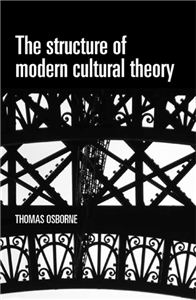
        The structure of modern cultural theory

        by Thomas Osborne

        This book is about the claims of Cultural Theory as a particular kind of intellectual ethos or discipline. The book argues that Cultural Theory is best seen, at least in its 'modern' form, as an ethical discipline. As such, it should be seen as a form of inquiry governed by the guiding idea of the cultivation of critical autonomy and, as such, is designed as much to change what we are in our relations to ourselves as to describe the world as it is in particular 'positive' ways. The content of the book develops this argument through critical readings of three canonical writers, namely Theodor Adorno, Michel Foucault and Pierre Bourdieu. A final chapter contrasts the ethical idea of modern Cultural Theory developed here with its postmodern derivations, which, it is argued, have taken both a more positivist and even more moralistic form.

      • Trusted Partner
        Cultural studies
        July 2013

        The structure of modern cultural theory

        by Thomas Osborne

        What is the point of cultural theory? Do we even know what it is? This book is at once an introduction to, and, broadly, a defence of modern cultural theory understood as a particular constellation of inquiry, one that may be all the more important in our postmodern times the more seemingly irrelevant it is to current fashions. Focusing on the work of Theodor Adorno, Pierre Bourdieu and Michel Foucault the book argues that in spite of their differences these authors shared particularly 'modern' understandings of culture, creativity and human agency; understandings centred on the ideas of critical autonomy and creativity of thought. Even though all three were committed to scholarly empirical research, for them the function of cultural theory was not just to describe the world positivistically 'as it is' (or was) but to cultivate the conditions for ethical autonomy in their readerships by opening up ways for thinking differently and exposing the fetishisms and blockages that hinder that task.

      • Trusted Partner
        Humanities & Social Sciences
        September 2008

        The structure of modern cultural theory

        by Thomas Osborne

        What is the point of cultural theory? Do we even know what it is? This book is at once an introduction to, and, broadly, a defence of modern cultural theory understood as a particular constellation of inquiry, one that may be all the more important in our postmodern times the more seemingly irrelevant it is to current fashions. Focusing on the work of Theodor Adorno, Pierre Bourdieu and Michel Foucault the book argues that in spite of their differences these authors shared particularly 'modern' understandings of culture, creativity and human agency; understandings centred on the ideas of critical autonomy and creativity of thought. Even though all three were committed to scholarly empirical research, for them the function of cultural theory was not just to describe the world positivistically 'as it is' (or was) but to cultivate the conditions for ethical autonomy in their readerships by opening up ways for thinking differently and exposing the fetishisms and blockages that hinder that task. ;

      • Trusted Partner
        Humanities & Social Sciences
        September 2008

        The structure of modern cultural theory

        by Thomas Osborne

        What is the point of cultural theory? Do we even know what it is? This book is at once an introduction to, and, broadly, a defence of modern cultural theory understood as a particular constellation of inquiry, one that may be all the more important in our postmodern times the more seemingly irrelevant it is to current fashions. Focusing on the work of Theodor Adorno, Pierre Bourdieu and Michel Foucault the book argues that in spite of their differences these authors shared particularly 'modern' understandings of culture, creativity and human agency; understandings centred on the ideas of critical autonomy and creativity of thought. Even though all three were committed to scholarly empirical research, for them the function of cultural theory was not just to describe the world positivistically 'as it is' (or was) but to cultivate the conditions for ethical autonomy in their readerships by opening up ways for thinking differently and exposing the fetishisms and blockages that hinder that task. ;

      Subscribe to our

      newsletter