
Humanities & Social Sciences
January 2018


1. Introduction: the emergent critical history of intellectual disability - Patrick McDonagh, C.F. Goodey, and Tim Stainton 2. Conceptualization of intellectual disability in medieval English law - Wendy J. Turner 3. 'Will-nots' and 'Cannots': tracing a trope in medieval thought - Irina Metzler 4. 'Some have it from birth, some by disposition': foolishness in medieval German literature - Janina Dillig 5. Exclusion from the eucharist: the seventeenth-century church and the creation of 'intellectually' disabled people - C.F. Goodey 6. 'A defect in the mind': cognitive ableism in Swift's Gulliver's Travels - D. Christopher Gabbard 7. Sensationalism and the construction of intellectual disability - Tim Stainton 8. Peter the 'wild boy': what Peter means to us - Katie Branch, Clemma Fleat, Nicola Grove, Tim Lumley Smith, and Robin Meader 9. 'Belief', 'opinion' and 'knowledge': the idiot in law in the the long eighteenth century - Simon Jarrett 10. Idiocy and the conceptual economy of madness - Murray K. Simpson 11. Visiting Earlswood: the asylum travelogue and the shaping of 'idiocy' - Patrick McDonagh Index
 Trusted Partner

This book explores the development of modern transatlantic prosthetic industries in nineteenth and twentieth centuries and reveals how the co-alignment of medicine, industrial capitalism, and social norms shaped diverse lived experiences of prosthetic technologies and in turn, disability identities. Through case studies that focus on hearing aids, artificial tympanums, amplified telephones, artificial limbs, wigs and dentures, this book provides a new account of the historic relationship between prostheses, disability and industry. Essays draw on neglected source material, including patent records, trade literature and artefacts, to uncover the historic processes of commodification surrounding different prostheses and the involvement of neglected companies, philanthropists, medical practitioners, veterans, businessmen, wives, mothers and others in these processes.
Trusted Partner

This book explores the development of modern transatlantic prosthetic industries in nineteenth and twentieth centuries and reveals how the co-alignment of medicine, industrial capitalism, and social norms shaped diverse lived experiences of prosthetic technologies and in turn, disability identities. Through case studies that focus on hearing aids, artificial tympanums, amplified telephones, artificial limbs, wigs and dentures, this book provides a new account of the historic relationship between prostheses, disability and industry. Essays draw on neglected source material, including patent records, trade literature and artefacts, to uncover the historic processes of commodification surrounding different prostheses and the involvement of neglected companies, philanthropists, medical practitioners, veterans, businessmen, wives, mothers and others in these processes.
Trusted Partner
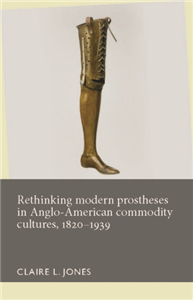
This book explores the development of modern transatlantic prosthetic industries in nineteenth and twentieth centuries and reveals how the co-alignment of medicine, industrial capitalism, and social norms shaped diverse lived experiences of prosthetic technologies and in turn, disability identities. Through case studies that focus on hearing aids, artificial tympanums, amplified telephones, artificial limbs, wigs and dentures, this book provides a new account of the historic relationship between prostheses, disability and industry. Essays draw on neglected source material, including patent records, trade literature and artefacts, to uncover the historic processes of commodification surrounding different prostheses and the involvement of neglected companies, philanthropists, medical practitioners, veterans, businessmen, wives, mothers and others in these processes.
Trusted Partner
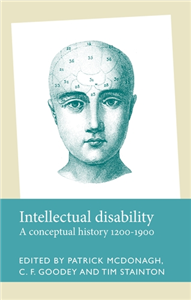
This collection explores the historical origins of our modern concepts of intellectual or learning disability. The essays, from some of the leading historians of ideas of intellectual disability, focus on British and European material from the Middle Ages to the late-nineteenth century and extend across legal, educational, literary, religious, philosophical and psychiatric histories. They investigate how precursor concepts and discourses were shaped by and interacted with their particular social, cultural and intellectual environments, eventually giving rise to contemporary ideas. The collection is essential reading for scholars interested in the history of intelligence, intellectual disability and related concepts, as well as in disability history generally.
Trusted Partner
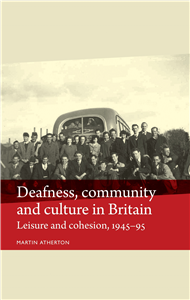
Setting a case study of deaf people's leisure practices in north-west England within a wider examination of communal deaf leisure across Britain, this book offers new insights into a misunderstood and misrepresented community. Available for the first time in paperback, the book provides a detailed analysis of deaf people's leisure during the second half of the twentieth century, which questions perceptions of deafness as a disability, investigates the importance of shared leisure in community formation more generally and examines the ways in which changing patterns of socialisation are affecting British society. Although focusing on the British deaf community, the concepts and principles explored in this book can be applied across a wide range of social, cultural and ethnic groups. This book draws upon a wide range of subject areas and will consequently be of interest to students and academics working in the fields of disability, history, community and cultural minority studies, sport, leisure and regional studies. ;
Trusted Partner

An electronic version of this book is also available under a Creative Commons (CC-BY-NC-ND) license, thanks to the support of the Wellcome Trust. The Industrial Revolution produced injury, illness and disablement on a large scale and nowhere was this more visible than in coalmining. Disability in the Industrial Revolution sheds new light on the human cost of industrialisation by examining the lives and experiences of those disabled in an industry that was vital to Britain's economic growth. Although it is commonly assumed that industrialisation led to increasing marginalisation of people with impairments from the workforce, disabled mineworkers were expected to return to work wherever possible, and new medical services developed to assist in this endeavour. This book explores the working lives of disabled miners and analyses the medical, welfare and community responses to disablement in the coalfields. It shows how disability affected industrial relations and shaped the class identity of mineworkers. The book will appeal to students and academics interested in disability, occupational health and social history.
Trusted Partner

Setting a case study of deaf people's leisure practices in north-west England within a wider examination of communal deaf leisure across Britain, this book offers new insights into a misunderstood and misrepresented community. The book provides a detailed analysis of deaf people's leisure during the second half of the twentieth century, which questions perceptions of deafness as a disability, investigates the importance of shared leisure in community formation more generally and examines the ways in which changing patterns of socialisation are affecting British society. Although focusing on the British deaf community, the concepts and principles explored in this book can be applied across a wide range of social, cultural and ethnic groups. This book draws upon a wide range of subject areas and will consequently be of interest to students and academics working in the fields of disability, history, community and cultural minority studies, sport, leisure and regional studies
Trusted Partner
Setting a case study of deaf people's leisure practices in north-west England within a wider examination of communal deaf leisure across Britain, this book offers new insights into a misunderstood and misrepresented community. The book provides a detailed analysis of deaf people's leisure during the second half of the twentieth century, which questions perceptions of deafness as a disability, investigates the importance of shared leisure in community formation more generally and examines the ways in which changing patterns of socialisation are affecting British society. Although focusing on the British deaf community, the concepts and principles explored in this book can be applied across a wide range of social, cultural and ethnic groups. This book draws upon a wide range of subject areas and will consequently be of interest to students and academics working in the fields of disability, history, community and cultural minority studies, sport, leisure and regional studies ;
Trusted Partner

The Industrial Revolution produced injury, illness and disablement on a large scale and nowhere was this more visible than in coalmining. Disability and industrial society 1780-1880 sheds new light on the human cost of industrialisation by examining the lives and experiences of those disabled in an industry that was vital to Britain's economic growth. Although it is commonly assumed that industrialisation led to increasing marginalisation of people with impairments from the workforce, disabled mineworkers were expected to return to work wherever possible, and new medical services developed to assist in this endeavour. This book explores the working lives of disabled miners and analyses the medical, welfare and community responses to disablement in the coalfields. It shows how disability affected industrial relations and shaped the class identity of mineworkers. The book will appeal to students and academics interested in disability, occupational health and social history.
Trusted Partner
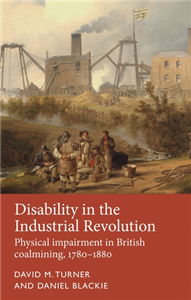
The Industrial Revolution produced injury, illness and disablement on a large scale and nowhere was this more visible than in coalmining. Disability and industrial society 1780-1880 sheds new light on the human cost of industrialisation by examining the lives and experiences of those disabled in an industry that was vital to Britain's economic growth. Although it is commonly assumed that industrialisation led to increasing marginalisation of people with impairments from the workforce, disabled mineworkers were expected to return to work wherever possible, and new medical services developed to assist in this endeavour. This book explores the working lives of disabled miners and analyses the medical, welfare and community responses to disablement in the coalfields. It shows how disability affected industrial relations and shaped the class identity of mineworkers. The book will appeal to students and academics interested in disability, occupational health and social history.
Trusted Partner
 Trusted Partner
 Trusted Partner
 Trusted Partner
 Trusted Partner
 Trusted Partner

This electronic version has been made available under a Creative Commons (BY-NC-ND) open access license. An electronic version of this book is also available under a Creative Commons (CC-BY-NC-ND) license, thanks to the support of the Wellcome Trust. Coalmining was a notoriously dangerous industry and many of its workers experienced injury and disease. However, the experiences of the many disabled people within Britain's most dangerous industry have gone largely unrecognised by historians. This book looks at British coal through the lens of disability, using an interdisciplinary approach to examine the lives of disabled miners and their families. A diverse range of sources are used to examine the economic, social, political and cultural impact of disability in the coal industry, looking beyond formal coal company and union records to include autobiographies, novels and existing oral testimony. It argues that, far from being excluded entirely from British industry, disability and disabled people were central to its development. The book will appeal to students and academics interested in disability history, disability studies, social and cultural history and representations of disability in literature.
Trusted Partner

Is deafness a disability to be prevented or the uniting trait of a cultural community to be preserved? Combining the history of eugenics and genetics with deaf and disability history, this book traces how American heredity researchers moved from trying to eradicate deafness to embracing it as a valuable cultural diversity. It looks at how deafness came to be seen as a hereditary phenomenon at all, how eugenics became part of progressive reform at schools for the deaf, and how, from the 1950s on, more sociocultural approaches to disability and minority led to new cooperative projects between professionals and local signing deaf communities. Analysing the transformative effects of exchange between researchers and objects of research, this book offers new insight to changing ideas about medical ethics, reproductive rights, the meaning of scientific progress and cultural diversity.
Trusted Partner
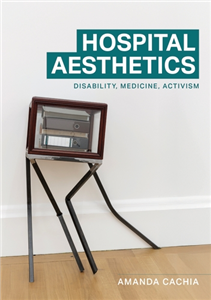
In Hospital aesthetics, Amanda Cachia introduces a broad array of contemporary artists who are engaging in relational aesthetic activism and socially engaged art practice. She analyzes practices in which artists are taking health and care into their own hands by making works that engage with the ever-subjective experience of being sick and ill. The first truly comprehensive monograph in critical disability studies to be grounded in a deep and scholarly understanding of modern and contemporary art practice, this work presents hospital aesthetics as a decolonizing gesture, wherein contemporary artists go against the tendency for the medical industrial complex to treat disabled bodies as specimens and, eventually, archives. Cachia aims to codify "hospitable aesthetics" as a category or genre of disability art that is more relevant now than ever before, as increasing numbers of artists turn to the hospital or doctor's office as a canvas, literally and symbolically.

