
Teaching, Language & Reference
April 2020


 Trusted Partner
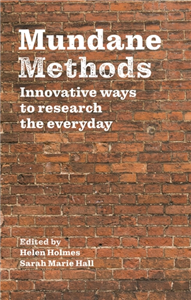
Mundane Methods is an innovative and original collection which will make a distinctive methodological and empirical contribution to research on the everyday. Bringing together a range of interdisciplinary approaches it provides a practical, hands-on approach for scholars interested in studying the mundane and exploring its potential. Divided into three key themes this volume explores methods for studying: materials and memories, emotions and senses, and mobilities and motion; with encounters, relationships, practices, spaces, temporalities and imaginaries cross-cutting throughout. In doing so, it draws on the work of a range of established and up-and-coming scholars researching the everyday, including human geographers, sociologists, anthropologists, urban planners, cartographers, and fashion historians. With empirical examples, practical tips, ethical considerations, and exercises.
Trusted Partner
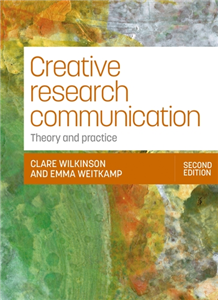
Creative Research Communication explores contemporary approaches to research communication and engagement, whilst examining the history and key debates in the field. Starting from the premise that researchers can and ought to participate in the public sphere, in any discipline, this book provides practical guidance and advice on engaging the public inclusively where they are, whether that is at the theatre, via policymakers, at a science festival or through citizen science. Researchers increasingly recognise the need to move away from one-size fits all and embrace opportunities for creative approaches to research communication. This book argues for a shift away from metrics and tick box approaches and towards approaches that work for individuals, in the context of their own discipline and interests, and with an inclusive approach. Through a combination of practical examples and theoretical context, it offers an accessible introduction to student and practitioner alike. This updated edition contains new chapters on inclusivity and professionalization, and all content has been thoroughly updated to reflect developments in the field, covering topics such as digital, intersectionality, activism, internet safety and reliability and decolonialisation of science.
Trusted Partner
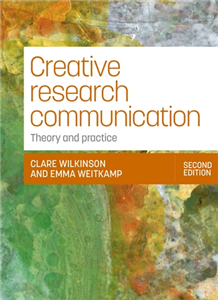
Creative Research Communication explores contemporary approaches to research communication and engagement, whilst examining the history and key debates in the field. Starting from the premise that researchers can and ought to participate in the public sphere, in any discipline, this book provides practical guidance and advice on engaging the public inclusively where they are, whether that is at the theatre, via policymakers, at a science festival or through citizen science. Researchers increasingly recognise the need to move away from one-size fits all and embrace opportunities for creative approaches to research communication. This book argues for a shift away from metrics and tick box approaches and towards approaches that work for individuals, in the context of their own discipline and interests, and with an inclusive approach. Through a combination of practical examples and theoretical context, it offers an accessible introduction to student and practitioner alike. This updated edition contains new chapters on inclusivity and professionalization, and all content has been thoroughly updated to reflect developments in the field, covering topics such as digital, intersectionality, activism, internet safety and reliability and decolonialisation of science.
Trusted Partner
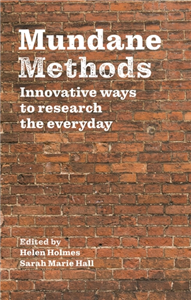
Mundane Methods is an innovative and original collection which will make a distinctive methodological and empirical contribution to research on the everyday. Bringing together a range of interdisciplinary approaches it provides a practical, hands-on approach for scholars interested in studying the mundane and exploring its potential. Divided into three key themes this volume explores methods for studying: materials and memories, emotions and senses, and mobilities and motion; with encounters, relationships, practices, spaces, temporalities and imaginaries cross-cutting throughout. In doing so, it draws on the work of a range of established and up-and-coming scholars researching the everyday, including human geographers, sociologists, anthropologists, urban planners, cartographers, and fashion historians. With empirical examples, practical tips, ethical considerations, and exercises.

