Your Search Results

      • Trusted Partner
        Humanities & Social Sciences
        January 2017

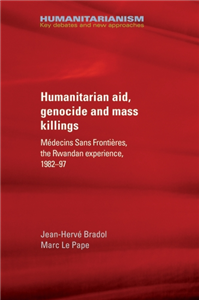
        Humanitarian aid, genocide and mass killings

        The Rwandan Experience

        by Jean-Hervé Bradol, Marc Le Pape, Bertrand Taithe

        Introduction: through the eyes of field teams' members 1. From the persecution of Kinyarwanda speakers in Uganda to the genocide of Rwandan Tutsis 2. Rwandan refugee camps in Tanzania and Zaire, 1994-5 3. The new Rwanda 4. Refugees on the run in war-torn Zaire, 1996-7 Epilogue: the effectiveness of aid in the face of repeated mass atrocities Index

      • Trusted Partner
        Humanities & Social Sciences
        January 2017

        Humanitarian aid, genocide and mass killings

        The Rwandan Experience

        by Jean-Hervé Bradol, Marc Le Pape, Bertrand Taithe

        Introduction: through the eyes of field teams' members 1. From the persecution of Kinyarwanda speakers in Uganda to the genocide of Rwandan Tutsis 2. Rwandan refugee camps in Tanzania and Zaire, 1994-5 3. The new Rwanda 4. Refugees on the run in war-torn Zaire, 1996-7 Epilogue: the effectiveness of aid in the face of repeated mass atrocities Index

      • Trusted Partner
        Humanities & Social Sciences
        April 2019

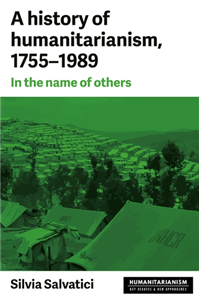
        A history of humanitarianism, 1775–1989

        In the name of others

        by Silvia Salvatici, Bertrand Taithe

        The book traces the history of international humanitarianism from the anti-slavery movement to the end of the cold war. It is based on an extensive survey of the international literature and is retold in an original narrative that relies on a close examination of the sources. The reconstruction of humanitarianism's long history unfolds around some crucial moments and events: the colonial expansion of European countries, the two world wars and their aftermaths, the emergence of a new postcolonial order. In terms of its contents, narrative style, interpretative approach the book is aimed at a large and diverse public including: scholars who are studying and teaching humanitarianism; students who need to learn about humanitarianism as part of their training or research; operators and volunteers who are engaged in the field; non-specialist readers who are interested in the topic because of its relevance to current events.

      • Trusted Partner
        Humanities & Social Sciences
        April 2019

        A history of humanitarianism, 1775–1989

        In the name of others

        by Silvia Salvatici, Bertrand Taithe

      • Trusted Partner
        Humanities & Social Sciences
        April 2019

        A history of humanitarianism, 1775–1989

        In the name of others

        by Silvia Salvatici, Bertrand Taithe

        The book traces the history of international humanitarianism from the anti-slavery movement to the end of the cold war. It is based on an extensive survey of the international literature and is retold in an original narrative that relies on a close examination of the sources. The reconstruction of humanitarianism's long history unfolds around some crucial moments and events: the colonial expansion of European countries, the two world wars and their aftermaths, the emergence of a new postcolonial order. In terms of its contents, narrative style, interpretative approach the book is aimed at a large and diverse public including: scholars who are studying and teaching humanitarianism; students who need to learn about humanitarianism as part of their training or research; operators and volunteers who are engaged in the field; non-specialist readers who are interested in the topic because of its relevance to current events.

      • Trusted Partner
      • Trusted Partner
      • Trusted Partner
      • Trusted Partner
      • Trusted Partner
        Humanities & Social Sciences
        October 2023

        Humanitarian extractivism

        The digital transformation of aid

        by Kristin Bergtora Sandvik

        This book investigates the digital transformation of aid as a form of humanitarian extractivism. It focuses on how practices of data extraction shift power towards states, the private sector and humanitarians. Digital initiatives aimed towards 'fixing' the humanitarian system, making it better and more secure, also create risk and harm for vulnerable individuals and communities. Central to the digital transformation of aid is the digital body - with digital identities becoming a prerequisite for receiving aid and protection - and the centralisation of vulnerability arising from enormous databases holding ever more humanitarian data. Cyber-attacks, human error and technological problems generate risks for humanitarians, but also mean that humanitarians themselves can put populations in need at risk. The book explores new humanitarian spaces and practices such as the humanitarian drone airspace, wearable innovation challenges and ethics in global disaster innovation labs.

      • Trusted Partner
        Humanities & Social Sciences
        October 2023

        Humanitarian extractivism

        The digital transformation of aid

        by Kristin Bergtora Sandvik

        This book investigates the digital transformation of aid as a form of humanitarian extractivism. It focuses on how practices of data extraction shift power towards states, the private sector and humanitarians. Digital initiatives aimed towards 'fixing' the humanitarian system, making it better and more secure, also create risk and harm for vulnerable individuals and communities. Central to the digital transformation of aid is the digital body - with digital identities becoming a prerequisite for receiving aid and protection - and the centralisation of vulnerability arising from enormous databases holding ever more humanitarian data. Cyber-attacks, human error and technological problems generate risks for humanitarians, but also mean that humanitarians themselves can put populations in need at risk. The book explores new humanitarian spaces and practices such as the humanitarian drone airspace, wearable innovation challenges and ethics in global disaster innovation labs.

      • Trusted Partner
        Humanities & Social Sciences
        October 2023

        Humanitarian extractivism

        The digital transformation of aid

        by Kristin Bergtora Sandvik

        This book investigates the digital transformation of aid as a form of humanitarian extractivism. It focuses on how practices of data extraction shift power towards states, the private sector and humanitarians. Digital initiatives aimed towards 'fixing' the humanitarian system, making it better and more secure, also create risk and harm for vulnerable individuals and communities. Central to the digital transformation of aid is the digital body - with digital identities becoming a prerequisite for receiving aid and protection - and the centralisation of vulnerability arising from enormous databases holding ever more humanitarian data. Cyber-attacks, human error and technological problems generate risks for humanitarians, but also mean that humanitarians themselves can put populations in need at risk. The book explores new humanitarian spaces and practices such as the humanitarian drone airspace, wearable innovation challenges and ethics in global disaster innovation labs.

      • Trusted Partner
        Humanities & Social Sciences
        October 2023

        Humanitarian extractivism

        The digital transformation of aid

        by Kristin Bergtora Sandvik

        This book investigates the digital transformation of aid as a form of humanitarian extractivism. It focuses on how practices of data extraction shift power towards states, the private sector and humanitarians. Digital initiatives aimed towards 'fixing' the humanitarian system, making it better and more secure, also create risk and harm for vulnerable individuals and communities. Central to the digital transformation of aid is the digital body - with digital identities becoming a prerequisite for receiving aid and protection - and the centralisation of vulnerability arising from enormous databases holding ever more humanitarian data. Cyber-attacks, human error and technological problems generate risks for humanitarians, but also mean that humanitarians themselves can put populations in need at risk. The book explores new humanitarian spaces and practices such as the humanitarian drone airspace, wearable innovation challenges and ethics in global disaster innovation labs.

      • Trusted Partner
        Humanities & Social Sciences
        May 2020

        A history of humanitarianism, 1755–1989

        In the name of others

        by Silvia Salvatici

        The book traces the history of international humanitarianism from the anti-slavery movement to the end of the cold war. It is based on an extensive survey of the international literature and is retold in an original narrative that relies on a close examination of the sources. The reconstruction of humanitarianism's long history unfolds around some crucial moments and events: the colonial expansion of European countries, the two world wars and their aftermaths, the emergence of a new postcolonial order. In terms of its contents, narrative style, interpretative approach the book is aimed at a large and diverse public including: scholars who are studying and teaching humanitarianism; students who need to learn about humanitarianism as part of their training or research; operators and volunteers who are engaged in the field; non-specialist readers who are interested in the topic because of its relevance to current events.

      • Trusted Partner
        Humanities & Social Sciences
        October 2023

        Humanitarianism and the Greater War, 1914–24

        by Elisabeth Piller, Neville Wylie

        This book provides fresh perspectives on a key period in the history of humanitarianism. Drawing on economic, cultural, social and diplomatic perspectives, it explores the scale and meaning of humanitarianism in the era of the Great War. Foregrounding the local and global dimensions of the humanitarian responses, it interrogates the entanglement of humanitarian and political interests and uncovers the motivations and agency of aid donors, relief workers and recipients. The chapters probe the limits of humanitarian engagement in a period of unprecedented violence and suffering and evaluate its long-term impact on humanitarian action.

      • Trusted Partner
        Humanities & Social Sciences
        October 2023

        Humanitarianism and the Greater War, 1914–24

        by Elisabeth Piller, Neville Wylie

        This book provides fresh perspectives on a key period in the history of humanitarianism. Drawing on economic, cultural, social and diplomatic perspectives, it explores the scale and meaning of humanitarianism in the era of the Great War. Foregrounding the local and global dimensions of the humanitarian responses, it interrogates the entanglement of humanitarian and political interests and uncovers the motivations and agency of aid donors, relief workers and recipients. The chapters probe the limits of humanitarian engagement in a period of unprecedented violence and suffering and evaluate its long-term impact on humanitarian action.

      • Trusted Partner
        Humanities & Social Sciences
        June 2025

        Humanitarianism and the Greater War, 1914–24

        by Elisabeth Piller, Neville Wylie

        This book provides fresh perspectives on a key period in the history of humanitarianism. Drawing on economic, cultural, social and diplomatic perspectives, it explores the scale and meaning of humanitarianism in the era of the Great War. Foregrounding the local and global dimensions of the humanitarian responses, it interrogates the entanglement of humanitarian and political interests and uncovers the motivations and agency of aid donors, relief workers and recipients. The chapters probe the limits of humanitarian engagement in a period of unprecedented violence and suffering and evaluate its long-term impact on humanitarian action.

      • Trusted Partner
        Business, Economics & Law
        May 2025

        Hierarchies and exclusion in humanitarianism

        by Clara Egger, Andrea Schneiker

        While humanitarians generally present themselves as 'do-gooders' and use this image to gather support and funding, this edited volume addresses hierarchies and exclusions in humanitarianism - an issue that has gained increased attention. Contributions analyse how hierarchies, power asymmetries and exclusion emerge, are maintained and can ultimately be challenged in humanitarian governance. Leading scholars on humanitarianism coming from a variety of disciplinary fields such as international relations, philosophy, organisational science and management, and sociology analyse exclusion dynamics at the individual, organisational and structural levels. Authors thereby combine data from a diverse range of methods, including ethnography, survey and statistical analysis. The volume informs current efforts to increase inclusiveness and equity in humanitarian practice.

      Subscribe to our

      newsletter