Your Search Results

      • Trusted Partner
        Political parties
        July 2013

        The French party system

        by Jocelyn Evans

      • Trusted Partner
        Political parties
        July 2013

        The ideology of the extreme right

        by Casse Mudde

      • Trusted Partner
        Political parties
        July 2013

        The ideology of the extreme right

        by Mudde

      • Trusted Partner
        Political parties
        July 2012

        The ideology of the extreme right

        by Mudde

      • Trusted Partner
        Political parties
        July 2013

        The Labour governments 1964–1970 volume 1

        Labour and cultural change

        by Steven Fielding

        This book looks at how the British Labour Party came to terms with the 1960's 'cultural revolution', specifically changes to: the class structure, place of women, black immigration, the generation gap and calls for direct political participation.

      • Trusted Partner
        Political parties
        July 2013

        The Labour governments 1964–1970 volume 1

        Labour and cultural change

        by Steven Fielding

        This book looks at how the British Labour Party came to terms with the 1960's 'cultural revolution', specifically changes to: the class structure, place of women, black immigration, the generation gap and calls for direct political participation.

      • Trusted Partner
        Political parties
        July 2012

        The Labour governments 1964–1970 volume 1

        Labour and cultural change

        by Steven Fielding

        This book looks at how the British Labour Party came to terms with the 1960's 'cultural revolution', specifically changes to: the class structure, place of women, black immigration, the generation gap and calls for direct political participation.

      • Trusted Partner
        Political parties
        July 2013

        The Labour Party and the world, volume 1

        by Rhiannon Vickers

        This is the first comprehensive study of the political ideology and history of the Labour Party's world-view and foreign policy. It argues that the development of Labour's foreign policy perspective should be seen not as the development of a socialist foreign policy but as an application of the ideas of liberal internationalism. The first volume outlines and assesses the early development and evolution of Labour's world-view. It then follows the course of the Labour party's foreign policy during a tumultuous period on the international stage, including the First World War, the Russian Revolution, the Spanish Civil War, the build up to and violent reality of the Second World War, and the start of the Cold War. This highly readable book provides an excellent analysis of Labour's foreign policy during the period in which Labour experienced power for the first time.

      • Trusted Partner
      • Trusted Partner
        Political parties
        July 2012

        The Labour Party and the world, volume 1

        by Rhiannon Vickers

        This is the first-ever critical work on Jack Rosenthal, the award-winning British television dramatist. His career began with Coronation Street in the 1960s and he became famous for his popular sitcoms, including The Lovers and The Dustbinmen. During what is often known as the 'golden age' of British television drama, Rosenthal wrote such plays as The Knowledge, The Chain, Spend, Spend, Spend and P'tang, Yang, Kipperbang, as well as the pilot for the series London's Burning. This study offers a close analysis of all Rosenthal's best-known works, drawing on archival material as well as interviews with his collaborators and cast members. The book places Rosenthal's plays in their historical and televisual context. It does so by tracing the events that informed his writing, ranging from his comic take on the 'permissive society' of the 1960s, through to the recession in the 1970s and Thatcherism in the 1980s. Rosenthal's distinctive brand of humour and its everyday surrealism is contrasted throughout with the work of his contemporaries, including Dennis Potter, Alan Bleasdale and Johnny Speight, and his influence on contemporary television and film is analysed. Rosenthal is not usually placed in the canon of Anglo-Jewish writing but the book argues this case by focusing on his prize-winning Plays for Today, The Evacuees and Bar Mitzvah Boy. This book will appeal to students and researchers in Television, Film and Cultural Studies, as well as those interested in contemporary drama and Jewish Studies.

      • Trusted Partner
        Humanities & Social Sciences
        November 2006

        The marketing of political parties

        Political marketing at the 2005 general election

        by Darren Lilleker, Nigel Jackson, Richard Scullion

        What is political marketing and how does it work? This question sits at the heart of this book. Using the British General Election of 2005 as a case study, this collection focuses on three important elements: the products offered by the parties; the campaign communication; and the perceptions, reactions and attitudes of the voters. Within each chapter is a discussion of the role of marketing in constructing the elements of an election campaign, how marketing informs the communicational aspects and how the strategy is perceived by the voters. This analysis, the first of its kind, allows us to understand how marketing informs the disparate elements of a campaign to understand if politics has entered a market-oriented phase. The book raises a number of important questions, particularly the extent to which marketing has become the new political ideology, and what affect this is having on the voter perceptions of the parties. ;

      • Trusted Partner
        Humanities & Social Sciences
        September 2012

        Defectors and the Liberal Party 1910–2010

        A study of inter-party relationships

        by Alun Wyburn-Powell

        This book is the first analysis of political defections over a long time span. It investigates all the Liberal/Liberal Democrat MPs and former MPs who defected from the party between the elections of December 1910 and May 2010 - around one sixth of all those elected - as well as the smaller number of inward defectors. Each of the 122 defections was an expert judgment on the state of the party at a specific date. The research investigates the timing and reasons for all the defections and reveals long-term trends and underlying causes and apportions responsibility between leaders for them. The author finds some significant differences which distinguished defectors from loyalists and draws wider conclusions about the underlying factors which lead MPs to defect. This book will be of interest to students and lecturers of British politics and anyone interested in the relationship between British political parties in the last century. ;

      • Trusted Partner
        Political parties
        September 2014

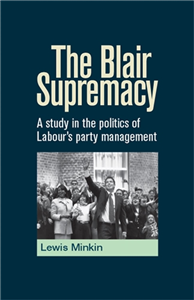
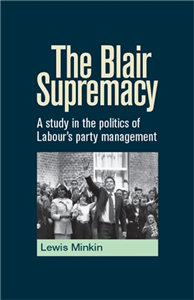
        The Blair Supremacy

        A study in the politics of Labour's party management

        by Lewis Minkin

        Lewis Minkin has immense experience of the Labour Party and has acted as adviser to two major internal reviews of the internal party organisation. As the author of two widely acclaimed and original studies on the Labour Party, The Labour Party Conference and The Contentious Alliance, he possesses an unrivalled grasp of the subtleties and nuances of Labour's internal relationships. The Blair Supremacy is groundbreaking in its investigation of the processes, methods, character and politics of party management, during a period when Blair strengthened his own position as he and his allies and managers drove the party through a ferment of new developments under the name 'New Labour'. For this book Minkin has been able to draw on a wealth of sources unavailable to other scholars. What is uncovered here is revealing and at times startling. It includes an extensive covert internal organisation, a culture which facilitated manipulation and what can be described as a rolling coup. These developments are rigorously and critically examined with a strong focus on three fundamental questions: How were these changes achieved? Was it, as it was often represented, a complete supremacy? Why did it end so badly with Blair being forced, in effect, to step down? The study challenges many misconceptions and sheds new light on the Blair legacy and on the intense controversies surrounding him. It also adds greatly to our understanding of some acute contemporary problems in British political life.

      • Trusted Partner
        Political parties
        April 2014

        The Blair Supremacy

        A study in the politics of Labour's party management

        by Lewis Minkin

        Lewis Minkin has immense experience of the Labour Party and has acted as adviser to two major internal reviews of the internal party organisation. As the author of two widely acclaimed and original studies on the Labour Party, The Labour Party Conference and The Contentious Alliance, he possesses an unrivalled grasp of the subtleties and nuances of Labour's internal relationships. The Blair Supremacy is groundbreaking in its investigation of the processes, methods, character and politics of party management, during a period when Blair strengthened his own position as he and his allies and managers drove the party through a ferment of new developments under the name 'New Labour'. For this book Minkin has been able to draw on a wealth of sources unavailable to other scholars. What is uncovered here is revealing and at times startling. It includes an extensive covert internal organisation, a culture which facilitated manipulation and what can be described as a rolling coup. These developments are rigorously and critically examined with a strong focus on three fundamental questions: How were these changes achieved? Was it, as it was often represented, a complete supremacy? Why did it end so badly with Blair being forced, in effect, to step down? The study challenges many misconceptions and sheds new light on the Blair legacy and on the intense controversies surrounding him. It also adds greatly to our understanding of some acute contemporary problems in British political life.

      • Trusted Partner
        Political parties
        April 2014

        The Blair Supremacy

        A study in the politics of Labour's party management

        by Lewis Minkin

        Lewis Minkin has immense experience of the Labour Party and has acted as adviser to two major internal reviews of the internal party organisation. As the author of two widely acclaimed and original studies on the Labour Party, The Labour Party Conference and The Contentious Alliance, he possesses an unrivalled grasp of the subtleties and nuances of Labour's internal relationships. The Blair Supremacy is groundbreaking in its investigation of the processes, methods, character and politics of party management, during a period when Blair strengthened his own position as he and his allies and managers drove the party through a ferment of new developments under the name 'New Labour'. For this book Minkin has been able to draw on a wealth of sources unavailable to other scholars. What is uncovered here is revealing and at times startling. It includes an extensive covert internal organisation, a culture which facilitated manipulation and what can be described as a rolling coup. These developments are rigorously and critically examined with a strong focus on three fundamental questions: How were these changes achieved? Was it, as it was often represented, a complete supremacy? Why did it end so badly with Blair being forced, in effect, to step down? The study challenges many misconceptions and sheds new light on the Blair legacy and on the intense controversies surrounding him. It also adds greatly to our understanding of some acute contemporary problems in British political life.

      • Trusted Partner
        Political parties
        November 2014

        The Conservative Party and the extreme right 1945–1975

        by Mark Pitchford

        This book, newly available in paperback, reveals the Conservative Party's relationship with the extreme right between 1945 and 1975. For the first time, this book shows how the Conservative Party, realising that its well known pre-Second World War connections with the extreme right were now embarrassing, used its bureaucracy to implement a policy of investigating extreme right groups and taking action to minimise their chances of success. The book focuses on the Conservative Party's investigation of right-wing groups, and shows how its perception of their nature determined the party bureaucracy's response. The book draws a comparison between the Conservative Party machine's negative attitude towards the extreme right and its support for progressive groups. It concludes that the Conservative Party acted as a persistent block to the external extreme right in a number of ways, and that the Party bureaucracy persistently denied the extreme right within the party assistance access to funds and representation within party organisations. It reaches a climax with the formulation of a 'plan' threatening its own candidate if he failed to remove the extreme right from the Conservative Monday Club.

      • Trusted Partner
        Political parties
        July 2013

        The Conservative Party and the extreme right 1945–1975

        by Mark Pitchford

        This book reveals the Conservative Party's relationship with the extreme right between 1945 and 1975. For the first time, this book shows how the Conservative Party, realising that its well known pre-Second World War connections with the extreme right were now embarrassing, used its bureaucracy to implement a policy of investigating extreme right groups and taking action to minimise their chances of success. The book focuses on the Conservative Party's investigation of right-wing groups, and shows how its perception of their nature determined the party bureaucracy's response. The book draws a comparison between the Conservative Party machine's negative attitude towards the extreme right and its support for progressive groups. It concludes that the Conservative Party acted as a persistent block to the external extreme right in a number of ways, and that the Party bureaucracy persistently denied the extreme right within the party assistance, access to funds, and representation within party organisations. It reaches a climax with the formulation of 'plan' threatening its own candidate if he failed to remove the extreme right from the Conservative Monday Club.

      • Trusted Partner
        Political parties
        July 2013

        The Conservative Party and the extreme right 1945–1975

        by Mark Pitchford

        This book reveals the Conservative Party's relationship with the extreme right between 1945 and 1975. For the first time, this book shows how the Conservative Party, realising that its well known pre-Second World War connections with the extreme right were now embarrassing, used its bureaucracy to implement a policy of investigating extreme right groups and taking action to minimise their chances of success. The book focuses on the Conservative Party's investigation of right-wing groups, and shows how its perception of their nature determined the party bureaucracy's response. The book draws a comparison between the Conservative Party machine's negative attitude towards the extreme right and its support for progressive groups. It concludes that the Conservative Party acted as a persistent block to the external extreme right in a number of ways, and that the Party bureaucracy persistently denied the extreme right within the party assistance, access to funds, and representation within party organisations. It reaches a climax with the formulation of 'plan' threatening its own candidate if he failed to remove the extreme right from the Conservative Monday Club.

      Subscribe to our

      newsletter