Your Search Results

      • Trusted Partner
        Humanities & Social Sciences
        December 2016

        Intelligence, security and the Attlee governments, 1945–51

        An uneasy relationship?

        by Daniel Lomas

        Introduction 1. Wartime apprenticeship: Labour and intelligence during the Second World War 2. Lacking intelligence? British intelligence, ministers and the Soviet Union 3. The Cold War heats up: propaganda and subversion, 1945-8 4. Britain's secret Cold War offensive: ministers, subversion and special operations, 1948-51 5. The special relationship? Ministers, atomic espionage and Anglo-American relations 6. Defending the realm: Labour ministers, vetting and subversion 7. Empire, Commonwealth and security Conclusion: intelligence and the Labour governments, 1945-51 Index

      • Trusted Partner
        Humanities & Social Sciences
        November 2016

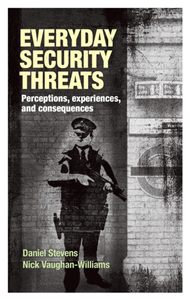
        Everyday security threats

        Perceptions, experiences, and consequences

        by Daniel Stevens, Nick Vaughan-Williams

        This book explores citizens' perceptions and experiences of security threats in contemporary Britain, based on twenty focus groups and a large sample survey conducted between April and September 2012. The data is used to investigate the extent to which a diverse public shares government framings of the most pressing security threats, to assess the origins of perceptions of security threats, to investigate what makes some people feel more threatened than others, to examine the effects of threats on other areas of politics and to evaluate the effectiveness of government messages about security threats. We demonstrate widespread heterogeneity in perceptions of issues as security threats and in their origins, with implications for the extent to which shared understandings of threats are an attainable goal. While this study focuses on the British case, it seeks to make broader theoretical and methodological contributions to Political Science, International Relations, Political Psychology, and Security Studies.

      • Trusted Partner
        Humanities & Social Sciences
        July 2018

        Defending Britain in uncertain times

        by Michael Clarke, Bill Jones

        An analysis that takes the complexity of British defence policy apart to view its anatomy and show how policy is made in this area. British defence policy is in a phase of great transition as the country confronts its Brexit future and also as world politics becomes more threatening and potentially unstable. This book uses the most up to date information to examine in a concise and readable way all the elements that go to make up Britain's defence policy as it goes through the most significant transition since the end of the Cold War in 1991. By analyzing the costs of defence, the equipment issues, the personnel, the technical and intelligence back-up for it, and the strategies to employ military forces, this book offers a brief but rich guide to understanding an area of policy that many people find baffling.

      • Trusted Partner
        Humanities & Social Sciences
        July 2018

        Defending Britain in uncertain times

        by Michael Clarke, Bill Jones

      • Trusted Partner
        Humanities & Social Sciences
        November 2016

        Everyday security threats

        Perceptions, experiences, and consequences

        by Daniel Stevens, Nick Vaughan-Williams

        This book explores citizens' perceptions and experiences of security threats in contemporary Britain, based on twenty focus groups and a large sample survey conducted between April and September 2012. The data is used to investigate the extent to which a diverse public shares government framings of the most pressing security threats, to assess the origins of perceptions of security threats, to investigate what makes some people feel more threatened than others, to examine the effects of threats on other areas of politics and to evaluate the effectiveness of government messages about security threats. We demonstrate widespread heterogeneity in perceptions of issues as security threats and in their origins, with implications for the extent to which shared understandings of threats are an attainable goal. While this study focuses on the British case, it seeks to make broader theoretical and methodological contributions to Political Science, International Relations, Political Psychology, and Security Studies.

      • Trusted Partner
        Humanities & Social Sciences
        May 2019

        Everyday security threats

        Perceptions, experiences, and consequences

        by Daniel Stevens, Nick Vaughan-Williams

        This book explores citizens' perceptions and experiences of security threats in contemporary Britain, based on twenty focus groups and a large sample survey conducted between April and September 2012. The data is used to investigate the extent to which a diverse public shares government framings of the most pressing security threats, to assess the origins of perceptions of security threats, to investigate what makes some people feel more threatened than others, to examine the effects of threats on other areas of politics and to evaluate the effectiveness of government messages about security threats. We demonstrate widespread heterogeneity in perceptions of issues as security threats and in their origins, with implications for the extent to which shared understandings of threats are an attainable goal. While this study focuses on the British case, it seeks to make broader theoretical and methodological contributions to Political Science, International Relations, Political Psychology, and Security Studies.

      • Trusted Partner
        Humanities & Social Sciences
        December 2016

        Intelligence, security and the Attlee governments, 1945–51

        An uneasy relationship?

        by Daniel Lomas

        Introduction 1. Wartime apprenticeship: Labour and intelligence during the Second World War 2. Lacking intelligence? British intelligence, ministers and the Soviet Union 3. The Cold War heats up: propaganda and subversion, 1945-8 4. Britain's secret Cold War offensive: ministers, subversion and special operations, 1948-51 5. The special relationship? Ministers, atomic espionage and Anglo-American relations 6. Defending the realm: Labour ministers, vetting and subversion 7. Empire, Commonwealth and security Conclusion: intelligence and the Labour governments, 1945-51 Index

      • Trusted Partner
        Humanities & Social Sciences
        May 2020

        The challenge of defending Britain

        by Michael Clarke, Bill Jones

        An analysis that takes the complexity of British defence policy apart to view its anatomy and show how policy is made in this area. British defence policy is in a phase of great transition as the country confronts its Brexit future and also as world politics becomes more threatening and potentially unstable. This book uses the most up to date information to examine in a concise and readable way all the elements that go to make up Britain's defence policy as it goes through the most significant transition since the end of the Cold War in 1991. By analysing the costs of defence, the equipment issues, the personnel, the technical and intelligence back-up for it, and the strategies to employ military forces, this book offers a brief but rich guide to understanding an area of policy that many people find baffling.

      • Trusted Partner
        Humanities & Social Sciences
        May 2020

        The challenge of defending Britain

        by Michael Clarke, Bill Jones

        An analysis that takes the complexity of British defence policy apart to view its anatomy and show how policy is made in this area. British defence policy is in a phase of great transition as the country confronts its Brexit future and also as world politics becomes more threatening and potentially unstable. This book uses the most up to date information to examine in a concise and readable way all the elements that go to make up Britain's defence policy as it goes through the most significant transition since the end of the Cold War in 1991. By analysing the costs of defence, the equipment issues, the personnel, the technical and intelligence back-up for it, and the strategies to employ military forces, this book offers a brief but rich guide to understanding an area of policy that many people find baffling.

      • Trusted Partner
        Humanities & Social Sciences
        April 2022

        Russian grand strategy in the era of global power competition

        by Andrew Monaghan, Richard Connolly

        This book offers a nuanced and detailed examination of two of the most important current debates about contemporary Russia's international activity: is Moscow acting strategically or opportunistically, and should this be understood in regional or global terms? Monaghan addresses core themes of Russian activity - military, energy and economic - incorporating both regional and thematic specialist expertise to offer an innovative, multi-disciplinary analysis. Underpinned by detailed analyses of the revolution in Russian geospatial capabilities and the establishment of a strategic planning foundation, the book includes chapters on military and maritime strategies, energy security and economic diversification and influence. This serves to highlight the connections between military and economic interests that shape and drive Russian strategy.

      • Trusted Partner
        Humanities & Social Sciences
        April 2022

        Russian grand strategy in the era of global power competition

        by Andrew Monaghan, Richard Connolly

        This book offers a nuanced and detailed examination of two of the most important current debates about contemporary Russia's international activity: is Moscow acting strategically or opportunistically, and should this be understood in regional or global terms? The book addresses core themes of Russian activity - military, energy and economic - but it offers an unusual multi-disciplinary analysis to these themes. Monaghan incorporates both regional and thematic specialist expertise to give a fresh perspective to each of these core themes. Underpinned by detailed analyses of the revolution in Russian geospatial capabilities and the establishment of a strategic planning foundation, the book includes chapters on military and maritime strategies, energy security and economic diversification and influence. This serves to highlight the connections between military and economic interests that shape and drive Russian strategy.

      • Trusted Partner
        Humanities & Social Sciences
        April 2022

        Russian grand strategy in the era of global power competition

        by Andrew Monaghan, Richard Connolly

        This book offers a nuanced and detailed examination of two of the most important current debates about contemporary Russia's international activity: is Moscow acting strategically or opportunistically, and should this be understood in regional or global terms? The book addresses core themes of Russian activity - military, energy and economic - but it offers an unusual multi-disciplinary analysis to these themes. Monaghan incorporates both regional and thematic specialist expertise to give a fresh perspective to each of these core themes. Underpinned by detailed analyses of the revolution in Russian geospatial capabilities and the establishment of a strategic planning foundation, the book includes chapters on military and maritime strategies, energy security and economic diversification and influence. This serves to highlight the connections between military and economic interests that shape and drive Russian strategy.

      • Trusted Partner
        Humanities & Social Sciences
        June 2023

        The sea in Russian strategy

        by Andrew Monaghan, Richard Connolly

        For the first two decades after the Cold War, Russian naval power hardly featured in the Euro-Atlantic community's strategic thinking. This began to change in the mid-2010s, as the idea that the Russian navy poses a threat to NATO began to gain ground. That threat took shockingly real form in February 2022, when Moscow launched its invasion of Ukraine. The sea in Russian strategy is the first sustained examination of Russian maritime power in the period since the fall of the Soviet Union. It brings together leading specialists from public policy and academia to reflect on historical and contemporary aspects of Russia's naval strategy and capacities. At a time of mounting tensions, which some observers have named the 'Fourth Battle of the Atlantic', the book offers an informed and nuanced discussion, taking into account the view from Moscow and how this differs from western perspectives. It sketches a trajectory of Russia's power at sea and reflects on current capabilities and problems, as well as Moscow's strategic planning for the future.

      • Trusted Partner
        Humanities & Social Sciences
        June 2023

        The sea in Russian strategy

        by Andrew Monaghan, Richard Connolly

        For the first two decades after the Cold War, Russian naval power hardly featured in the Euro-Atlantic community's strategic thinking. This began to change in the mid-2010s, as the idea that the Russian navy poses a threat to NATO began to gain ground. That threat took shockingly real form in February 2022, when Moscow launched its invasion of Ukraine. The sea in Russian strategy is the first sustained examination of Russian maritime power in the period since the fall of the Soviet Union. It brings together leading specialists from public policy and academia to reflect on historical and contemporary aspects of Russia's naval strategy and capacities. At a time of mounting tensions, which some observers have named the 'Fourth Battle of the Atlantic', the book offers an informed and nuanced discussion, taking into account the view from Moscow and how this differs from western perspectives. It sketches a trajectory of Russia's power at sea and reflects on current capabilities and problems, as well as Moscow's strategic planning for the future.

      • Trusted Partner
        Humanities & Social Sciences
        November 2024

        Blitzkrieg and the Russian art of war

        by Andrew Monaghan

        Russian strategy today is often framed in terms of 'hybridity', an approach characterised by interference in domestic politics through cyber warfare and disinformation campaigns. Such asymmetric measures are seen as part of a shift away from armed violence towards political subversion and other non-military tools. Moving beyond the concept of hybridity, this book looks more broadly at Russian thinking about warfare. Drawing directly on Russian sources, it reflects on a series of questions that are generally overlooked in the existing Euro-Atlantic literature about Russia, notably: what is the military leadership's distinctive idea of twenty-first-century blitzkrieg? How does it understand holistic territorial defence? And how does it manage the shifting balance between the offensive and defensive? Exploring key concepts and terms used in Russian military thinking and action, Blitzkrieg and the art of Russian war contributes to an active and lively debate about Russia's resurgent role in international affairs and the challenge the country poses to the international order.

      • Trusted Partner
        Humanities & Social Sciences
        November 2024

        Blitzkrieg and the Russian art of war

        by Andrew Monaghan

        Russian strategy today is often framed in terms of 'hybridity', an approach characterised by interference in domestic politics through cyber warfare and disinformation campaigns. Such asymmetric measures are seen as part of a shift away from armed violence towards political subversion and other non-military tools. Moving beyond the concept of hybridity, this book looks more broadly at Russian thinking about warfare. Drawing directly on Russian sources, it reflects on a series of questions that are generally overlooked in the existing Euro-Atlantic literature about Russia, notably: what is the military leadership's distinctive idea of twenty-first-century blitzkrieg? How does it understand holistic territorial defence? And how does it manage the shifting balance between the offensive and defensive? Exploring key concepts and terms used in Russian military thinking and action, Blitzkrieg and the art of Russian war contributes to an active and lively debate about Russia's resurgent role in international affairs and the challenge the country poses to the international order.

      • Trusted Partner
        Humanities & Social Sciences
        September 2021

        Counter-terrorism and civil society

        Post-9/11 progress and challenges

        by Scott N. Romaniuk, Emeka Thaddues Njoku

        This book examines the intersection between national and international counter-terrorism policies and civil society in numerous national and regional contexts. The 9/11 terrorist attacks against the United States in 2001 led to new waves of scholarship on the proliferation of terrorism and efforts to combat international terrorist groups, organizations, and networks. Civil society organisations have been accused of serving as ideological grounds for the recruitment of potential terrorists and a channel for terrorist financing. Consequently, states around the world have established new ranges of counter-terrorism measures that target the operations of civil society organisations exclusively. Security practices by states have become a common trend and have assisted in the establishment of 'best practices' among non-liberal democratic or authoritarian states, and are deeply entrenched in their security infrastructures. In developing or newly democratized states - those deemed democratically weak or fragile - these exceptional securities measures are used as a cover for repressing opposition groups, considered by these states as threats to their national security and political power apparatuses. This timely volume provides a detailed examination of the interplay of counter-terrorism and civil society, offering a critical discussion of the enforcement of global security measures by governments around the world.

      • Trusted Partner
        Humanities & Social Sciences
        September 2021

        Counter-terrorism and civil society

        Post-9/11 progress and challenges

        by Scott N. Romaniuk, Emeka Thaddues Njoku

        This book examines the intersection between national and international counter-terrorism policies and civil society in numerous national and regional contexts. The 9/11 terrorist attacks against the United States in 2001 led to new waves of scholarship on the proliferation of terrorism and efforts to combat international terrorist groups, organizations, and networks. Civil society organisations have been accused of serving as ideological grounds for the recruitment of potential terrorists and a channel for terrorist financing. Consequently, states around the world have established new ranges of counter-terrorism measures that target the operations of civil society organisations exclusively. Security practices by states have become a common trend and have assisted in the establishment of 'best practices' among non-liberal democratic or authoritarian states, and are deeply entrenched in their security infrastructures. In developing or newly democratized states - those deemed democratically weak or fragile - these exceptional securities measures are used as a cover for repressing opposition groups, considered by these states as threats to their national security and political power apparatuses. This timely volume provides a detailed examination of the interplay of counter-terrorism and civil society, offering a critical discussion of the enforcement of global security measures by governments around the world.

      Subscribe to our

      newsletter