Your Search Results

      • Trusted Partner
        Humanities & Social Sciences
        June 2017

        Conflict, peace and mental health

        Addressing the consequences of conflict and trauma in Northern Ireland

        by David Bolton

        What are the human consequences of conflict and what are the appropriate service responses? This book seeks to provide an answer to these important questions drawing upon over 25 years work by the author in Northern Ireland and elsewhere. Focussing on the work undertaken following the Omagh bombing the book describes how needs were assessed and understood, how evidence-based services were put in place and the training and education programmes that were developed to assist first those communities affected by the Omagh bombing and later the wider population affected by the years of conflict. The author places the mental health needs of conflict affected communities at the heart of the political and peace processes that follow. This is a practical book and will be of particular interest to those planning for and responding to conflict-related disasters, policy makers, service commissioners and providers, politicians, civil servants and peace makers.

      • Trusted Partner
        Humanities & Social Sciences
        June 2017

        Conflict, peace and mental health

        Addressing the consequences of conflict and trauma in Northern Ireland

        by David Bolton

        What are the human consequences of conflict and what are the appropriate service responses? This book seeks to provide an answer to these important questions, drawing on over twenty-five years of work by the author in Northern Ireland and elsewhere. Focusing on the work undertaken following the Omagh bombing, the book describes how needs were assessed and understood, how evidence-based services were put in place, and the training and education programmes that were developed to assist first those communities affected by the bombing and later the wider population affected by the years of conflict. The author places the mental-health needs of affected communities at the heart of the political and peace processes that follow. This is a practical book and will be of particular interest to those planning for and responding to conflict-related disasters, policy makers, service commissioners and providers, politicians, civil servants and peace makers.

      • Trusted Partner
        Literature & Literary Studies
        April 2020

        Samuel Beckett and trauma

        by Mariko Hori Tanaka, Yoshiki Tajiri, Michiko Tsushima

        Samuel Beckett and trauma is the first book that specifically addresses the question of trauma in Beckett, taking into account the recent rise of trauma studies in literature. Beckett is an author whose works are strongly related to the psychological and historical trauma of our age. His works not only explore the multifarious aspects of trauma but also radically challenge our conception of trauma itself by the unique syntax of language, aesthetics of fragmentation, bodily malfunctions and the creation of void. Instead of simply applying current trauma theories to Beckett, this book provides new perspectives that will expand and alter them by employing other theoretical frameworks in literature, theatre, art, philosophy and psychoanalysis. It will inspire anybody interested in literature and trauma, including specialists and students working on twentieth-century world literature, comparative studies, trauma studies and theatre /art.

      • Trusted Partner
        Teaching, Language & Reference
        September 2025

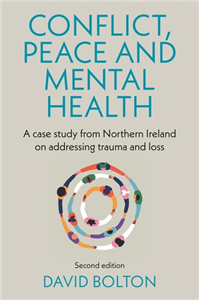
        Conflict, peace and mental health

        A case study from Northern Ireland on addressing trauma and loss: Second edition

        by David Bolton

        A powerful guide for dealing with traumatised communities in the wake of conflict and disaster. What are the human consequences of conflict, and how should healthcare and social services respond? In this book, David Bolton provides an answer to these urgent questions, drawing on more than twenty-five years of service experience in Northern Ireland and elsewhere. Focusing on the work he undertook with colleagues following the devastating Omagh bombing in 1998, Bolton reveals how needs were assessed and how evidence-based services were put in place. He describes the training and education programmes that were developed to assist first those communities directly affected by the bombing and later the wider population traumatised by the years of conflict. Crucially, he places the mental-health needs of affected communities at the heart of the political and peace processes that follow. The second edition of this clear and practical book includes new chapters on the challenges of promoting justice and reconciliation in a post-conflict situation. It is essential reading for those planning for and responding to conflict-related disasters, policy makers, service commissioners and providers, politicians, civil servants and peace makers.

      • Trusted Partner
        Teaching, Language & Reference
        September 2025

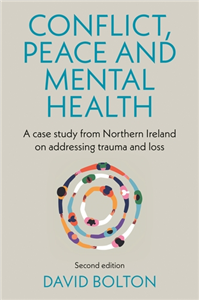
        Conflict, peace and mental health

        A case study from Northern Ireland on addressing trauma and loss: Second edition

        by David Bolton

        A powerful guide for dealing with traumatised communities in the wake of conflict and disaster. What are the human consequences of conflict, and how should healthcare and social services respond? In this book, David Bolton provides an answer to these urgent questions, drawing on more than twenty-five years of service experience in Northern Ireland and elsewhere. Focusing on the work he undertook with colleagues following the devastating Omagh bombing in 1998, Bolton reveals how needs were assessed and how evidence-based services were put in place. He describes the training and education programmes that were developed to assist first those communities directly affected by the bombing and later the wider population traumatised by the years of conflict. Crucially, he places the mental-health needs of affected communities at the heart of the political and peace processes that follow. The second edition of this clear and practical book includes new chapters on the challenges of promoting justice and reconciliation in a post-conflict situation. It is essential reading for those planning for and responding to conflict-related disasters, policy makers, service commissioners and providers, politicians, civil servants and peace makers.

      • Trusted Partner
        Literature & Literary Studies
        April 2026

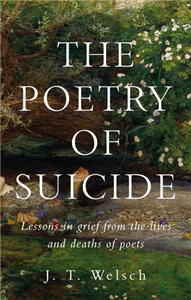
        The poetry of suicide

        Lessons in grief from the lives and deaths of poets

        by J. T. Welsch

        A profound exploration of the connection between poetry and suicide. 'Suicides have a special language,' Anne Sexton wrote in her 1964 poem 'Wanting to Die'. But is it a language we can learn to read? In The poetry of suicide, J. T. Welsch interweaves stories of poets who took their own lives with the long history of suicide in his own family, searching for a new way of understanding these difficult deaths. Beginning with Hamlet's 'To be or not to be?', he delves into the work of Dante, Sylvia Plath, Vladimir Mayakovsky and others, asking what it can teach us about suicide's messy reality. Suicide is more like poetry than we realise, Welsch argues. Both are filled with ambiguities, contradictions and unknowable intentions. Both demand and resist interpretation. Recovering the personal dimension often lost in our medicalised public discourse, Welsch finds practical ways of confronting suicide's poem-like difficulties.

      Subscribe to our

      newsletter