Your Search Results

      • Trusted Partner
        Literature & Literary Studies
        August 2017

        Literature and sustainability

        Concept, text and culture

        by Adeline Johns-Putra, John Parham, Louise Squire

        How might literary scholarship engage with the sustainability debate? Aimed at research scholars and advanced students in literary and environmental studies, this collection brings together twelve essays by leading and up-coming scholars on the theme of literature and sustainability. In today's sociopolitical world, sustainability has become a ubiquitous term, yet one potentially driven to near meaninglessness by the extent of its usage. While much has been written on sustainability in various domains, this volume sets out to foreground the contributions literary scholarship might make to notions of sustainability, both as an idea with a particular history and as an attempt to reconceptualise the way we live. Essays in this volume take a range of approaches, using the tools of literary analysis to interrogate sustainability's various paradoxes and to examine how literature in its various forms might envisage notions of sustainability.

      • Trusted Partner
        Literature & Literary Studies
        May 2021

        Writing on sheep

        Ecology, the animal turn and sheep in poetry

        by William Welstead

        Sheep are marginalised in literary criticism and in discussion of pastoral literature. This book brings an animal studies approach to poetry about sheep that allows for the agency of these sentient beings, that have been associated for humans over ten thousand years. This approach highlights the distinction between wild and domesticated species and the moral dilemma between the goals of animal welfare and those of saving species from extinction. Discussion of mostly contemporary poetry follows a new reading of works from the pastoral and georgic canon. Allowing for the sentience and sociality of this species makes it easier to imagine a natureculture within which to make kin across the species boundary. Reading poetry about sheep has the power to make new meanings as we try to adapt to an increasingly complex and problematic environment.

      • Trusted Partner
        Literature & Literary Studies
        May 2021

        Writing on sheep

        Ecology, the animal turn and sheep in poetry

        by William Welstead

        Sheep are marginalised in literary criticism and in discussion of pastoral literature. This book brings an animal studies approach to poetry about sheep that allows for the agency of these sentient beings, that have been associated for humans over ten thousand years. This approach highlights the distinction between wild and domesticated species and the moral dilemma between the goals of animal welfare and those of saving species from extinction. Discussion of mostly contemporary poetry follows a new reading of works from the pastoral and georgic canon. Allowing for the sentience and sociality of this species makes it easier to imagine a natureculture within which to make kin across the species boundary. Reading poetry about sheep has the power to make new meanings as we try to adapt to an increasingly complex and problematic environment.

      • Trusted Partner
        Literature & Literary Studies
        May 2021

        Writing on sheep

        Ecology, the animal turn and sheep in poetry

        by William Welstead

        Sheep are marginalised in literary criticism and in discussion of pastoral literature. This book brings an animal studies approach to poetry about sheep that allows for the agency of these sentient beings, that have been associated for humans over ten thousand years. This approach highlights the distinction between wild and domesticated species and the moral dilemma between the goals of animal welfare and those of saving species from extinction. Discussion of mostly contemporary poetry follows a new reading of works from the pastoral and georgic canon. Allowing for the sentience and sociality of this species makes it easier to imagine a natureculture within which to make kin across the species boundary. Reading poetry about sheep has the power to make new meanings as we try to adapt to an increasingly complex and problematic environment.

      • Trusted Partner
        Humanities & Social Sciences
        October 2023

        Visualising far-right environments

        Communication and the politics of nature

        by Bernhard Forchtner

        This volume presents ground-breaking analyses of how the far right represents natural environments and environmentalism around the globe. Images are not simply pervasive in our increasingly visual culture - they are a means of proposing worlds to viewers. Accordingly, the book approaches the visual not as something 'extra' or 'illustrative' but as a key means of producing identities and 'doing politics'. Putting visuality centre stage and covering political parties and non-party actors in Africa, Asia, Australia and New Zealand, Europe and the United States, contributors demonstrate the various ways in which the far right articulates natural environments and the rampant environmental crises of the twenty-first century, providing essential insights into such multifaceted politics.

      • Trusted Partner
        Humanities & Social Sciences
        October 2023

        Visualising far-right environments

        Communication and the politics of nature

        by Bernhard Forchtner

        This volume presents ground-breaking analyses of how the far right represents natural environments and environmentalism around the globe. Images are not simply pervasive in our increasingly visual culture - they are a means of proposing worlds to viewers. Accordingly, the book approaches the visual not as something 'extra' or 'illustrative' but as a key means of producing identities and 'doing politics'. Putting visuality centre stage and covering political parties and non-party actors in Africa, Asia, Australia and New Zealand, Europe and the United States, contributors demonstrate the various ways in which the far right articulates natural environments and the rampant environmental crises of the twenty-first century, providing essential insights into such multifaceted politics.

      • Trusted Partner
        Humanities & Social Sciences
        June 2025

        Visualising far-right environments

        Communication and the politics of nature

        by Bernhard Forchtner

        This volume presents ground-breaking analyses of how the far right represents natural environments and environmentalism around the globe. Images are not simply pervasive in our increasingly visual culture - they are a means of proposing worlds to viewers. Accordingly, the book approaches the visual not as something 'extra' or 'illustrative' but as a key means of producing identities and 'doing politics'. Putting visuality centre stage and covering political parties and non-party actors in Africa, Asia, Australia and New Zealand, Europe and the United States, contributors demonstrate the various ways in which the far right articulates natural environments and the rampant environmental crises of the twenty-first century, providing essential insights into such multifaceted politics.

      • Trusted Partner
        Literature & Literary Studies
        October 2024

        Literature and sustainability

        Concept, text and culture

        by Adeline Johns-Putra, John Parham, Louise Squire

        How might literary scholarship engage with the sustainability debate? Aimed at research scholars and advanced students in literary and environmental studies, this collection brings together twelve essays by leading and up-coming scholars on the theme of literature and sustainability. In today's sociopolitical world, sustainability has become a ubiquitous term, yet one potentially driven to near meaninglessness by the extent of its usage. While much has been written on sustainability in various domains, this volume sets out to foreground the contributions literary scholarship might make to notions of sustainability, both as an idea with a particular history and as an attempt to reconceptualise the way we live. Essays in this volume take a range of approaches, using the tools of literary analysis to interrogate sustainability's various paradoxes and to examine how literature in its various forms might envisage notions of sustainability.

      • Trusted Partner
        Humanities & Social Sciences
        October 2023

        Visualising far-right environments

        Communication and the politics of nature

        by Bernhard Forchtner

        This volume presents ground-breaking analyses of how the far right represents natural environments and environmentalism around the globe. Images are not simply pervasive in our increasingly visual culture - they are a means of proposing worlds to viewers. Accordingly, the book approaches the visual not as something 'extra' or 'illustrative' but as a key means of producing identities and 'doing politics'. Putting visuality centre stage and covering political parties and non-party actors in Africa, Asia, Australia and New Zealand, Europe and the United States, contributors demonstrate the various ways in which the far right articulates natural environments and the rampant environmental crises of the twenty-first century, providing essential insights into such multifaceted politics.

      • Trusted Partner
        Humanities & Social Sciences
        February 2026

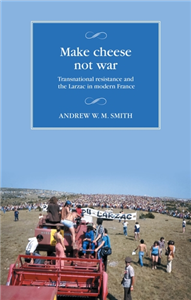
        Make cheese not war

        Transnational resistance and the Larzac in modern France

        by Andrew W. M. Smith

        In 1971, the French government announced a massive extension of its military base on the Larzac plateau in southern France. Land was to be expropriated from 107 farms around the small town of La Cavalerie. Limited resistance was expected, but what happened next exceeded all expectations. Local sheep farmers set up protest camps and occupied the land. They soon attracted an astonishing level of support, pioneering a form of regional radicalism with global implications. Drawing out the international dimensions of the protest, Make cheese not war explores a transnational resistance movement in the 1970s that challenged dominant visions of modernity and became a wellspring of radical alternatives. Exploring previously unconsulted archives in France and elsewhere, the book offers an in-depth analysis of the decade-long peasant movement and its aftermath. Repositioning the Larzac struggle within a wider network of French and international solidarities, from the US to the UK, Germany, Burkina Faso, New Caledonia and Japan, the book retraces political networks of pacifist activism, as well as environmental movements and anti-nuclear protest. It shows how this French peasant campaign became both a platform and a model for popular engagement.

      • Trusted Partner
        Geography & the Environment
        October 2025

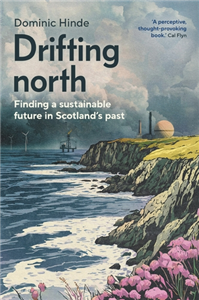
        Drifting north

        Finding the future at the top of the world

        by Dominic Hinde

        Scotland's past and future collide in this engaging journey through climate change, fossil capitalism and the struggle for a sustainable world. Scotland's history and future are entangled with climate change and the story of the modern world. This small country on the fringes of northern Europe pioneered fossil capitalism and played a key role in its spread across the planet. It is a living museum of the crisis of the west, of deindustrialisation, stagnation and the struggle to build a better future from the ashes. Journalist and sociologist Dominic Hinde travels from the treeless Highlands to the lowland cities, struggling to balance memories with aspiration. Through this journey he finds that his own sensory turmoil, shaped by recovery from a near fatal accident, mirrors the disarray of the fossil fuel transition - an uncertain passage between what was and what must be. Part memoir, part environmental history, part travelogue, this is a compelling narrative of connections - to place, energy and the possibility of renewal. Through the lens of one country, it asks a vital question: can the lessons of the past help us build a more sustainable future?

      Subscribe to our

      newsletter