
Business, Economics & Law
June 2020



The book explores the relationship between violence against women on the one hand, and the rights to health and to reproductive health on the other. It argues that the violation of the right to health is a consequence of violence (horizontal dimension) as much as State health policies (vertical dimension) might be a cause of - or create the conditions for - violence against women. It significantly contributes to the feminist and international human rights legal scholarship by conceptualizing a new ground-breaking notion, violence against women's health (VAWH), using the Hippocratic paradigm as approach. The book is divided into 5 chapters: the introduction; the Anamnesis examining around 70 decisions of domestic, regional and international judicial or quasi-judicial bodies; the Diagnosis, unravelling the innovative notion at the core of the book; the Treatment, containing a re-conceptualisation of States' obligations in countering VAWH; and the Prognosis as conclusions.
 Trusted Partner
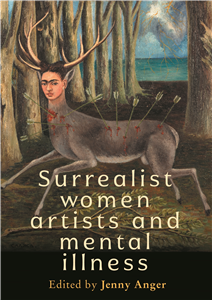
Female mental illness has been a prominent and complicated theme in surrealist cultural traditions, including the idealization of women with mental illness in works such as André Breton's Nadja (1928). Art historians have examined this tendency before, but to date there has been no comprehensive study of the lived reality of women surrealist artists with mental illness. How did women's experience and their work intersect with this romanticized vision? Was the masculine dream of feminized, "mad" genius prohibitive or productive for these women artists? After establishing the ideological field within which these women worked, the book turns to case studies of well-known and some lesser-known artists, including Ángeles Santos, Leonora Carrington, Dora Maar, Claude Cahun, Frida Kahlo, Meret Oppenheim, Sonja Sekula, and Unica Zürn. This collection of essays contains a wide range of responses, revealing surrealism's generative as well as restrictive force.

