
Classroom Complete Press
Livres Canada Books
View Rights Portal

Class Professional Publishing aims to fully support healthcare professions by publishing the best, most innovative educational resources.
View Rights Portal

In this accessible and sophisticated exploration of the nature and workings of social and political power, Haugaard examines the interrelation between domination and empowerment. Building upon the perspectives of Steven Lukes, Michel Foucault, Amy Allen, Hannah Arendt, Anthony Giddens, Pierre Bourdieu and others, he offers a clear theoretical framework, delineating power in four interrelated dimensions. The first and second dimensions of power entail two different types of social conflict. The third dimension concerns tacit knowledge, uses of truth and reification. Drawing upon genealogical theory and accounts of slavery as social death, the fourth dimension of power concerns the power to create social subjects. The book concludes with an original normative pragmatist power-based account of democracy. Offering lucid and entertaining illustrations of complex theoretical perspectives, this book is essential reading for scholars and activists.
 Trusted Partner
This book offers the first comprehensive history of white workers from the end of the First World War to Zimbabwean independence in 1980. It reveals how white worker identity was constituted, examines the white labouring class as an ethnically and nationally heterogeneous formation comprised of both men and women, and emphasises the active participation of white workers in the ongoing and contested production of race. White wage labourers' experiences, both as exploited workers and as part of the privileged white minority, offer insight into how race and class co-produced one another and how boundaries fundamental to settler colonialism were regulated and policed. Based on original research conducted in Zimbabwe, South Africa and the UK, this book offers a unique theoretical synthesis of work on gender, whiteness studies, labour histories, settler colonialism, Marxism, emotions and the New African Economic History.
Trusted Partner

Transforming conflict through social and economic development examines lessons learned from the Northern Ireland and Border Counties conflict transformation process through social and economic development and their consequent impacts and implications for practice and policymaking, with a range of functional recommendations produced for other regions emerging from and seeking to transform violent conflict. It provides, for the first time, a comprehensive assessment of the region's transformation activity, largely amongst grassroots actors, enabled by a number of specific funding programmes, namely the International Fund for Ireland, Peace I, II and III and INTERREG I, II and IIIA. These programmes have been responsible for a huge increase in grassroots practice which to date has attracted virtually no academic analysis; this book seeks to fill this gap. In focusing on the politics of the socioeconomic activities that underpinned the elite negotiations of the peace process, key theoretical transformation concepts are firstly explored, followed by an examination of the social and economic context of Northern Ireland and the border counties. The three programmes and their impacts are then assessed before considering what policy lessons can be learned and what recommendations can be made for practice. This is underpinned by a range of semi-structured interviews and the author's own experience as a project promoter through these programmes in the border counties for more than a decade. The book will be essential reading for students, practitioners and policymakers in the fields of peace and conflict studies, conflict transformation, peacebuilding, post-agreement reconstruction and the political economy of conflict and those interested in contemporary developments in the Northern Ireland peace process. ;
Trusted Partner
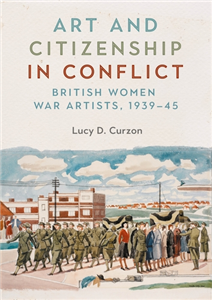
Art and Citizenship in Conflict examines the work of women war artists in order to highlight the complexity of citizenship and gender in Britain during the Second World War. Evelyn Dunbar, Mary Kessell, Ethel Gabain, Stella Schmolle, and Laura Knight, among others, were commissioned by the War Artists' Advisory Committee (WAAC) to document the millions of women who took up sometimes unconventional roles-in agriculture, the auxiliary services, and manufacturing, among others-to support the British war effort. Indeed, their prints, drawings, and paintings were part of a broader scheme to uphold morale and promote much-needed citizen involvement on the home front. While there is growing interest, the importance of their remit in the history of the Second World War and the quality of their artistry have nonetheless not yet secured them a significant place in scholarship. Art and Citizenship in Conflict seeks to amend this gap while also broadening approaches to the study of war itself.
Trusted Partner

This book is a study of the ambitions, activities and achievements of Methodist missionaries in northern Burma from 1887-1966 and the expulsion of the last missionaries by Ne Win. The story is told through painstaking original research in archives which contain thousands of hitherto unpublished documents and eyewitness accounts meticulously recorded by the Methodist missionaries. This accessible study constitutes a significant contribution to a very little-known area of missionary history. Leigh pulls together the themes of conflict, politics and proselytisation in to a fascinating study of great breadth. The historical nuances of the relationship between religion and governance in Burma are traced in an accessible style. This book will appeal to those teaching or studying colonial and postcolonial history, Burmese politics, and the history of missionary work.
Trusted Partner
Trusted Partner
 Trusted Partner
 Trusted Partner
At every level of human interaction new levels of identity-based tension are in evidence. Contributors to this book explore facets of fragmentation processes within systems of state and interstate organisation, how they influence the use of negotiation, and how negotiation might be used to effect renewed coherence. Following Anstey's (Ch1) introductory chapter framing the nature and shape of fragmentation dynamics, Zartman (Ch 2) argues that the use of negotiation as a process of conflict resolution is deeply shaped by identity groups whose internal coherence is dependent on sustaining a negative identity of others. International relations are no longer solely the realm of experienced diplomats but are shaped as Meerts (Ch3) points out by politicians seeking to be responsive to voting publics rather than wider concerns. Anstey digs into problems of fragmentation (Ch. 4) and Troitskiy (Ch 5) points out how a reluctant acceptance of the power of 'the other' can lead to a form of strategic stability in relations. Anstey and Meerts (Ch 6) point out in their analysis of the Israeli-Palestinian case as an identity conflict turned very bad. Guggenbuhl (Ch 7 ) reveals how structures and processes have been designed within the EU to prevent, contain and regulate conflicts to limit risks of confrontation and fragmentation. Schuessler (Ch 8) to advocates a shift away from a template or roadmap approach to EU membership to a cohesion based on non-dominance. There is still a strong desire on the part of some states, like Northern Macedonia, to become EU members, as reflected in Manton's (Ch 9). Paula Garzon and Frans Schram explain the success of the Colombia Peace Negotiations (Ch 10), while Odigie and da Rocha (Ch 11) analyse the struggle faced by ECOWAS to influence coup leaders in Mali to return to constitutional government and changes of government by constitutional means. Liang (Ch12) discusses how the internet as the modern vehicle of inter-state, inter-group and interpersonal communication has become weaponised. In Ch 13 Anstey draws some lessons from contributions to the compilation.
Trusted Partner
 Trusted Partner
Conducting a Lacanian-inspired psychoanalysis of some of the most candid interview materials ever gathered from former IRA members and loyalists, the author demonstrates through a careful examination of their slips of the tongue, jokes, rationalisations and contradictions, that it is the unconscious dynamics of socio-ideological fantasy, i.e. the unconscious pleasure people find in suffering, domination, submission, ignorance, failure and rivalry over jouissance, that lead to the reproduction of antagonism between the Catholic and Protestant communities in Northern Ireland. In the light of this, he concludes that traditional approaches to conflict resolution which overlook the unconscious are doomed to failure and that a Lacanian psychoanalytic understanding of socio-ideological fantasy has great potential for informing the way we understand and study all inter-religious and ethnic conflicts. Whether you find yourself agreeing with the arguments in this book or not, you are sure to find it a welcome change from both the existing, mainly conservative, analyses of the Northern Ireland conflict and traditional approaches to conflict resolution.
Trusted Partner
In the aftermath of the greed vs. grievance debate and the new wars paradigm, the focus of conflict studies shifted decisively to understanding "predatory" behaviours as the raison d'etre of contemporary conflict. Conflict was viewed as a continuum in which the more you engage in criminal behaviour, the less political you are.This approach has been robustly criticised over the past 15 years; however, in the process, we have been left with unsuitable concepts to handle the complex interactions between civil war, political power and criminality. The departure point here is the understanding of politics and criminality as two historically differentiated domains of human activity. Different, but interrelated, often co-constitutive and overlapping. Here, we empirically and theoretically explore their interactions, connections, and convergences, not focusing solely on irregular actors, thus bringing back the State and elites into this debate.
Trusted Partner
Focusing on experiential life stories across a range of forms and practices, this book investigates subjectivity, culture and the cultural politics of representation as a neglected dimension of conflict transformation in the Northern Irish peace process. Interdisciplinary critical perspectives from historical cultural studies, oral history and popular-memory theory inform close interpretive engagement with life stories in their cultural, historical and geographical contexts. This enables exploration of the complex temporal dynamics of 'post-conflict' subjectivities in the lengthening 'afterlife' of the Troubles, where feelings attached to conflict experiences are not 'past' but haunt the present, and memory-work carries future-oriented desires for truth, justice and reconciliation. Through case studies responding to the evolving peace process through this prism of life-storytelling, Afterlives maps a contested history of legacy policy-making and approaches to 'dealing with the past', from devolution in 2005-7 through to the Legacy and Reconciliation Act of 2023.
Trusted Partner

This book provides a careful and systematic analysis of Anthony Ascham's career and writings for the first time in English. During the crucial period between the Second Civil War and the establishment of the English Republic, when he served as official pamphleteer of the Parliament and the republican government, Ascham put forward a complex argument in support of Parliament's claims for obedience which drew on the political thought of Grotius, Hobbes, Selden, Filmer and Machiavelli. He combined ideas taken from these authors and turned them into a powerful instrument of propaganda to be deployed in the service of the political agenda of his Independent patrons in Parliament. This investigation of Ascham's works brings together an intellectual analysis of his political thought and an exploration of the interaction between politics, propaganda and political ideas.
Trusted Partner

This book is about the EU's role in conflict resolution and reconciliation in Europe. The central argument of the book is that the evolution of the policy mix, resources, framing influences and political opportunities through which European integration affects conflicts and processes of conflict resolution demonstrates a historical trend through which the EU has become an indispensable factor of conflict resolution . It begins with the pooling together of policy-making at the European level for the management of particular sectors (early integration in the European Coal and Steel Community) through the functioning of core EU policies (Northern Ireland) to the challenges of enlargement (Cyprus) and the European perspective for the Western Balkans (Kosovo). The book will be of value to academics and non-expert observers alike with an interest in European integration and peace studies.
Trusted Partner

Borders and conflict in South Asia is the first full-length study of the 1947 drawing of the Indo-Pakistani boundary in Punjab. Using the Radcliffe commission as a window onto the decolonization and independence of India and Pakistan, and examining the competing interests, both internal and international, that influenced the actions of the various major players, it highlights British efforts to maintain a grip on India even as the decolonization process spun out of control. Drawing on extensive archival research in India, Pakistan, and Britain, combined with innovative use of cartographic sources, the book paints a vivid picture of both the partition process and the Radcliffe line's impact on Punjab. This book will be vital reading for scholars and students of colonialism, decolonization, partition, and borderlands studies, while providing anyone interested in South Asia's independence with a highly readable account of one of its most controversial episodes.
Trusted Partner
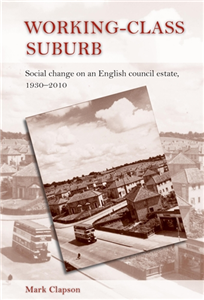
Not all council estates are the same. A detailed historical account of the birth and social evolution of the Whitley council estate in Reading, Working-Class Suburb challenges many of the more depressing images and cultural stereotypes about council housing in twentieth and twenty-first century England. Key areas covered by the study are housing and politics; community campaigns; women and the corporate life of council estates; the uses of leisure; the relationships between tenants, residents and the local authority, and continuities in working-class life despite economic, demographic and political change. The book will be of interest to anyone studying urban history and social history, to professionals working in the fields of housing policy and housing studies, and to the growing number of academics interested in suburban studies. ;
Trusted Partner

After three decades of violence, Northern Ireland has experienced unprecedented peace. This book examines the impact of the 1998 Agreement which halted the violence on those most affected by it - the Northern Irish people themselves. Using public opinion surveys conducted over half a century, this book covers changes in public opinion across all areas of society and politics, including elections, education, community relations and national identity. The surveys show that despite peace, Protestants and Catholics remain as deeply divided as ever. The vast majority marry co-religionists, attend religious schools and have few friends across the religious divide. The results have implications not just for peace-making in Northern Ireland, but for other societies emerging from conflict. The main lesson of peace-making in Northern Ireland is that political reform has to be accompanied by social change across the society as a whole. Peace after conflict needs social as well as political change. ;
Trusted Partner
Green's The contemporary law of armed conflict has been acclaimed as one of the most significant works on the law of armed conflict to appear in recent years. The first edition was adopted as a basic text by military institutions and educational establishments throughout the world and is among the most comprehensive and readable works on the subject. This new edition brings the work up to date, examining the significance of the World Court's Opinion on the legality of the nuclear weapon. It also considers the importance of such matters as the laser weapon agreement, the mines treaty and the jurisprudence of the two war crimes tribunals, that for the former Yugoslavia as well as for Rwanda, and assesses the role of the proposed International Criminal Court as it may affect the law of armed conflict. The book applies a practical as well as a theoretical approach, and draws on an extensive range of national and international practice. It is thus an indispensable reference for the armed forces and government defence organizations, as well as academics and students interested in the modern law of war. ;



