
Your Search Results

-
Promoted Content
-
Promoted Content
-
 Trusted Partner

 May 1999
1848 - Revolution in Europa.
Verlauf, politische Programme, Folgen und Wirkungen.
by Herausgegeben von Timmermann, Heiner
-
Trusted Partner
-
Trusted Partner

 Humanities & Social SciencesApril 2018
Disability in the Industrial Revolution
Physical impairment in British coalmining, 1780–1880
by David M. Turner, Daniel Blackie, Julie Anderson
An electronic version of this book is also available under a Creative Commons (CC-BY-NC-ND) license, thanks to the support of the Wellcome Trust. The Industrial Revolution produced injury, illness and disablement on a large scale and nowhere was this more visible than in coalmining. Disability in the Industrial Revolution sheds new light on the human cost of industrialisation by examining the lives and experiences of those disabled in an industry that was vital to Britain's economic growth. Although it is commonly assumed that industrialisation led to increasing marginalisation of people with impairments from the workforce, disabled mineworkers were expected to return to work wherever possible, and new medical services developed to assist in this endeavour. This book explores the working lives of disabled miners and analyses the medical, welfare and community responses to disablement in the coalfields. It shows how disability affected industrial relations and shaped the class identity of mineworkers. The book will appeal to students and academics interested in disability, occupational health and social history.
-
Trusted Partner
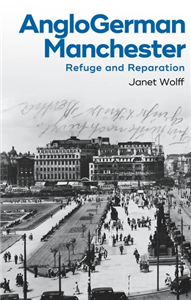 Humanities & Social SciencesMay 2026
AngloGerman Manchester
Refuge and Reparation
by Janet Wolff
The essays in this book discuss the lives of Germans living in Manchester, from the mid-nineteenth century to the present, combining historical study with personal and autobiographical material. Chapters are devoted to Frederick Engels, Fanny Lewald, Rabbi Felix Carlebach and W. G. Sebald, with additional discussion of Elizabeth Gaskell and the Manchester writer Geraldine Jewsbury. One chapter focuses on Jewish refugees from Nazism who set up new industries in Manchester, including the author's father. The final chapter takes up the theme of reparation, which runs through the book, relating the work of non-Jewish Germans engaged in the project of 'making amends' in their own country for the crimes of an earlier generation.
-
Trusted Partner
-
Trusted Partner
-
Trusted Partner

 May 2005
Das Zeitalter der europäischen Revolution 1780-1848
by Bergeron, Louis; Furet, Francois; Koselleck, Reinhart / Illustriert von Bukor, Harald; Illustriert von Bukor, Ruth; Herausgegeben von Bergeron, Louis; Herausgegeben von Furet, Francois; Herausgegeben von Koselleck, Reinhart; Übersetzt von Cramer, Sybille
-
Trusted Partner

 May 1988
Ansichten von Deutschland
Bürgerliches Heldenleben
by Hans Mayer
Diese zehn »Ansichten« berichten von Deutschland aus dem Zeitraum etwa zwischen 1850 und 1933. Das begann mit dem Scheitern einer bürgerlichen Revolution von 1848/49 und endete dort, wo sich ein Zweites Reich, das seit 1918 Republik geworden war, nunmehr anschickte, als Drittes Reich die Jahrhunderte zu überdauern.
-
Trusted Partner
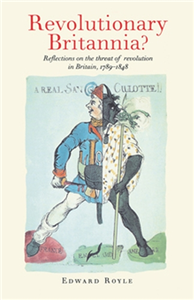 Humanities & Social SciencesDecember 2000
Revolutionary Britannia?
Reflections on the threat of revolution in Britain, 1789–1848
by Edward Royle
Europe was swept by revolution in the period from 1789 to 1848. Britain, alone of the major western powers, seemed exempt from this revolutionary fervour. The governing class attributed this exemption to divine providence and the soundness of the British Constitution. This view has been upheld by historians for over a century. This book provides students with an alternative view of the potential for revolution and the resources of conservatism in early industrial Britain which challenges many of the common assumptions. Incorporates quotations from primary sources to give the reader a critical sense of why revolution was taken seriously by people at the time. Shows how the revolutionaries were defeated by the government's propaganda against revolutionary sentiments and the strength of popular conservatism. ;
-
Trusted Partner
 August 2020
Vernunft und Revolution
Hegel und die Entstehung der Gesellschaftstheorie
by Herbert Marcuse, Alfred Schmidt
Herbert Marcuses Vernunft und Revolution bietet eine durch ihre Klarheit und Werkkenntnis immer noch bestechende Einführung in das philosophische System Hegels und spürt zugleich dessen bahnbrechendem Einfluss auf die Entwicklung der Gesellschaftstheorie nach. Marcuse rekonstruiert das maßgeblich durch Hegel geprägte sozialphilosophische und sozialwissenschaftliche Denken des 19. und 20. Jahrhunderts und widerlegt dabei die immer wieder geäußerte These, Hegel sei ein Theoretiker der Restauration und ein Ideologe des Obrigkeitsstaats totalitärer Prägung gewesen. Für Marcuse ist er vielmehr ein Denker der Vernunft, des Fortschritts und der Freiheit. Ein Klassiker der Hegel-Literatur!
-
Trusted Partner
-
Trusted Partner
 April 1989
Die Russische Revolution. 1905–1921
by Manfred Hildermeier, Hans-Ulrich Wehler
Zu den Problemen, denen die vorliegende Darstellung besondere Aufmerksamkeit schenkt, gehören der wirtschaftliche und soziale Wandel des Zarenreichs im ausgehenden 19. Jahrhundert, die schwere Krise des alten Regimes 1905/07, der Zusammenhang von Krieg und Revolution, die Gründe für das Scheitern des einzigen demokratischen Regimes der russischen Geschichte sowie die Ursachen und inneren Folgen der Behauptung der Sowjetmacht im Bürgerkrieg.
-
Trusted Partner

 September 2008
Ins Ungebundene gehet eine Sehnsucht
Projektionsraum Romantik
by Christa Wolf, Gerhard Wolf, Gerhard Wolf, Christa Wolf
„Ein Zufall kann es nicht sein, daß wir begonnen haben, den Abgeschriebenen nachzufragen, das Urteil, das über sie verhängt wurde, anzufechten, es zu bestreiten und aufzuheben – fasziniert durch Verwandtschaft und Nähe, wenn auch der Zeiten … eingedenk, die zwischen uns und denen liegen …“ Gemeint sind Hölderlin, Kleist, Heine, Bettina und Achim von Arnim – Dichter, die zwischen der klassischen Kunstperiode und einer Literatur im Vorfeld der Revolution von 1848 lebten und schrieben, Dichter, die zusammengehörten oder als Schatten in der Biographie der anderen auftauchten. Der Begriff „Romantik“ trifft nur einige von ihnen. Christa und Gerhard Wolf nehmen ihn als Gesprächsangebot, als Reibungspunkt, um die Lebensmuster der Generationen Hölderlins und der Romantiker gegeneinanderzusetzen, ihren „inneren Geschichten“ nachzuspüren. Zwei Autoren von heute nähern sich ihren Vorgängern, greifen Motive und Ideen auf, die sie verfolgen und einander zuspielen.
-
Trusted Partner
-
Trusted Partner
-
Trusted Partner
 Humanities & Social SciencesJuly 2013
The 1989 Revolutions in Central and Eastern Europe
From Communism to Pluralism
by Kevin McDermott, Matthew Stibbe
This important book reassesses a defining historical, political and ideological moment in contemporary history: the 1989 revolutions in central and eastern Europe. Adopting a multi-disciplinary approach, the authors reconsider such crucial themes as the broader historical significance of the 1989 events, the complex interaction between external and internal factors in the origins and outcomes of the revolutions, the impact of the 'Gorbachev phenomenon', the West and the end of the Cold War, the political and socio-economic determinants of the revolutionary processes in Poland, Hungary, the German Democratic Republic, Czechoslovakia, Romania and Bulgaria, and the competing academic, cultural and ideological perceptions of the year 1989 as communism gave way to post-communist pluralism in the 1990s and beyond. Concluding that the contentious term 'revolution' is indeed apt for the momentous developments in eastern Europe in 1989, this book will be essential reading for undergraduates, postgraduates and specialists alike. ;
-
Trusted Partner
 August 2013
Blumenfresser
by László Darvasi, Heinrich Eisterer
Zwei Menschen sind in ihrer zugenagelten Wohnung verhungert: ineinander verschlungen liegen sie in einem mit Blumen vollgestopften Zimmer. Draußen tritt die Theiß über die Ufer, reißt die Behausungen der geflohenen Juden, Armenier und Serben mit sich fort und zerstört in einer Jahrhundertflut Szeged, die Stadt im Südosten des Habsburger Reichs. Bei den Toten handelt es sich um Klara Pelsőczy, eine leidenschaftliche, ungefügige Frau, die drei Männer liebt und „mit dem Fußabdruck eines Engels auf der Hand“ zur Welt kam; und um den Naturhistoriker Imre Schön, der nach der niedergeschlagenen Revolution von 1848 sieben Jahre im Gefängnis saß: ein Vortrag über Blumenfresser wurde ihm zum Verhängnis. In apokalyptischen und phantastischen Szenarien erzählt László Darvasi von Liebe und Gewalt in Mitteleuropa. Sein von surrealen Episoden durchsetzter Roman, im Jahrhundert der Freiheitsbewegungen angesiedelt, kennt neben der menschlichen und kreatürlichen Welt eine zarte und gefahrvolle Sphäre des Traums und des hellsichtigen Irrsinns, die man nach dem Verzehr von Blumen betritt.
-
Trusted Partner
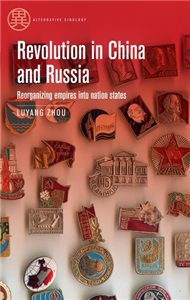 Humanities & Social SciencesJune 2025
Revolution in China and Russia
Reorganizing empires into nation states
by Luyang Zhou
Most scholars believe that China's nationality policy, like that of other socialist states, imitated the Soviet nationality model, a system which has been termed an "affirmative action empire." This book offers two contributions to the literature which run counter to this convention. First, it argues that the People's Republic of China (PRC) and the Soviet Union (USSR) were different; while the PRC was aimed to build an ideal-typical nation-state, the USSR was an open union of nation-states that was only temporarily confined to a physical territory. Second, while scholars who have noted this difference attribute it to contextual factors, such as ethnic structure, geopolitical status, and Russia's intervention into the Chinese Revolution, this book contends that context shaped the Sino-Soviet difference, yet it did not determine it. Rather, there was significant leeway between the implications of the contextual factors, and what the policy-designers ultimately established. This book probes who held agency, and how these individuals bridged this gap.



