
Arbeiter Ring Publishing
Livres Canada Books
View Rights Portal

Nova knjiga insists to create good connection between comercial and elite.We pay close attention to all aspects of the publishing business according to the highest standards and criteria always taking care of the high quality of the translation, covers and textblock.Publishing sectors: fiction, non-fiction, classics, children books. Nova knjiga has a network of own bookstores in biggest towns which covers Montenegrin market. Beside the publishing we have great developed network of wholesale and we are main suppliers of the books in Montenegro. We provide to all companies in Montenegro and region easy way to buy all our editions and editions of other publishing houses.
View Rights Portal


This edited collection investigates New Zealand's history as an imperial power, and its evolving place within the British Empire. It revises and expands the history of empire within, to and from New Zealand by looking at the country's spheres of internal imperialism, its relationship with Australia, its Pacific empire and its outreach to Antarctica. The book critically revises our understanding of the range of ways that New Zealand has played a role as an imperial power, including the cultural histories of New Zealand inside the British Empire, engagements with imperial practices and notions of imperialism, the special significance of New Zealand in the Pacific region, and the circulation of ideas of empire both through and inside New Zealand over time. The essays in this volume span social, cultural, political and economic history, and in testing the concept of New Zealand's empire, the contributors take new directions in both historiographical and empirical research.
 Trusted Partner


Die Reihe Einfach erklärt hält, was sie verspricht: Hier werden komplexe Themen leicht verständlich aufbereitet und anschaulich illustriert. Kurze Kapitel, eine klare Struktur und der coole Mix aus Fotos und modernen Infografiken helfen Leser*innen ab zehn Jahren, schnell und unkompliziert neues Wissen zu erlangen. So klappt es mit dem Durchblick – garantiert! Was ist ein Algorithmus? Können Maschinen denken? Welche technischen Entwicklungen wird es in der Zukunft geben? Wie entstehen Fake News? Und wie können Staaten und Regierungen all das nutzen, um ihre Bevölkerung zu beeinflussen? Der Autor spannt den Bogen von Algorithmen über den Einsatz von künstlicher Intelligenz in verschiedenen Bereichen bis hin zum hochaktuellen Thema Propaganda. Durch leicht verständliche Erklärungen und zahlreiche detaillierte Infografiken wird so das Interesse an unserer technischen Zukunft geweckt.
Trusted Partner


The dream of the ideal city is as old as the city itself. Since real cities often develop chaotically, the idea of perfecting them, even tearing them down if necessary, and rebuilding them according to the prevailing patterns of thought is an obvious one. The latest manifestation of this utopia is the smart city - the intelligent city, packed with the latest technology and extensively digitised. But will air taxis and hyperloops, ubiquitous sensors, access control systems and data-driven management really make the city of the future a better place to live? Are they the answer to the enormous challenges facing today's fast-growing metropolises? Or will the supposed administrative paradise ultimately mutate into a digital juggernaut?
Trusted Partner
 Trusted Partner

This book examines the distinctive aspects that insiders and outsiders perceived as characteristic of Irish and Scottish ethnic identities in New Zealand. When, how, and why did Irish and Scots identify themselves and others in ethnic terms? What characteristics did the Irish and the Scots attribute to themselves and what traits did others assign to them? Did these traits change over time and if so how? Contemporary interest surrounding issues of ethnic identities is vibrant. In countries such as New Zealand, descendants of European settlers are seeking their ethnic origins, spurred on in part by factors such as an ongoing interest in indigenous genealogies, the burgeoning appeal of family history societies, and the booming financial benefits of marketing ethnicities abroad. This fascinating book will appeal to scholars and students of the history of empire and the construction of identity in settler communities, as well as those interested in the history of New Zealand.
Trusted Partner
 Trusted Partner
Trusted Partner
Trusted Partner
 Trusted Partner
Trusted Partner
Trusted Partner
Trusted Partner
Trusted Partner
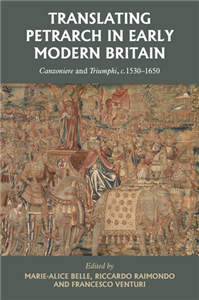
Translating Petrarch in early modern Britain gathers twelve essays by international scholars focusing on the translation of Petrarch's vernacular verse (Canzoniere and Triumphi) into English, from the Tudor age to the mid-seventeenth century (and beyond). Approaching translation as an interpretive process, but also a mode of literary emulation and cultural engagement with Petrarch's prestigious precedent, the collection explores the complex and interconnected trajectories of both poetic works in English and Scottish literary milieux. While situating each translation in its distinct historical, material, and literary context, the essays trace the reception of Petrarch's works in early modern Britain through the combined processes of linguistic and metric innovation, literary imitation, musical adaptation and cultural and material 'domestication'. The collection sheds light on the origins and development of early modern English Petrarchism as part of wider transnational - and indeed, translational-European literary culture.
Trusted Partner
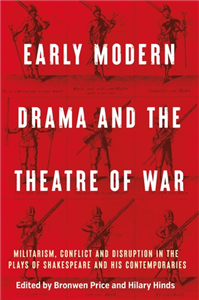
This volume explores the disruptive effects of militarism, war and social unrest in early modern drama. Engaging with Simon Barker's seminal work on dramatic representations of war and militarism, contributors highlight what often lies hidden beneath the surface of martial narratives, treating them as formative interventions in contemporary discourses, whether in justifying war, excluding dissident voices or shaping cultural identities. Discussions include new examinations of militarism, the figure of the soldier and early modern theories of war in Shakespearean tragedy, history and comedy, alongside antimasque and dramatic satire by lesser-known playwrights. The essays investigate how ideas of war underpin emerging concepts of gender, leadership, marriage and the family, as well as the continuing mobilisation of Shakespearean drama in the context of modern armed conflict. Together, they offer rich new contributions to the current lively critical debates on this topic.
Trusted Partner

The media leave no one indifferent. Many people are upset that once again wrong things are written in the newspaper. Others think journalists are far too powerful. And some people philosophize polemically that the mass media are damaging democracy, while elsewhere “lying press” is chanted. This book combines media analysis and criticism with media education and journalistic transparency, reflection and advice. In doing so reflect the main tasks of journalism today: providing well-founded information, stimulating and perspective-rich opinion-forming – and sophisticated entertainment.
Trusted Partner
Trusted Partner

This volume questions and qualifies commonly accepted assumptions about the early modern English sonnet: that it was a strictly codified form, most often organised in sequences, which only emerged at the very end of the sixteenth century and declined as fast as it had bloomed, and that minor poets merely participated in the sonnet fashion by replicating established conventions. Drawing from book history and relying on close reading and textual criticism, this collection offers a more nuanced account of the history of the sonnet. It discusses how sonnets were written, published and received in England as compared to mainland Europe, and explores the works of major (Shakespeare, Sidney, Spenser) and minor (Barnes, Harvey) poets alike. Reflecting on current editorial practices, it also provides the first modern edition of an early seventeenth-century Elizabethan miscellany including sonnets presumably by Sidney and Spenser.
Trusted Partner
Death in modern theatre offers a unique account of modern Western theatre, focusing on the ways in which dramatists and theatre-makers have explored historically informed ideas about death and dying in their work. It investigates the opportunities theatre affords to reflect on the end of life in a compelling and socially meaningful fashion. In a series of interrelated, mostly chronological, micronarratives beginning in the late nineteenth century and ending in the early twenty-first century, this book considers how and why death and dying are represented at certain historical moments using dramaturgy and aesthetics that challenge audiences' conceptions, sensibilities, and sense-making faculties. It includes a mix of well-known and lesser-known plays from an international range of dramatists and theatre-makers, and offers original interpretations through close reading and performance analysis.
Trusted Partner

 Trusted Partner
 Trusted Partner



