Your Search Results

      • Mary Abouchaar

        Every story describes a wish that Tyler makes, the steps he takes to obtain it, and the reason why he gladly grants it to a dear one. In "Tyler's Promised Gift" Tyler works hard to obey his mother's commands in anticipation of receiving his promised 'little red car". At his birthday party he offers the car to a younger, sad, and crying guest. In "Tyler's Baby Sister" Tyler tries to get his mother to focus her attention again on him instead of on his baby sister, Tia. Tyler finally realizes that helping his mother to give more care to Tia gave him the most satisfaction. In "Tyler's Acting Practice" Tyler spends hours perfecting his aim when using a slingshot. When he was finally ready to play the part of David in the school play "David and Goliath", he noticed that his friend Joel, who was new to the school this year, was being bullied and excluded from all games because he was missing the net whenever he tried to shoot a basketball. Heroically, Tyler offers the role of David to Joel when he learns that Joel excels at aiming pebbles with his slingshot. His plan to reverse the students' disrespect towards Joel succeeded when everyone in the school auditorium cheered Joel for his perfect aim at the helmet of Goliath. In "Tyler's Lunchbox Treat", Tyler could hardly wait for lunch break to bite into the krispy marshmallow treat his mother had baked for him.  When Tyler discovers that the sandwich of his lunch companion was missing, and that he couldn't share his peanut butter sandwich with him because his companion was allergic to peanuts, Tyler gives him his krispy marshmallow square. Tyler always feels like a winner at the end, and not at all a loser. Children and parents are happy to arrive at the ending of each story.

        View Rights Portal

      • La Emboscadura

        Por la difusión global del pensamiento de Antonio Escohotado

        View Rights Portal
      • Trusted Partner
        The Arts
        December 2000

        Contemporary Australian cinema

        An introduction

        by Jonathan Rayner

        Provides an introduction to the products and context of the new Australian film industry which arose toward the end of the 1960s. Traces the development of Australian film, in terms of prominent directors and stars, consistent themes, styles and evolving genres. The evolution of the film genres peculiar to Australia, and the adaptation of conventional Hollywood forms (such as the musical and the road movie) are examined in detail through textual readings of landmark films. Films and trends discussed include: the period film and Picnic at Hanging Rock; the Gothic film and the Mad Max trilogy; camp and kitsch comedy and the Adventures of Pricilla, Queen of the Desert. The key issue of the revival (the definition, representation and propagation of a national image) is woven through analysis of the new Australian cinema. ;

      • Trusted Partner
        Humanities & Social Sciences
        July 2026

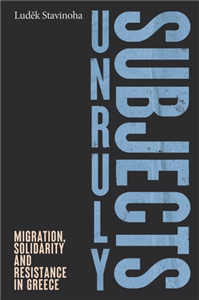
        Unruly subjects

        Migration, solidarity and resistance in Greece

        by Ludek Stavinoha

        Unruly Subjects takes readers to the epicentre of Europe's intensifying border struggles-the Aegean islands in Greece, where thousands of 'undesirable' migrants have been warehoused and violently abandoned in EU-funded refugee camps. Drawing on nearly a decade of research, Ludek Stavinoha reveals the subterranean corners in which resistance brews and solidarity takes hold, tracing migrants' everyday struggles for dignity and their rights, alongside grassroots volunteers who have built vital infrastructures of support. At the heart of the book are the creative, if precarious and ambivalent, solidarities forged between volunteers and refugees, citizens and non-citizens, as they unsettle racialised boundaries and logics of control, in defiance of state-sanctioned violence, criminalisation, and neglect. Urgent and compelling, Unruly Subjects illuminates how people navigate and subvert Europe's increasingly hostile border regime, and the alternative imaginaries of more just futures their struggles embody.

      • Trusted Partner
        Humanities & Social Sciences
        January 2025

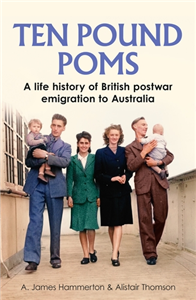
        ‘Ten Pound Poms’

        A life history of British postwar emigration to Australia

        by A. James Hammerton, Alistair Thomson, Becca Parkinson

        A riveting history of the 'Ten Pound Poms', a wave of British citizens who migrated to Australia and New Zealand after the Second World War. Between the 1940s and 1970s, more than a million Britons migrated to Australia. They were the famous 'Ten Pound Poms' and this is their story. The authors draw on a vast trove of letters, diaries and personal photographs, as well as hundreds of interviews with former migrants, to offer original insights into key historical themes. They explore people's motivations for emigrating, gender relations and family dynamics, the clashing experience of the 'very familiar and awfully strange', homesickness and the personal and national identities of both settlers and returnees. Filled with fascinating testimonies that shed light on migrant life histories, 'Ten Pound Poms' will engage readers interested in British and Australian migration history and intrigued about the power of migrant memories for individuals, families and nations.

      • Trusted Partner
        Humanities & Social Sciences
        July 2023

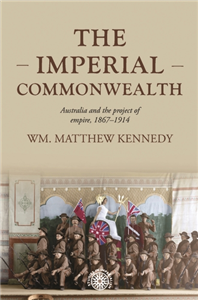
        The imperial Commonwealth

        Australia and the project of empire, 1867-1914

        by Wm. Matthew Kennedy

        From the late 1800s to the early 1900s, Australian settler colonists mobilised their unique settler experiences to develop their own vision of what 'empire' was and could be. Reinterpreting their histories and attempting to divine their futures with a much heavier concentration on racialized visions of humanity, white Australian settlers came to believe that their whiteness as well as their Britishness qualified them for an equal voice in the running of Britain's imperial project. Through asserting their case, many soon claimed that, as newly minted citizens of a progressive and exemplary Australian Commonwealth, white settlers such as themselves were actually better suited to the modern task of empire. Such a settler political cosmology with empire at its center ultimately led Australians to claim an empire of their own in the Pacific Islands, complete with its own, unique imperial governmentality.

      • Trusted Partner
        Humanities & Social Sciences
        March 2025

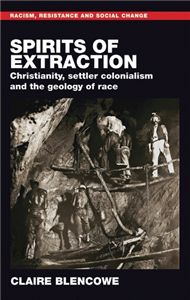
        Spirits of extraction

        Christianity, settler colonialism and the geology of race

        by Claire Blencowe

        Spirits of extraction revisits the troubling history of socially reformist, ostensibly anti-racist, Christianity and its role in the expansion of the extractive industries, British imperialism, and settler colonialism. The book explores key moments in the history of Methodism and the evangelical movement. Colonial fears, and the attempt to 'civilise savages', were crucial to the movement's foundation in eighteenth-century industrialising Bristol, England. Through the culture of the Cornish mining diaspora of the nineteenth century, Methodism enmeshed with all the complexity of race and labour-structures of the British empire. At the same time, in Anishinaabewaki/Upper Canda/Ontario, Methodist missionaries laid the foundation of abusive education and racialised ideas of redemption that both enable and sacralise the mining industry. Through these histories of our present, the book theorises the relation of religion and education to racism, modernity, biopower, extractivism, and the geology of race.

      • Trusted Partner
        Humanities & Social Sciences
        December 2022

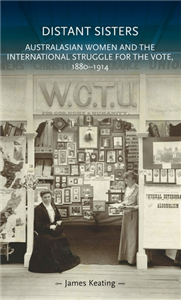
        Distant sisters

        Australasian women and the international struggle for the vote, 1880–1914

        by James Keating

        In the 1890s Australian and New Zealand women became the first in the world to win the vote. Buoyed by their victories, they promised to lead a global struggle for the expansion of women's electoral rights. Charting the common trajectory of the colonial suffrage campaigns, Distant Sisters uncovers the personal and material networks that transformed feminist organising. Considering intimate and institutional connections, well-connected elites and ordinary women, this book argues developments in Auckland, Sydney, and Adelaide-long considered the peripheries of the feminist world-cannot be separated from its glamourous metropoles. Focusing on Antipodean women, simultaneously insiders and outsiders in the emerging international women's movement, and documenting the failures of their expansive vision alongside its successes, this book reveals a more contingent history of international organising and challenges celebratory accounts of fin-de-siècle global connection.

      • Trusted Partner
        Humanities & Social Sciences
        February 2017

        The colonisation of time

        by Giordano Nanni

      • Trusted Partner
        Humanities & Social Sciences
        March 2017

        Imperial medicine and indigenous societies

        by David Arnold

      • Trusted Partner
        Humanities & Social Sciences
        February 2022

        Missionaries and modernity

        by Felicity Jensz, Alan Lester

      • Trusted Partner
        Humanities & Social Sciences
        September 2023

        Missionaries and modernity

        Education in the British Empire, 1830-1910

        by Felicity Jensz

        Many missionary societies established mission schools in the nineteenth century in the British Empire as a means to convert non-Europeans to Christianity. Although the details, differed in various colonial contexts, the driving ideology behind mission schools was that Christian morality was highest form of civilisation needed for non-Europeans to be useful members of colonies under British rule. This comprehensive survey of multi-colonial sites over the long time span clearly describes the missionary paradox that to draw in pupils they needed to provide secular education, but that secular education was seen to lead both to a moral crisis and to anti-British sentiments.

      • Trusted Partner
      • Trusted Partner
        1981

        Erkennen - Wollen - Handeln

        Beiträge zur Allgemeinen und Angewandten Psychologie. Festschrift für Heinrich Düker zum 80. Geburtstag

        by Herausgegeben von Tent, Lothar

      • Trusted Partner
        Humanities & Social Sciences
        December 2021

        Translations, an autoethnography

        by Paul Carter

      • Trusted Partner
      • Trusted Partner
        April 2011

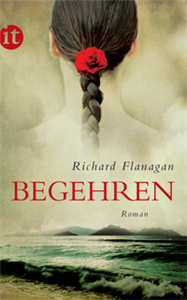
        Begehren

        Roman

        by Richard Flanagan, Peter Knecht

        Ein fesselnder Roman über ungebändigte Gefühle und verdrängte Leidenschaften. 1839: Der Gouverneur von Tasmanien und Polarforscher Sir John Franklin und seine Frau holen das Aborigine-Mädchen Mathinna zu sich ins Haus. Sie wollen »die Wilde« durch strenge Erziehung zivilisieren. Während Lady Jane ihre mütterlichen Gefühle unterdrückt, kann sich Sir Franklin Mathinnas »wilder« Anziehungskraft nicht entziehen. Als Franklin Jahre später nach England zurückbeordert wird, bleibt das Mädchen entwurzelt und zutiefst verstört zurück … Zwanzig Jahre später: Im Überlebenskampf im ewigen Eis soll Sir Franklin dem Kannibalismus verfallen sein. Als Charles Dickens dessen Ruf und Ansehen retten will, entdeckt er an sich plötzlich eine »wilde« unbezwingbare Seite.

      • Trusted Partner
      • Trusted Partner
        January 1986

        London Embassy

        Kabinettstücke

        by Theroux, Paul

      • Trusted Partner
        Humanities & Social Sciences
        September 2024

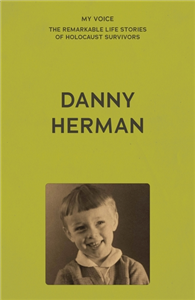
        My Voice: Danny Herman

        by Danny Herman

        Danny Herman was born in 1935 in Königsberg in East Prussia. As the Nazis were rounding up Jews, Danny's father managed to escape to England in July 1939. He travelled to the Kitchener Camp in Kent, which helped refugees secure visas for safer places. Danny and his mother arrived in England just three days before war was declared in 1939, and his father was later sent to an internment camp on the Isle of Man. Danny went on to become a successful runner, competing in many international athletics events and volunteering in many roles, including at the 2002 Commonwealth Games. Danny's detailed memories of arriving in England, initially at the seaside in Kent and then moving to Manchester, create a vivid picture of life-changing events as experienced by a young child. Danny's book is part of the My Voice book collection, a stand-alone project of The Fed, the leading Jewish social care charity in Manchester, dedicated to preserving the life stories of Holocaust survivors and refugees from Nazi persecution who settled in the UK. The oral history, which is recorded and transcribed, captures their entire lives from before, during and after the war years. The books are written in the words of the survivor so that future generations can always hear their voice. The My Voice book collection is a valuable resource for Holocaust awareness and education.

      Subscribe to our

      newsletter