
December 2011
Your Search Results
-
Promoted Content


-
Promoted Content
-
 Trusted Partner

 Business, Economics & LawJanuary 2026
Sovereignty disputes and the United Nations Convention on the Law of the Sea
A public order perspective
by Thomas D. Grant
Because maritime questions are often admixed with territorial sovereignty questions, parties sometimes seek to settle them together. Jurisdiction under the United Nations Convention on the Law of the Sea-UNCLOS-according to the received view does not encompass disputes concerning territorial sovereignty. In this book, international law scholar and practitioner Thomas D. Grant argues that the received view overstates the exclusion of sovereignty disputes. In Coastal State Rights, UNCLOS Annex VII arbitrators overstated the scope of the term 'sovereignty dispute' as well, an error of definition compounded when they ignored evidence probative as to whether a sovereignty dispute exists. Examining UNCLOS, its drafting history, and decades of decided cases, Sovereignty Disputes and the United Nations Convention on the Law of the Sea relates an important problem of international dispute settlement to the public order of which UNCLOS forms part.
-
Trusted Partner

 January 2016
Judge This
Warum der erste Eindruck zählt. TED Books (gebundene Ausgabe)
by Kidd, Chip / Englisch Gabler, Irmengard
-
Trusted Partner
-
Trusted Partner

 Health & Personal Development
How About Giving It a Try?
by Fabian Grolimund, Stefanie Rietzler
“Yuck!” says the little dung beetle, turning away. With playfulrhymes and colorful animal antics, this picture booktackles picky eating with humor and heart. Perfect for easingmealtime stress, it also includes a science-based guidefor caregivers with practical tips to foster curiosity – withoutpressure. • Fun rhyming story about picky eaters• Lighthearted support for family mealtimes• Expert-backed advice for caregivers included
-
Trusted Partner

 Children's & YA
Explorer Team (1). The Adventure Begins!
by Björn Berenz / Christoph Dittert
Become an explorer! Go with Lias on an exciting mission and solve the puzzles that will lead you to your goal. Eventually you must decide: how will the adventure continue? 3 paths – 3 adventures – which of them is for YOU? Join Lias, Mojo and Cookie on a mission to the Himalayas: together they must find out what has happened to Lias’s father. He disappeared six months ago and the only thing he left behind was his expedition diary, which is full of strange clues and puzzles. The reader will be able to move onto the next stage only if you can decipher them. A great adventure awaits you! And you decide In the end, you must decide: How should the adventure continue for you and the Explorer Team? Hunt with Lias through the forgotten world. Go with Tashi to discover the eternal ice or follow Cookie and Mojo through fire and lava. You will have to choose which of the Explorers you want to accompany on the next adventure.
-
Trusted Partner

 April 1986
Die Rolle des Federal District Court Judge im Verhältnis zu den Parteien.
Dargestellt anhand exemplarisch ausgewählter Befugnisse.
by Braun, Thomas
-
Trusted Partner
 Humanities & Social SciencesFebruary 2022
Missionaries and modernity
by Felicity Jensz, Alan Lester
-
Trusted Partner
Humanities & Social SciencesSeptember 2023
Missionaries and modernity
Education in the British Empire, 1830-1910
by Felicity Jensz
Many missionary societies established mission schools in the nineteenth century in the British Empire as a means to convert non-Europeans to Christianity. Although the details, differed in various colonial contexts, the driving ideology behind mission schools was that Christian morality was highest form of civilisation needed for non-Europeans to be useful members of colonies under British rule. This comprehensive survey of multi-colonial sites over the long time span clearly describes the missionary paradox that to draw in pupils they needed to provide secular education, but that secular education was seen to lead both to a moral crisis and to anti-British sentiments.
-
Trusted Partner
 Children's & YA
The Enchanting Three (1). Hoggs and Bear Courage
by Stefanie Dahle
Hoggs the bear would love to be brave. But he is afraid of spiders and ghosts. And so Hoggs and his best friend Poki the skunk decide to go on an adventure in order to practise being brave. They head for the abandoned witch’s house behind the bee field. Ugh, it’s certainly ghostly! In fact there’s a kettle bubbling quite scarily…”Anybody there?” asks Hoggs cautiously. Yes! Fips the rabbit urgently needs help. And – whoosh! – suddenly the friends find themselves right in the middle of a stormy but magical adventure…
-
Trusted Partner
 Children's & YA
The Little Lady in the Blue Mountains (5)
by Stefanie Taschinski/Nina Dullek
The Blue Mountains are calling! When Lilly’s grandma’s favourite cow falls ill, the Bear family immediately decide to pay them a visit – but without the Little Lady. Mother and Father Bear are worried that her chameleon-like behaviour might upset Grandma Annie. But Lilly, Charley and the Little Lady won’t accept such thinking. With a zip and a zoom the Little Lady opens her umbrella and up and away they go on the greatest mountain “salafari” of all time! But then something weird happens to the Little Lady: first her feet start to tickle, then her fine hiking boots start to pinch, and her jacket seems to be shrinking! She sees with horror that she is starting to grow. What can Lilly, Charley and she do to stop it?
-
Trusted Partner
 Children's & YA
Seawalkers (3). Wild Waves
by Katja Brandis/Claudia Carls
The students and teachers at Blue Reef High are worried sick. It’s not just because recently there’s been an influx of reptile and python shapeshifters who are causing chaos. Now there’s a powerful hurricane building up off the coast of Florida. Tiago, the shark shapeshifter, the dolphin girl Shari and all their friends decide to escape by swimming out to the open sea. But will they really be safe there? And will Blue Reef High still be standing when they return? Quite apart from the hurricane, Tiago has heard some unpleasant rumours – that some unscrupulous business people are going to organize fights between divers and sharks. Is this true, and if so, will the Seawalker friends be able to defend themselves?
-
Trusted Partner
 Humanities & Social SciencesJune 2021
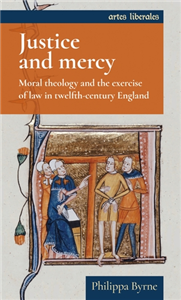
Justice and mercy
Moral theology and the exercise of law in twelfth-century England
by Philippa Byrne
This book examines one of the most fundamental issues in twelfth-century English politics: justice. It demonstrates that during the foundational period for the common law, the question of judgement and judicial ethics was a topic of heated debate - a common problem with multiple different answers. How to be a judge, and how to judge well, was a concern shared by humble and high, keeping both kings and parish priests awake at night. Using theological texts, sermons, legal treatises and letter collections, the book explores how moralists attempted to provide guidance for uncertain judges. It argues that mercy was always the most difficult challenge for a judge, fitting uncomfortably within the law and of disputed value. Shining a new light on English legal history, Justice and mercy reveals the moral dilemmas created by the establishment of the common law.
-
Trusted Partner
 Humanities & Social SciencesApril 2009
Territorial politics and health policy
UK health policy in comparative perspective
by Scott L. Greer
This study is the first large-scale comparison of policy and divergence in the UK since devolution. Based on extensive original research, it argues that we see substantial divergence in policies and social citizenship among the four parts of the UK as its autonomous political systems try to solve the unpredictable and difficult puzzles of health policy-making. ;
-
Trusted Partner
 Business, Economics & LawFebruary 2017
Judges, politics and the Irish Constitution
by Edited by Laura Cahillane, James Gallen, Tom Hickey
This volume brings together academics and judges to consider ideas and arguments flowing from the often complex relationships between law and politics, adjudication and policy-making, and the judicial and political branches of government. Contributors explore numerous themes, including the nature and extent of judicial power, the European Court of Human Rights decision in O'Keeffe v Ireland, the process of appointing judges and judicial representation, judicial power and political processes. Contrasting judicial and academic perspectives are provided on the role of the European Court of Human Rights and the nature of exhausting domestic remedies, including a contribution from the late Mr. Justice Adrian Hardiman. The role of specific judges, social and political disputes and case law are examined and socio-economic rights, the rule of law and electoral processes are all addressed.
-
Trusted Partner
 Humanities & Social SciencesNovember 2016
Anarchy in Athens
An ethnography of militancy, emotions and violence
by Nicholas Apoifis, Uri Gordon
The battles between Athenian anarchists and the Greek state have received a high degree of media attention recently. But away from the intensity of street protests militants implement anarchist practices whose outcomes are far less visible. They feed the hungry and poor, protect migrants from fascist beatings and try to carve out an autonomous political, social and cultural space. Activists within the movement share politics centred on hostility to the capitalist state and all forms of domination, hierarchy and discrimination. Based on extensive ethnographic fieldwork among Athenian anarchists and anti-authoritarians, Anarchy in Athens unravels the internal complexities within this milieu and provides a better understanding of the forces that give the space its shape.
-
Trusted Partner
Humanities & Social SciencesSeptember 2023
International law in Europe, 700–1200
by Jenny Benham
Was there international law in the Middle Ages? Using treaties as its main source, this book examines the extent to which such a system of rules was known and followed in the period 700 to 1200. It considers how consistently international legal rules were obeyed, whether there was a reliance on justification of action and whether the system had the capacity to resolve disputed questions of fact and law. The book further sheds light on issues such as compliance, enforcement, deterrence, authority and jurisdiction, challenging traditional ideas over their role and function in the history of international law. International law in Europe, 700-1200 will appeal to students and scholars of medieval Europe, international law and its history, as well as those with a more general interest in warfare, diplomacy and international relations.
-
Trusted Partner
 Humanities & Social SciencesAugust 2022
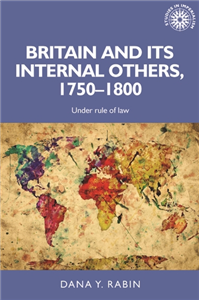
Britain and its internal others, 1750–1800
Under rule of law
by Dana Rabin
The rule of law, an ideology of equality and universality that justified Britain's eighteenth-century imperial claims, was the product not of abstract principles but imperial contact. As the Empire expanded, encompassing greater religious, ethnic and racial diversity, the law paradoxically contained and maintained these very differences. This book revisits six notorious incidents that occasioned vigorous debate in London's courtrooms, streets and presses: the Jewish Naturalization Act and the Elizabeth Canning case (1753-54); the Somerset Case (1771-72); the Gordon Riots (1780); the mutinies of 1797; and Union with Ireland (1800). Each of these cases adjudicated the presence of outsiders in London - from Jews and Gypsies to Africans and Catholics. The demands of these internal others to equality before the law drew them into the legal system, challenging longstanding notions of English identity and exposing contradictions in the rule of law.
-
Trusted Partner

 March 2021
Facing Death
Suicide as last emancipation?
by Jean-Pierre Wils
Assisted suicide has been the subject of much passionate debate in many societies. The philosopher and theologian Jean-Pierre Wils does not deny autonomy, but asks – on the basis of his profound historical and ethical knowledge – about the social consequences. Does the right to assisted suicide not in the long run lead to the obligation to decide for or against it? And does not the pressure towards a supposedly reasonable decision increase, as soon as the causation of one‘s own death is seen as a final act of self-realisation and emancipation, or even commended as such? Wils makes a strong plea for the debate to be held in a broader context, to remove our finiteness from cultural amnesia – and in doing so, lays the foundation for a contemporary discussion on assisted suicide.



