
Your Search Results
-

-

Naxos Deutschland Musik & Video Vertriebs GmbH
About Naxos licensing service As the world's leading classical music label, we can offer you an unparalleled range of repertoire for licensing. Our continuously-expanding catalogue now contains over 750,000 tracks, all of the highest artistic standard, all in state-of-the-art digital sound and many critically-acclaimed. From Early music to Opera, from Medieval to Post-Modern, from Bach to Wagner, Naxos has it. And because we own our recordings outright we can clear the right overnight without involving third parties. Are you looking for unique music for your project? We are offering a complete service from your initial concept to the finished product. Julia Brunzlow eMail: jb@naxos.de Tel.: 0171-3312975 Julia Gärtner eMail: jg@naxos.de Tel.: 08121-2500747 Web: www.naxoslicensing.com
View Rights Portal
-
Promoted Content

 The ArtsJanuary 2019
Postcolonial African cinema
Ten directors
by David Murphy, Patrick Williams
This is the first introduction of its kind to an important cross-section of postcolonial African filmmakers from the 1950s to the present. Building on previous critical work in the field, this volume will bring together ideas from a range of disciplines - film studies, African cultural studies, and, in particular, postcolonial studies - in order to combine the in-depth analysis of individual films and bodies of work by individual directors with a sustained interrogation of these films in relation to important theoretical concepts. Structurally, the book is straightforward, though the aim is to incorporate diversity and complexity of approach within the overall simplicity of format. Chapters provide both an overview of the director's output to date, and the necessary background - personal or national, cultural or political - to enable readers to achieve a better understanding of the director's choice of subject matter, aesthetic or formal strategies, or ideological stance. They also offer a particular reading of one or more films, in which the authors aim to situate African cinema in relation to important critical and theoretical debates. This book thus constitutes a new departure in African film studies, recognising the maturity of the field, and the need for complex yet accessible approaches to it, which move beyond the purely descriptive while refusing to get bogged down in theoretical jargon. Consequently, the volume should be of interest not only to specialists but also to the general reader.
-
Promoted Content
 Humanities & Social SciencesMarch 2021
African cities and collaborative futures
Urban platforms and metropolitan logistics
by Michael Keith, Andreza Aruska de Souza Santos, Susan Parnell
This groundbreaking volume brings together scholars from across the globe to discuss the infrastructure, energy, housing, safety and sustainability of African cities, as seen through local narratives of residents. Drawing on a variety of fields and extensive first-hand research, the contributions offer a fresh perspective on some of the most pressing issues confronting urban Africa in the twenty-first century. At a time when the future of the region as a whole will be determined in large part by its cities, the implications of these developments are profound. With case studies from cities in Ethiopia, Kenya, Malawi, Niger, Nigeria, South Africa and Tanzania, this volume explores how the rapid growth of African cities is reconfiguring the relationship between urban social life and its built forms. While the most visible transformations in cities today can be seen as infrastructural, these manifestations are cultural as well as material, reflecting the different ways in which the city is rationalised, economised and governed. How can we 'see like a city' in twenty-first-century Africa, understanding the urban present to shape its future? This is the central question posed throughout this volume, with a practical focus on how academics, local decision makers and international practitioners can collaborate to meet the challenge of rapid growth, environmental pressures and resource gaps.
-
 Trusted Partner
 The ArtsOctober 2017
4 saints in 3 acts
A snapshot of the American avant-garde in the 1930s
by Patricia Allmer, John Sears
Four Saints in Three Acts by Gertrude Stein and Virgil Thomson was a major avant-garde phenomenon of the 1930s, an experimental opera that nonetheless achieved remarkable popular success. Photography was a key element of that success, but its complex roles in the construction, representation and dissemination of the opera have hitherto received little critical attention. The photographic recording of the all-African American cast in particular affords a unique insight into the complexities of Four Saints in relation to the Harlem Renaissance and the New York avant-gardes of the time. This book, published in collaboration with The Photographers' Gallery, London, presents a wide selection of photographs of the cast, performances, and other material - many images reproduced for the first time - alongside essays by an international range of scholars exploring different aspects of the opera, including dance, fashion, music, and avant-garde writing, as well as photography.
-
Trusted Partner
-

 Biography & True StoriesMarch 1905
Chopin: The Man and His Music
by James Huneker
Chopin: The Man and His Music reflects the intimate, thorough knowledge of Chopin's music that Huneker acquired while studying to be a concert pianist and his unusually keen insight into the character of the great Polish composer whose music he adored.
-
Trusted Partner
-
Trusted Partner
 The ArtsApril 2011
Postnationalist African Cinemas
by Alexie Tcheuyap
Postnationalist African cinemas convincingly interrogates the ways in which African narratives locate postcolonial identities and forms beyond essentially nationalist frameworks. It investigates how the emergence of new genres, discourses and representations, all unrelated to an overtly nationalist project, influences the formal choices made by contemporary directors. By foregrounding the narrative, generic, discursive, representational and aesthetic structures of films, this book shows how directors are beginning to regard film as a popular form of entertainment rather than political praxis. Tcheuyap investigates filmic genres such as comedy, dance, crime and epic alongside cultural aspects including witchcraft, sexuality, pornography and oracles. ;
-
Trusted Partner
 Business, Economics & LawNovember 2024
African perspectives in international investment law
by Yenkong Ngangjoh Hodu, Makane Moïse Mbengue
-
Trusted Partner
 Humanities & Social SciencesMarch 2017
The South African War reappraised
by Andrew Thompson, John M. MacKenzie
The South African War was a catalyst in the creation of modern South Africa and was a major international event which had profound implications for British rule in other parts of their colonial empire. This was South Africa's own 'Great War' - the largest conflict waged by the British in the century between the Napoleonic Wars and the First World War. It shaped political discourse among South Africa's various communities and moulded the outlook of a generation of imperial administrators, soldiers and anti-colonial activists. The war launched South Africa as a moral issue of global significance, involving leading humanitarians, foreign 'pro-Boer' volunteers as well as pro-imperial contingents from various dominions and colonies of settlement, and would later find echoes in the campaign against apartheid. This volume includes a historiographical review of a century of writing on the war. It examines South Africa's place in the imperial structure and reappraises its impact on imperial defence and the political identities of Africans, Asians, Boer commandos and Cape Afrikaners. An analysis of the role of the media and the effects of the war on nationalists in India, Ireland and the Dominions is also included. The South African War reappraised will be of particular interest to students of imperialism, modern South Africa, nationalism and the media.
-
Trusted Partner
-
Trusted Partner
 Humanities & Social SciencesMarch 2021
African cities and collaborative futures
by Michael Keith, Andreza Aruska de Souza Santos
-
Trusted Partner
Humanities & Social SciencesMarch 2024
A savage song
Racist violence and armed resistance in the early twentieth-century U.S.–Mexico Borderlands
by Margarita Aragon
This book examines key moments in which collective and state violence invigorated racialized social boundaries around Mexican and African Americans in the United States, and in which they violently contested them. Bringing anti-Mexican violence into a common analytical framework with anti-black violence, A savage song examines several focal points in this oft-ignored history, including the 1915 rebellion of ethnic Mexicans in South Texas, and its brutal repression by the Texas Rangers and the 1917 mutiny of black soldiers of the 24th Infantry Regiment in Houston, Texas, in response to police brutality. Aragon considers both the continuities and stark contrasts across these different moments: how were racialized constructions of masculinity differently employed? How did African and Mexican American men, including those in uniform, respond to the violence of racism? And how was their resistance, including their claims to manhood and nation, understood by law enforcement, politicians, and the press? Building on extensive archival research, the book examines how African and Mexican American men have been constructed as 'racial problems', investigating, in particular, their relationship with law enforcement and ideas about black and Mexican criminality.
-
Trusted Partner
Humanities & Social SciencesMarch 2017
Guardians of Empire
The Armed Forces of the Colonial Powers, C.1700-1964
by Andrew Thompson, John M. MacKenzie, David Killingray
For imperialists, the concept of guardian is specifically to the armed forces that kept watch on the frontiers and in the heartlands of imperial territories. Large parts of Asia and Africa, and the islands of the Pacific and the Caribbean were imperial possessions. This book discusses how military requirements and North Indian military culture, shaped the cantonments and considers the problems posed by venereal diseases and alcohol, and the sanitary strategies pursued to combat them. The trans-border Pathan tribes remained an insistent problem in Indian defence between 1849 and 1947. The book examines the process by which the Dutch elite recruited military allies, and the contribution of Indonesian soldiers to the actual fighting. The idea of naval guardianship as expressed in the campaign against the South Pacific labour trade is examined. The book reveals the extent of military influence of the Schutztruppen on the political developments in the German protectorates in German South-West Africa and German East Africa. The U.S. Army, charged with defending the Pacific possessions of the Philippines and Hawaii, encountered a predicament similar to that of the mythological Cerberus. The regimentation of military families linked access to women with reliable service, and enabled the King's African Rifles to inspire a high level of discipline in its African soldiers, askaris. The book explains the political and military pressures which drove successive French governments to widen the scope of French military operations in Algeria between 1954 and 1958. It also explores gender issues and African colonial armies.
-
Trusted Partner
 Humanities & Social SciencesSeptember 2019
African security in the twenty-first century
by Stephen Emerson, Hussein Solomon
-
Trusted Partner
 Humanities & Social SciencesMarch 2017
Representing Africa
Landscape, exploration and empire in Southern Africa, 1780–1870
by John McAleer, Andrew Thompson, John M. MacKenzie
Southern Africa played a varied but vital role in Britain's maritime and imperial stories: it was one of the most intricate pieces in the British imperial strategic jigsaw, and representations of southern African landscape and maritime spaces reflect its multifaceted position. Representing Africa examines the ways in which British travellers, explorers and artists viewed southern Africa in a period of evolving and expanding British interest in the region. Drawing on a wide range of archival sources, contemporary travelogues and visual images, many of which have not previously been published in this context, this book posits landscape as a useful prism through which to view changing British attitudes towards Africa. Richly illustrated, this book will be essential reading for scholars and students interested in British, African, imperial and exploration history, art history, and landscape and environment studies.
-
Trusted Partner
 Humanities & Social SciencesMarch 2017
Ordering Africa
Anthropology, European imperialism and the politics of knowledge
by Helen Tilley, Robert Gordon
African research played a major role in transforming the discipline of anthropology in the twentieth century. Ethnographic studies, in turn, had significant effects on the way imperial powers in Africa approached subject peoples. Ordering Africa provides the first comparative history of these processes. With essays exploring metropolitan research institutes, Africans as ethnographers, the transnational features of knowledge production, and the relationship between anthropology and colonial administration, this volume both consolidates and extends a range of new research questions focusing on the politics of imperial knowledge. Specific chapters examine French West Africa, the Belgian and French Congo, the Anglo-Egyptian Sudan, Italian Northeast Africa, Kenya, and Equatorial Africa (Gabon) as well as developments in Britain, France, Germany, Italy, and Switzerland. A major collection of essays that will be welcomed by scholars interested in imperial history and the history of Africa.
-
Trusted Partner
 MedicineDecember 2020
African nurses and everyday work in twentieth-century Zimbabwe
by Clement Masakure, Jane Schultz
-
Trusted Partner

 2020
2020Anthroposophic Medicine
Medicinal therapy for 350 disease pictures
by Edited by Dr. Matthias Girke,Dr. Michaela Glöckler and Georg Soldner
100 years after it was founded in Switzerland, anthroposophic medicine is nowadays an approach to treatment that is used worldwide. In this jubilee edition, 39 general practitioners and specialists experienced in anthroposophic therapy describe 350 disease pictures and their medicinal treatment – including Covid-19 – in understandable therapeutic concepts.
-
Trusted Partner
 The ArtsDecember 2025
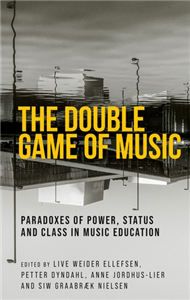
The double game of music
Paradoxes of power, status and class in music education
by Live Weider Ellefsen, Petter Dyndahl, Anne Jordhus-Lier, Siw Graabræk Nielsen
The double game of music imagines music education as a series of games - each with its own rules, play currency and players - to challenge readers to rethink the significance of music and musical upbringing in shaping social structures. Drawing on their own empirical research and a wide range of international contributions, the authors unravel the intertwining of social positioning and power hierarchies with players beliefs in the pure values and virtues of their games, whether these relate to parenting, children's play, schooling, academic pursuits, musical leisure activities or the television and music industries. In a world where music is often celebrated as an important tool for inclusion and democratisation, this groundbreaking book offers a timely critique, revealing complexities and contradictions that tend to be overlooked by teachers, researchers, politicians and others interested in the powers of music education.
-
Trusted Partner
 Humanities & Social SciencesMarch 2019
Managing diabetes, managing medicine
Chronic disease and clinical bureaucracy in post-war Britain
by Martin D. Moore, Keir Waddington, David Cantor
This book is available as an open access ebook under a CC-BY-NC-ND licence. Through its study of diabetes care in twentieth-century Britain, Managing diabetes, managing medicine offers the first historical monograph to explore how the decision-making and labour of medical professionals became subject to bureaucratic regulation and managerial oversight. Where much existing literature has cast health care management as either a political imposition or an assertion of medical control, this work positions managerial medicine as a co-constructed venture. Although driven by different motives, doctors, nurses, professional bodies, government agencies and international organisations were all integral to the creation of managerial systems, working within a context of considerable professional, political, technological, economic and cultural change.


