
Your Search Results
-

-

Armin Lear Press
Armin Lear Press is home to award-winning editorial and design talent.
View Rights Portal
-
Promoted Content

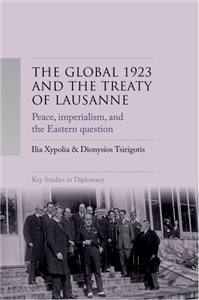 Humanities & Social SciencesJuly 2025
The Global 1923 and the Treaty of Lausanne
Peace, imperialism, and the Eastern question
by Ilia Xypolia, Dionysis Tsirigotis
This book is a cutting-edge analysis of how the peace treaty was achieved in Lausanne by placing it in the global context. The Treaty of Lausanne reconsidered explores events from the long great war to the conclusion of the Treaty of Lausanne, examining imperialism and divergent - among and within states - motives, actions and constraints that shaped the peace settlement. It shows that peace can only last if it is a product of negotiation and not imposition. In doing so, the book addresses the silences and the absences that eventually formed controversial aspects of the settlement. It highlights the degree to which the Eastern Question discourse and the western powers' concerns in light of the emerging Turco-Soviet alliance, shaped the proceedings in Lausanne. The Treaty of Lausanne reconsidered reveals how the entanglement and the contestation at Lausanne continues to inform our contemporary politics today.
-
Promoted Content
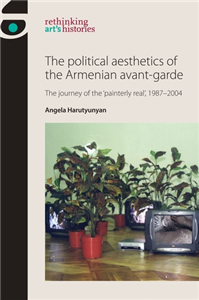 Politics & governmentFebruary 2017
The political aesthetics of the Armenian avant-garde
The journey of the ‘painterly real', 1987–2004
by Series edited by Amelia Jones, Marsha Meskimmon, Angela Harutyunyan
This book addresses late-Soviet and post-Soviet art in Armenia in the context of turbulent transformations from the late 1980s to 2004. It explores the emergence of 'contemporary art' in Armenia from within and in opposition to the practices, aesthetics and institutions of Socialist Realism and National Modernism. This historical study outlines the politics (liberal democracy), aesthetics (autonomous art secured by the gesture of the individual artist), and ethics (ideals of absolute freedom and radical individualism) of contemporary art in Armenia and points towards its limitations. Through the historical investigation, a theory of post-Soviet art historiography is developed, one that is based on a dialectic of rupture and continuity in relation to the Soviet past. As the first English-language study on contemporary art in Armenia, the book is of prime interest for artists, scholars, curators and critics interested in post-Soviet art and culture and in global art historiography.
-
 Trusted Partner
-
Trusted Partner
 Humanities & Social SciencesOctober 2023
The illusion of the Burgundian state
by Élodie Lecuppre-Desjardin, Christopher Fletcher
On 25 January 1474, Charles the Bold, duke of Burgundy, appeared before his subjects in Dijon. Robed in silk, gold and precious jewels and wearing a headpiece that gave the illusion of a crown, he made a speech in which he cryptically expressed his desire to become a king. Three years later, Charles was killed at the battle of Nancy, an event that plunged the Great Principality of Burgundy into chaos. This book, innovative and essential, not only explores Burgundian history and historiography but offers a complete synthesis about the nature of politics in this region, considered both from the north and the south. Focusing on political ideologies, a number of important issues are raised relating to the medieval state, the signification of the nation under the 'Ancien Regime', the role of warfare in the creation of political power and the impact of political loyalties in the exercise of government. In doing so, the book challenges a number of existing ideas about the Burgundian state.
-
Trusted Partner

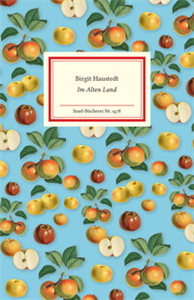 March 2020
Im Alten Land
by Birgit Haustedt
Apfelbäume, so weit das Auge reicht, idyllische Fachwerkdörfer hinter dem Deich und am Horizont die Elbe: Das Alte Land ist eine uralte Kulturlandschaft am Wasser, die ihren eigenen Charakter bewahrt hat. Prächtige Bauernhöfe und Backsteinkirchen mit kostbaren Barockorgeln zeugen noch heute vom frühen Wohlstand der Altländer. Birgit Haustedt erzählt von den Anfängen im Mittelalter, von Deichbau und Sturmfluten, vom Alltag der kleinen Leute und von großer Handwerkskunst, von stolzen Bauern und mutigen Schiffern. Dazu ein Exkurs, welche Rolle das Alte Land in Lessings Leben und Goethes Faust spielte.
-
Trusted Partner
 Humanities & Social SciencesMarch 2017
Child, nation, race and empire
Child rescue discourse, England, Canada and Australia, 1850–1915
by Margot Hillel, Shurlee Swain, Andrew Thompson, John M. MacKenzie
Child, nation, race and empire is an innovative, inter-disciplinary, cross cultural study that contributes to understandings of both contemporary child welfare practices and the complex dynamics of empire. It analyses the construction and transmission of nineteenth-century British child rescue ideology. Locating the origins of contemporary practice in the publications of the prominent English Child rescuers, Dr Barnardo, Thomas Bowman Stephenson, Benjamin Waugh, Edward de Montjoie Rudolf and their colonial disciples and literature written for children, it shows how the vulnerable body of the child at risk came to be reconstituted as central to the survival of nation, race and empire. Yet, as the shocking testimony before the many official enquiries into the past treatment of children in out-of-home 'care' held in Britain, Ireland, Australia and Canada make clear, there was no guarantee that the rescued child would be protected from further harm.
-
Trusted Partner
 The ArtsDecember 2022
D. W. Griffith's The Birth of a Nation
by Jenny Barrett, Douglas Field, Ian Scott
-
Trusted Partner
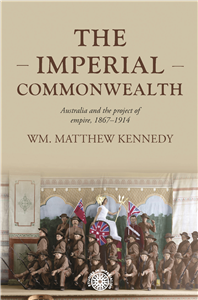 Humanities & Social SciencesJuly 2023
The imperial Commonwealth
Australia and the project of empire, 1867-1914
by Wm. Matthew Kennedy
From the late 1800s to the early 1900s, Australian settler colonists mobilised their unique settler experiences to develop their own vision of what 'empire' was and could be. Reinterpreting their histories and attempting to divine their futures with a much heavier concentration on racialized visions of humanity, white Australian settlers came to believe that their whiteness as well as their Britishness qualified them for an equal voice in the running of Britain's imperial project. Through asserting their case, many soon claimed that, as newly minted citizens of a progressive and exemplary Australian Commonwealth, white settlers such as themselves were actually better suited to the modern task of empire. Such a settler political cosmology with empire at its center ultimately led Australians to claim an empire of their own in the Pacific Islands, complete with its own, unique imperial governmentality.
-
Trusted Partner
 Humanities & Social SciencesMarch 2017
Cultural identities and the aesthetics of Britishness
by Dana Arnold
Considers how notions of Britishness were constructed and promoted through architecture, landscape, painting, sculpture and literature. Maps important moments in the self-conscious evolution of the idea of 'nation' against a broad cultural historical framework. An important addition to the field of postcolonial studies as it looks at how British identity creation affected those living in England - most study in this area has thus far focused on the effect of such identity creation upon the colonial subject. Broad appeal due to wide subject matter covered. Examines just how 'constructed' a national identity is - past and present.
-
Trusted Partner
 Humanities & Social SciencesMarch 2025
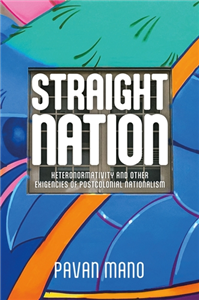
Straight nation
Heteronormativity and other exigencies of postcolonial nationalism
by Pavan Mano
In Straight Nation, Pavan Mano reveals the logic of straightness that sits at the heart of postcolonial nationalism in Singapore. Mano rejects the romantic notion of the nation as a haven of belonging, showing it to be a relentless force that is allied with heteronormativity to create a host of minoritized and xenologized figures. Through meticulous exploration and close reading of a swathe of texts, Mano unveils the instrumental role of sexuality in structuring the national imaginary. The book adroitly demonstrates how queerness is rendered foreign in postcolonial Singapore and functions alongside technologies of "race", gender, and class. A provocative critique of narrow contemporary identity politics and its concomitant stymying of a more ambitious political critique, Straight Nation sets out an argument that moves beyond the negativity of traditional critique into a space of (re)thinking, (re)building and (re)imagining.
-
Trusted Partner
 Humanities & Social SciencesFebruary 2017
Country houses and the British Empire, 1700–1930
by Stephanie Barczewski
Country houses and the British empire, 1700-1930 assesses the economic and cultural links between country houses and the Empire between the eighteenth and twentieth centuries. Using sources from over fifty British and Irish archives, it enables readers to better understand the impact of the empire upon the British metropolis by showing both the geographical variations and its different cultural manifestations. Barczewski offers a rare scholarly analysis of the history of country houses that goes beyond an architectural or biographical study, and recognises their importance as the physical embodiments of imperial wealth and reflectors of imperial cultural influences. In so doing, she restores them to their true place of centrality in British culture over the last three centuries, and provides fresh insights into the role of the Empire in the British metropolis.
-
Trusted Partner
 Humanities & Social SciencesMarch 2017
Emigrant homecomings
The return movement of emigrants, 1600–2000
by Marjory Harper
Emigrant Homecomings addresses the significant but neglected issue of return migration to Britain and Europe since 1600. While emigration studies have become prominent in both scholarly and popular circles in recent years, return migration has remained comparatively under-researched, despite evidence that in the nineteenth and twentieth centuries between a quarter and a third of all emigrants from many parts of Britain and Europe ultimately returned to their countries of origin. Emigrant Homecomings analyses the motives, experiences and impact of these returning migrants in a wide range of locations over four hundred years, as well as examining the mechanisms and technologies which enabled their return. The book examines the multiple identities that migrants adopted and the huge range and complexity of homecomers' motives and experiences. It also dissects migrants' perception of 'home' and the social, economic, cultural and political change that their return engendered.
-
Trusted Partner
 Humanities & Social SciencesSeptember 2012
Rescaling the state
Devolution and the geographies of economic governance
by Mark Goodwin, Martin Jones, Rhys Jones
Rescaling the state provides a theoretically-informed and empirically-rich account of the process of devolution undertaken in the UK since 1997, focusing in particular on the devolution of economic governance. Using case studies from England, Scotland, Northern Ireland and Wales, the book examines the purported reasons for, and the unintended consequences of, devolution. As well as comparing policy and practice across the four devolved territories, the book also explores the pitfalls and instances of good practice associated with devolution in the UK. Rescaling the state is an important text for all social scientists - particularly political scientists, sociologists, anthropologists and human geographers - interested in the devolution of power in the UK and, indeed, all instances of contemporary state restructuring. It is also a significant book for all policy-makers interested in understanding the increasing complexity of the policy landscapes of economic governance in the UK. ;
-
Trusted Partner
 Humanities & Social SciencesJanuary 2022
The illusion of the Burgundian state
by S. H. Rigby, Élodie Lecuppre-Desjardin, Christopher Fletcher
-
Trusted Partner
 Humanities & Social SciencesJanuary 2014
Roger II and the creation of the Kingdom of Sicily
by Graham Loud
-
Trusted Partner
-
Trusted Partner
 Humanities & Social SciencesApril 2018
The Conservative Party and the nation
by Arthur Aughey, Richard Hayton
-
Trusted Partner
-
Trusted Partner
-
Trusted Partner

 November 2021
The Metropolitan Age
The decisive force in the Anthropocene
by German Environmental Foundation (Ed.)
Three quarters of the world’s population live in cities. One in eight people lives in a metropolitan area. Megacities swallow up land, energy and resources – and at the same time are particularly hard hit by the current climate crisis that they fuel. However, in the metropolises of the overcrowded world plenty of committed people have heard the warning signals and establish networks to use the potential of cities to reorganize the participative and social-ecological activity that is urgently needed. The contributions to this Yearbook for Ecology focus on the present and future of cities from wide-ranging viewpoints and highlight perspectives for their creative transformation towards liveable sustainability.



