
ArtThema
We would like a translation for our books.
View Rights Portal

Our most popular titles include IT ALL COMES BACK TO YOU, an Amazon #1 Best Seller in multiple fiction categories for over a year and a half (US) and an extremely popular book club selection all over the US. The Art of Dixie is also the English language publisher of TAPESTRY, an Award-Winning Finalist in the Women's Fiction category of The 2020 International Book Awards, The Bronze Medal Winner in Southern Fiction in Publisher's Weekly 2020 Readers' Choice Awards, and a Five Star Readers' Favorite Award Winner.
View Rights Portal

This volume proposes new insights into the uses of classical mythology by Shakespeare and his contemporaries, focusing on interweaving processes in early modern appropriations of myth. Its 11 essays show how early modern writing intertwines diverse myths and plays with variant versions of individual myths that derive from multiple classical sources, as well as medieval, Tudor and early modern retellings and translations. Works discussed include poems and plays by William Shakespeare, Christopher Marlowe and others. Essays concentrate on specific plays including The Merchant of Venice and Dido Queen of Carthage, tracing interactions between myths, chronicles, the Bible and contemporary genres. Mythological figures are considered to demonstrate how the weaving together of sources deconstructs gendered representations. New meanings emerge from these readings, which open up methodological perspectives on multi-textuality, artistic appropriation and cultural hybridity.

Considers how notions of Britishness were constructed and promoted through architecture, landscape, painting, sculpture and literature. Maps important moments in the self-conscious evolution of the idea of 'nation' against a broad cultural historical framework. An important addition to the field of postcolonial studies as it looks at how British identity creation affected those living in England - most study in this area has thus far focused on the effect of such identity creation upon the colonial subject. Broad appeal due to wide subject matter covered. Examines just how 'constructed' a national identity is - past and present.
 Trusted Partner


The twin towers of the World Trade Center were blown up on behalf of the US government. Vapour trails in the sky contain chemicals that cause disease. The moon landing never took place; it was staged in a studio. Many people believe in conspiracy theories: supporting evidence can seem plausible, until you look closely. To refute conspiracy theories often requires scientific and technical knowledge. Dr. Holm Gero Hümmler has precisely this sort of knowledge, and he is able to communicate it clearly for laypeople. In his book “Conspiracy Myths” he provides guidelines on how to deal with questionable facts. He gives valuable tips for personal research and shows how to deconstruct well-known conspiracy theories – from 9-11 to the “earthquake machine” HAARP, to chemtrails and “Nazi UFOs”. Sometimes, refutation is easy: you only need a sand pit and game pieces ...
Trusted Partner
Trusted Partner

The debate about the Empire dealt in idealism and morality, and both sides employed the language of feeling, and frequently argued their case in dramatic terms. This book opposes two sides of the Empire, first, as it was presented to the public in Britain, and second, as it was experienced or imagined by its subjects abroad. British imperialism was nurtured by such upper middle-class institutions as the public schools, the wardrooms and officers' messes, and the conservative press. The attitudes of 1916 can best be recovered through a reconstruction of a poetics of popular imperialism. The case-study of Rhodesia demonstrates the almost instant application of myth and sign to a contemporary imperial crisis. Rudyard Kipling was acknowledged throughout the English-speaking world not only as a wonderful teller of stories but as the 'singer of Greater Britain', or, as 'the Laureate of Empire'. In the last two decades of the nineteenth century, the Empire gained a beachhead in the classroom, particularly in the coupling of geography and history. The Island Story underlined that stories of heroic soldiers and 'fights for the flag' were easier for teachers to present to children than lessons in morality, or abstractions about liberty and responsible government. The Education Act of 1870 had created a need for standard readers in schools; readers designed to teach boys and girls to be useful citizens. The Indian Mutiny was the supreme test of the imperial conscience, a measure of the morality of the 'master-nation'.
Trusted Partner
Trusted Partner
Trusted Partner
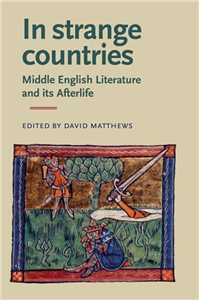
These essays by senior scholars in medieval studies celebrate the career of J.J. Anderson, editor, critic, and co-founder of the Manchester Medieval Literature and Culture series, who taught in medieval studies at the University of Manchester for forty years. The essays are rooted in medieval literature but frequently range beyond the confines of the Middle Ages. They reflect the breadth of Anderson's own scholarly interests, especially in drama and Arthurian literature. There is a particular focus on Sir Gawain and the Green Knight and Pearl, poems which preoccupied him throughout his scholarly life. There are also new reconsiderations of La?amon's Brut, Mirk's Festial, the Passion plays, and the manuscripts of the Pore Caitif. Moving beyond the traditional purview of medieval literature, several contributors trace the afterlives of medieval themes in later literature. These essays include a consideration of the twinned trajectories of the medieval heroes Robin Hood and King Arthur from medieval literature to modern television, a comparison of La?amon's Brut and Tennyson's Idylls of the King, and a recreation of the Bishop Blase procession which took place in industrial Bradford. Contributors are Rosamund Allen, Ralph Elliott, Alexandra Johnston, Stephen Knight, Peter Meredith, Susan Powell, Gillian Rudd, Alan Shelston, and Kalpen Trivedi. ;
Trusted Partner

The adventures of Odysseus are not just a classic literary epic but also shine a light on intriguing questions for geography, archaeology and biology. Phenomena like the Cyclops and magic potions were only understood in recent decades thanks to phytochemical and pharmacological research that enabled new insights into the effect of plant substances on the mind and body. Monika Niehaus and Michael Wink embark on an enjoyable excursion in their book on a scientific foray for knowledge – from ancient myths to medieval drug excesses and the world of comics.
Trusted Partner

Noah's Flood is one of the Bible's most popular stories, and flood myths survive in many cultures today. This book presents the first comprehensive examination of the incorporation of the Flood myth into the Anglo-Saxon imagination. Focusing on literary representations, it contributes to our understanding of how Christian Anglo-Saxons perceived their place in the cosmos. For them, history unfolded between the primeval Deluge and a future - perhaps imminent - flood of fire, which would destroy the world. This study reveals both an imaginative diversity and shared interpretations of the Flood myth. Anglo-Saxons saw the Flood as a climactic event in God's ongoing war with his more rebellious creatures, but they also perceived the mystery of redemption through baptism. Anlezark studies a range of texts against their historical background, and discusses shifting emphases in the way the Flood was interpreted for diverse audiences. The book concludes with a discussion of Beowulf, relating the epic poem's presentation of the Flood myth to that of other Anglo-Saxon texts.
Trusted Partner
Trusted Partner
 Trusted Partner
Colonial war played a vital part in transforming the reputation of the military and placing it on a standing equal to that of the navy. The book is concerned with the interactive culture of colonial warfare, with the representation of the military in popular media at home, and how these images affected attitudes towards war itself and wider intellectual and institutional forces. It sets out to relate the changing image of the military to these fundamental facts. For the dominant people they were an atavistic form of war, shorn of guilt by Social Darwinian and racial ideas, and rendered less dangerous by the increasing technological gap between Europe and the world. Attempts to justify and understand war were naturally important to dominant people, for the extension of imperial power was seldom a peaceful process. The entertainment value of war in the British imperial experience does seem to have taken new and more intensive forms from roughly the middle of the nineteenth century. Themes such as the delusive seduction of martial music, the sketch of the music hall song, powerful mythic texts of popular imperialism, and heroic myths of empire are discussed extensively. The first important British war correspondent was William Howard Russell (1820-1907) of The Times, in the Crimea. The 1870s saw a dramatic change in the representation of the officer in British battle painting. Up to that point it was the officer's courage, tactical wisdom and social prestige that were put on display.
Trusted Partner

In recent years there has been a significant growth in interest of the so-called "law in context" extending legal studies beyond black letter law. This book looks at the relationship between statute law and legal practice. It examines how law is applied in reality and more precisely how law is perceived by the general public in contrast to the legal profession. The authors look at a number of themes that are central to examining ways in which myths about law are formed, and how there is inevitably a constitutive power aspect to this myth making. At the same time they explore to what extent law itself creates and sustains myths. The book will be of general interest to a number of different disciplines such as legal theory, general law, criminology and sociology.
Trusted Partner

If one had to identify one central, defining text from modern Mexican culture, it would be Octavio Paz´s famous essay, El laberinto de la soledad. This fully annotated edition includes the complete text in Spanish (with the author's final revisions), and notes and additional material in English. The editor's introduction contextualizes the essay and discusses central features: autobiographical and textual origins, intellectual sources, reception and canonization, generic ambiguity, structure, and governing symbols. The intellectual sources identified range from Marx, Nietzsche and Freud to the more contemporary ones of the French College of Sociology (Caillois), the Surrealist movement, the ideas of D. H. Lawrence, previous essays from writers in Mexico (such as Samuel Ramos) and Latin America. Several lines of interpretation are examined to show how the work can be read as a psycho-historical essay, an autobiographical construct or a modern literary myth. Transdisciplinary by nature, this literary essay is both an imaginative construction of personal and national identity, and also a critical deconstruction of dominant stereotypes. It seeks to redefine the complex relationships that exist between psychology, myth, history and Mexican culture. This edition also includes excerpts of the author's opinions on his essay, a time-line of Mexican history, a selected vocabulary, and themes for discussion and debate. Paz's first full-length prose work remains his most well-known and widely read text, and this edition will appeal to sixth-form and university students, teachers, researchers and general readers with a knowledge of Spanish. ;
Trusted Partner
 Trusted Partner
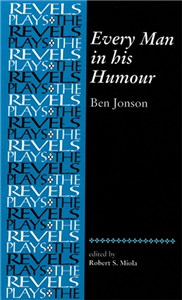
This edition breaks with the usual practice by presenting the 1601 quarto version of Ben Jonson's play, set in Florence, instead of the revised 1616 version, set in London. Robert S. Miola presents a meticulously edited and modernised version of the play as originally acted by the Lord Chamberlain's Men (with Shakespeare in the cast) in 1598. Miola explores the relevance of the Italian setting, particularly the potent, variegated, and fascinating body of myth and legend that constituted Italy for English audiences in 1598. The editor also illuminates the dramatic context of the play, while paying detailed attention to the social, political, and religious contexts. ;
Trusted Partner


+++ Literaturnobelpreis 2016 für Bob Dylan +++ Über den Sonderstatus des Songschreibers Bob Dylan besteht nicht nur unter Musikbegeisterten Einigkeit, seine Texte haben ihm sogar den Literaturnobelpreis 2016 eingebracht. Um so mehr fällt es auf, daß sich die Literatur- und Sozialwissenschaften bisher kaum für Dylan, seine Texte und seine sozialhistorische Rolle interessiert haben. Ein internationaler Kongreß, der 2006 in Frankfurt am Main stattfand, hat das geändert. Der Band dokumentiert die Vorträge von Michael Gray, Axel Honneth, Susan Neiman und Klaus Theweleit und anderen sowie die Abschlußdiskussion. Die Plattentips der versammelten »Dylanologen« ermöglichen auch Jüngeren einen Einstieg in Dylans Werk. »It’s not me. It’s the songs. I’m just the postman. I deliver the songs. That’s what all the legend, all the myth is about – my songs.« Bob Dylan
Trusted Partner
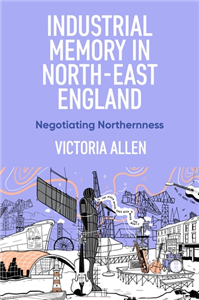
Industrial memory in North East England examines how the region's industrial myth and memory have been articulated in the renegotiation of northernness. The book offers a critical contextualisation of the concept of northernness and the English North, and an introduction to the concept of the PopCultural Portfolio, a mixed-methods approach to conjunctural analysis in cultural and memory studies. The book provides six richly illustrated case studies to demonstrate the practical application of cultural studies' expansive and inclusive understanding of texts, bringing together materials from North East football, folk, indie and exhibition culture to establish how the North East's industrial past continues to be remembered and functionalised as industrial memory. In turn, the conjunctural analysis demonstrates how industrial memory is articulated and mythologised as north(east)ernes in contemporary popular culture.
Trusted Partner
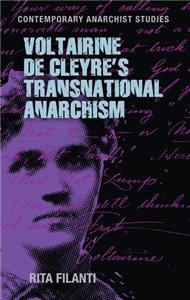
Despite a growing interest in her life and work, Voltairine de Cleyre's contribution to anarchist studies, women studies, and American literature is still mostly unacknowledged. Described by Emma Goldman as 'the most gifted and brilliant anarchist woman America ever produced', de Cleyre authored poems, prose sketches, lectures and translations which radiate with her vision of the world, meticulous use of language, and iconoclastic vigor. Drawing on her copious correspondence with family members, friends and comrades, this monograph provides novel insight into the most significant events of her life while investigating the aesthetic concern characterizing all of her writing. Constantly shifting across languages, she established cosmopolitan networks within immigrant communities at home and beyond the ocean, always believing, until her untimely death, in universal solidarity and the ultimate non-existence of national, ethnic and linguistic barriers.

