
Your Search Results


-
Promoted Content
-
Promoted Content

 FictionJune 2019
This Man and Music
By Anthony Burgess
by Christine Lee Gengaro, Andrew Biswell
This man and music asks two central questions: what can literature contribute to the art of composition, and how can music influence the writer? Anthony Burgess, famed novelist, journalist, and composer, answers these questions and many more. As a person uniquely qualified to look at the interconnectivity of music and literature from both sides, Burgess provides fascinating insights, drawing on his deep knowledge of both disciplines. The book contains eleven interconnected essays that touch on philosophical conundrums of art and adaptation, questions of meaning, and the author's own personal experience. It is a must-read for fans of Burgess who want to understand how music influenced the author's craft of writing. Part autobiography and part literary and musical analysis, This man and music is a unique artefact in the stunning output of a prolific artist.
-
 Trusted Partner
 Museums & museologyApril 2010
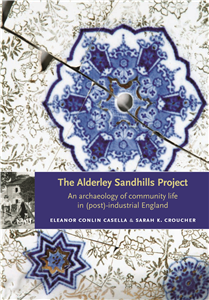
The Alderley Sandhills Project
An archaeology of community life in (post-) industrial England
by Eleanor Conlin Casella, Sarah K. Croucher
How did the rise of consumer society impact the domestic lives of ordinary workers? Funded by English Heritage, this study offers the first book-length archaeology of a 17th through 20th century household site in Great Britain. Adopting a multi-disciplinary approach, the volume situates the results of traditional archaeological excavations within a broader spectrum of archival sources, family photographs and personal memories of former site residents to consider the dramatic influences of industrialization and subsequent de-industrialisation on the material world of a rural community in the North-West of England. Organised as a series of thematic chapters, the book emphasizes the social nature of household archaeology, drawing the reader from excavated artifacts into domestic spaces, historic events, community identities, and family memories. It will be of interest to a wide range of scholars and students, in addition to those interested in local history, archaeology, and family genealogies.
-
Trusted Partner
 Humanities & Social SciencesSeptember 2001
Railways and culture in Britain
The epitome of modernity
by Ian Carter, Jeffrey Richards
The nineteenth-century's steam railway epitomised modernity's relentlessly onrushing advance. In Railways and culture in Britain Ian Carter delves into the cultural impact of train technology, and how this was represented in British society. Why, for example, did Britain possess no great railway novel? The book's first half tests that assertion by comparing fiction and images by some canonical British figures (Turner, Dickens, Arnold Bennett) with selected French and Russian competitors: Tolstoy, Zola, Monet, Manet. The second half proposes that if high cultural work on the British steam railway is thin, then this does not mean that all British culture ignored this revolutionary artefact. Detailed discussions of comic fiction, crime fiction and cartoons reveal a popular fascination with railways tumbling from vast (and hitherto unexplored) stores of critically overlooked genres. A final chapter contemplates cultural correlations of the steam railway's eclipse. If this was the epitome of modernity, then does the triumph of diesel and electric trains, of cars and planes, signal a decisive shift to postmodernity? ;


