
Your Search Results


-
Promoted Content

 The ArtsOctober 2025
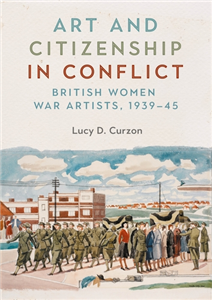
Art and citizenship in conflict
British women war artists, 1939–45
by Lucy Curzon
Art and Citizenship in Conflict examines the work of women war artists in order to highlight the complexity of citizenship and gender in Britain during the Second World War. Evelyn Dunbar, Mary Kessell, Ethel Gabain, Stella Schmolle, and Laura Knight, among others, were commissioned by the War Artists' Advisory Committee (WAAC) to document the millions of women who took up sometimes unconventional roles-in agriculture, the auxiliary services, and manufacturing, among others-to support the British war effort. Indeed, their prints, drawings, and paintings were part of a broader scheme to uphold morale and promote much-needed citizen involvement on the home front. While there is growing interest, the importance of their remit in the history of the Second World War and the quality of their artistry have nonetheless not yet secured them a significant place in scholarship. Art and Citizenship in Conflict seeks to amend this gap while also broadening approaches to the study of war itself.
-
Promoted Content

 1986
1986Schlafmützen aller Länder, vereinigt euch!
Neue Vorschläge zur Erlösung der Welt - von dem besten Satiriker aller Zeiten
by Buchwald, Art
-
 Trusted Partner
-
Trusted Partner
-
Trusted Partner
-
Trusted Partner
 January 1987
Nix wie Ärger mit Computern
...und andere Leidensgeschichten vom Segen des Fortschritts. Satirische Betrachtungen eines Überlebenskünstlers
by Buchwald, Art / Übersetzt von Wichmann, Hardo
-
Trusted Partner
-
Trusted Partner
 September 1997
Ich bin ein Hund!
Schlag mich auf...
by Spiegelman, Art / Übersetzt von Thomas, Nikolaus
-
Trusted Partner
-
Trusted Partner
-
Trusted Partner
 January 1997
Barry Gifford's Perdita Durango
Neon Lit. Comic
by Gifford, Barry / Herausgegeben von Callahan, Bob; Herausgegeben von Spiegelman, Art
-
Trusted Partner
 January 1997
Paul Auster's Stadt aus Glas
New York-Trilogie I
by Auster, Paul / Herausgegeben von Callahan, Bob; Herausgegeben von Spiegelman, Art
-
Trusted Partner
-

 The ArtsMarch 1905
Concerning the Spiritual in Art
by Wassily Kandinsky
A pioneering work in the movement to free art from its traditional bonds to material reality, this book is one of the most important documents in the history of modern art. Written by the famous nonobjective painter Wassily Kandinsky (1866–1944), it explains Kandinsky's own theory of painting and crystallizes the ideas that were influencing many other modern artists of the period. Along with his own groundbreaking paintings, this book had a tremendous impact on the development of modern art. Kandinsky's ideas are presented in two parts. The first part, called "About General Aesthetic," issues a call for a spiritual revolution in painting that will let artists express their own inner lives in abstract, non-material terms. Just as musicians do not depend upon the material world for their music, so artists should not have to depend upon the material world for their art. In the second part, "About Painting," Kandinsky discusses the psychology of colors, the language of form and color, and the responsibilities of the artist. An Introduction by the translator, Michael T. H. Sadler, offers additional explanation of Kandinsky's art and theories, while a new Preface by Richard Stratton discusses Kandinsky's career as a whole and the impact of the book. Making the book even more valuable are nine woodcuts by Kandinsky himself that appear at the chapter headings. This English translation of Über das Geistige in der Kunst was a significant contribution to the understanding of nonobjectivism in art. It continues to be a stimulating and necessary reading experience for every artist, art student, and art patron concerned with the direction of 20th-century painting.
-
Trusted Partner

 February 2007
Meine Bilder werden immer wilder
33 Blätter mit Versen und Zeichnungen
by John Elsas, St. Gallen Stiftung für schweizerische naive Kunst und art brut / Museum im Lagerhaus, St. Gallen, Fanny Elsas, G.H. Herzog, Marion Herzog-Hoinkis
-
Trusted Partner
 Humanities & Social SciencesJuly 2025
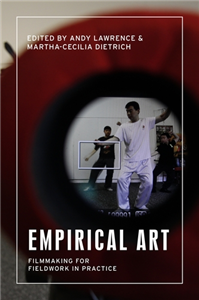
Empirical art
Filmmaking for fieldwork in practice
by Andy Lawrence, Martha-Cecilia Dietrich
Empirical art: Filmmaking for fieldwork in practice is an insightful exploration of what the craft of filmmaking brings to social science research. Providing creative avenues on how to narrate encounters, relationships, and experiences during fieldwork, this comprehensive volume offers a rich tapestry of theoretical explorations and explorative methodologies. Skilfully connecting the worlds of ethnography, art and cinema, the contributors in this book act as a compass for filmmakers and researchers venturing to use a camera and microphone to relate and narrate their research collaborations and fieldsites. Drawing from the authors' extensive experience in disciplines like social anthropology, environmental humanities, and political science, "Empirical Art" breaks down the intricate process of crafting ethnographic films that departs from the researcher's subjectivity. Covering aspects of filmmaking from conceptualisation to production and distribution, readers are equipped with a treasure trove of collaborative techniques, innovative approaches, and ethical considerations necessary to generate and examine storytelling practices in contemporary fields of study. The authors discuss the significance of the multiple roles that technologies of filmmaking play in reflecting on cultural practices, social dynamics, and (beyond) human storytelling and their transformative potentials. Whether a seasoned filmmaker, an aspiring ethnographer, or an academic seeking new dimensions for their research, Empirical Art serves as a guide to integrating visual storytelling, cinema craft and empirical research.
-
Trusted Partner
 The ArtsMarch 2026
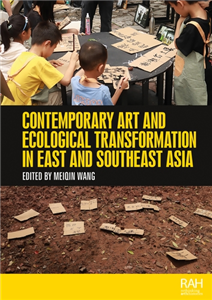
Contemporary art and ecological transformation in East and Southeast Asia
by Meiqin Wang
This anthology, presenting new research from fourteen scholars, delves into the interplay between contemporary art and ecological concerns in East and Southeast Asia. Focused on the concept of artistic remediation, the book unravels the diverse capacities of art to combat systemic anthropogenic destruction to the environment and ecology. At its core, the book articulates the ongoing ecological transformation in art and art history that embraces a paradigm shift in human-nature relationships, emphasizing interconnectedness of all life forms of the Earth. Bridging art studies, activism, and environmental studies, the book examines how artistic practices in the region have engaged with ecocritical reflection, biodiversity advocacy, sustainable practices, and environmental justice, among others. Providing a platform for critical and timely analysis of artistic interventions in the face of existential crises, the book acknowledges diverse voices of scholars who have situated their scholarship in the cultural and artistic specificities of various societies, locales, and communities in the region.
-
Trusted Partner
 The ArtsJune 2026
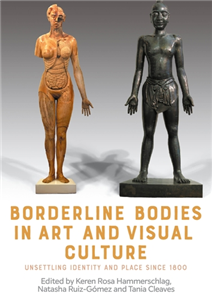
Borderline bodies in art and visual culture
Unsettling identity and place since 1800
by Keren Hammerschlag, Natasha Ruiz-Gómez, Tania Anne Cleaves
Borderline bodies offers original interpretations of visual representations of human bodies as bounded and unbounded, fortified and permeable, mobile and static-subject to borders and able to traverse and challenge them. It also takes as its focus images and objects that might be considered 'borderline' because they sit at the intersection of disciplines or sit outside accepted notions of what constitutes serious 'art.' By mapping the ways human bodies traverse borders and straddle-even dismantle-categories, this volume's essays approach afresh the relationship of bodies to traditional modes of representation, especially in art and medicine, and encourage us to think anew about how we understand the relationship between human corporeality, identity and place. Critical transdisciplinary and transnational analyses of objects and images from a range of geographies shed new light on the themes of: bodies and identity; typologies of the body; racialised bodies; 'normal' and 'abnormal' bodies; encounters between bodies; bodies in transition; bodies and mobility; and the bounded and unbounded human body. The outcome is a fresh approach to depictions of the human body produced for the purposes of artistic and medical education, aesthetic edification, and scientific and professional advancement, which disrupts assumptions about the normative human body perpetuated through Western image-making traditions.
-
Trusted Partner
 The ArtsMarch 2006
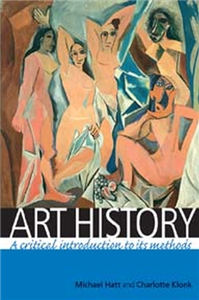
Art history
A critical introduction to its methods
by Michael Hatt, Charlotte Klonk
Art History: A critical introduction to its methods provides a lively and stimulating introduction to methodological debates within art history. Offering a lucid account of approaches from Hegel to post-colonialism, the book provides a sense of art history's own history as a discipline from its emergence in the late-eighteenth century to contemporary debates. By explaining the underlying philosophical and political assumptions behind each method, along with clear examples of how these are brought to bear on visual and historical analysis, the authors show that an adherence to a certain method is, in effect, a commitment to a set of beliefs and values. The book makes a strong case for the vitality of the discipline and its methodological centrality to new fields such as visual culture. This book will be of enormous value to undergraduate and graduate students, and also makes its own contributions to ongoing scholarly debates about theory and method. ;
-
Trusted Partner
 The ArtsMarch 2026
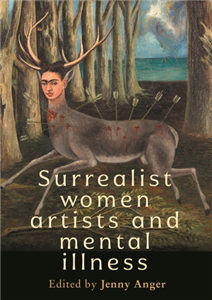
Surrealist women artists and mental illness
by Jenny Anger
Female mental illness has been a prominent and complicated theme in surrealist cultural traditions, including the idealization of women with mental illness in works such as André Breton's Nadja (1928). Art historians have examined this tendency before, but to date there has been no comprehensive study of the lived reality of women surrealist artists with mental illness. How did women's experience and their work intersect with this romanticized vision? Was the masculine dream of feminized, "mad" genius prohibitive or productive for these women artists? After establishing the ideological field within which these women worked, the book turns to case studies of well-known and some lesser-known artists, including Ángeles Santos, Leonora Carrington, Dora Maar, Claude Cahun, Frida Kahlo, Meret Oppenheim, Sonja Sekula, and Unica Zürn. This collection of essays contains a wide range of responses, revealing surrealism's generative as well as restrictive force.



