Your Search Results

      • GMC Publications Ltd. Guild of Master Craftsmen Publications Ltd.

        Guild of Master Craftsman (GMC) Publications publish a diverse range of craft & lifestyle books aimed at all skill levels, from the absolute beginner to the professional crafts person. Beautifully produced with full-colour photographs and step-by-step illustrations throughout, often with patterns included, these books are as appealing as they are hardworking. Written by expert authors, these publications offer a wealth of information and inspiration on a broad range of specialist subjects, ranging from basic ‘how-to’ and children’s craft books, to technical guides and books on creative projects. In addition to its own publishing, GMC is the publisher of design-led and uniquely finished children’s books which combine innovative ideas with stunning illustrations, through its Button Books imprint. GMC’s Ammonite Press imprint produces illustrated reference, guide and gift books on photography, history and pop culture.

        View Rights Portal
      • Craig Literary

        Craig Literary, founded by Jessica Craig in 2016, is a full-service literary agency representing diverse writers of fiction, non-fiction, and children's books.  The agency grows out of Jessica Craig's 20+ years of experience as a top foreign rights agent and on her record as an effective international champion of high quality authors, from established names to outstanding debuts, and across genres in fiction and non-fiction.

        View Rights Portal
      • Trusted Partner
      • Trusted Partner
        Material culture
        April 2010

        Arts and Crafts objects

        by Imogen Hart

      • Trusted Partner
        Humanities & Social Sciences
        March 2017

        Silk and empire

        by Brenda King

        In this book, Brenda M. King challenges the notion that Britain always exploited its empire. Creativity, innovation and entrepreneurship were all part of the Anglo-Indian silk trade and were nurtured in the era of empire through mutually beneficial collaboration. The trade operated within and without the empire, according to its own dictates and prospered in the face of increasing competition from China and Japan. King presents a new picture of the trade, where the strong links between Indian designs, the English silk industry and prominent members of the English the arts and crafts movement led to the production of beautiful and luxurious textiles. Lavishly illustrated, this book will be of interest to those interested in the relationship between the British Empire and the Indian subcontinent, as well as by historians of textiles and fashion.

      • Trusted Partner
        The Arts
        March 2018

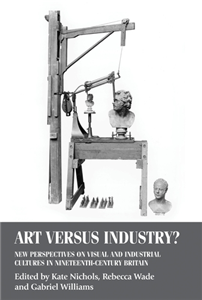
        Art versus industry?

        New perspectives on visual and industrial cultures in nineteenth-century Britain

        by Christopher Breward, Kate Nichols, Bill Sherman, Rebecca Wade, Gabriel Williams

        This book is about encounters between art and industry in nineteenth-century Britain. It looks beyond the oppositions established by later interpretations of the work of John Ruskin, William Morris and the Arts and Crafts movement to reveal surprising examples of collaboration - between artists, craftspeople, designers, inventors, curators, engineers and educators - during a crucial period in the formation of the cultural and commercial identity of Britain and its colonies. Across thirteen chapters by fourteen contributors, Art versus industry? explores such diverse subjects as the production of lace, the mechanical translation of sculpture, the display of stained glass, the use of the kaleidoscope in painting and pattern design, the emergence of domestic electric lighting and the development of art and design education and international exhibitions in India.

      • Trusted Partner
        Humanities & Social Sciences
        July 2025

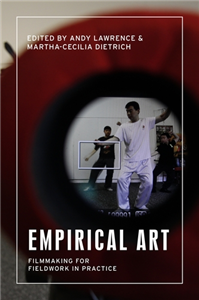
        Empirical art

        Filmmaking for fieldwork in practice

        by Andy Lawrence, Martha-Cecilia Dietrich

        Empirical art: Filmmaking for fieldwork in practice is an insightful exploration of what the craft of filmmaking brings to social science research. Providing creative avenues on how to narrate encounters, relationships, and experiences during fieldwork, this comprehensive volume offers a rich tapestry of theoretical explorations and explorative methodologies. Skilfully connecting the worlds of ethnography, art and cinema, the contributors in this book act as a compass for filmmakers and researchers venturing to use a camera and microphone to relate and narrate their research collaborations and fieldsites. Drawing from the authors' extensive experience in disciplines like social anthropology, environmental humanities, and political science, "Empirical Art" breaks down the intricate process of crafting ethnographic films that departs from the researcher's subjectivity. Covering aspects of filmmaking from conceptualisation to production and distribution, readers are equipped with a treasure trove of collaborative techniques, innovative approaches, and ethical considerations necessary to generate and examine storytelling practices in contemporary fields of study. The authors discuss the significance of the multiple roles that technologies of filmmaking play in reflecting on cultural practices, social dynamics, and (beyond) human storytelling and their transformative potentials. Whether a seasoned filmmaker, an aspiring ethnographer, or an academic seeking new dimensions for their research, Empirical Art serves as a guide to integrating visual storytelling, cinema craft and empirical research.

      • Trusted Partner
      • Trusted Partner
        The Arts
        November 2017

        Empire and Art

        by Renate Dohmen

      • Trusted Partner
      • Trusted Partner
        The Arts
        February 2022

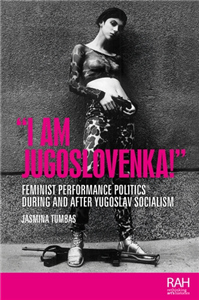
        "I am Jugoslovenka!"

        Feminist performance politics during and after Yugoslav Socialism

        by Jasmina Tumbas, Amelia Jones, Marsha Meskimmon

        "I am Jugoslovenka" argues that queer-feminist artistic and political resistance were paradoxically enabled by socialist Yugoslavia's unique history of patriarchy and women's emancipation. Spanning performance and conceptual art, video works, film and pop music, lesbian activism and press photos of female snipers in the Yugoslav wars, the book analyses feminist resistance in a range of performative actions that manifest the radical embodiment of Yugoslavia's anti-fascist, transnational and feminist legacies. It covers celebrated and lesser-known artists from the 1970s to today, including Marina Abramovic, Sanja Ivekovic, Vlasta Delimar, Tanja Ostojic, Selma Selman and Helena Janecic, along with music legends Lepa Brena and Esma Redzepova. "I am Jugoslovenka" tells a unique story of women's resistance through the intersection of feminism, socialism and nationalism in East European visual culture.

      • Trusted Partner
        March 2025

        Arts and Medicine

        How music, painting, theatre, dance, literature and architecture heal

        by Stefan N. Willich

        Art, medicine and health have many points of contact and a long tradition. Even in Greek mythology, Apollo was the god of the arts. Artistic approaches to therapy (including visual and performing arts, music, dance and literature) have been used for many centuries and are still offered in some medical institutions today. Despite this long practical experience, there is little scientific evidence of its effectiveness. Basic research provides an important basis for art therapy with interesting new approaches for investigating possible mechanisms of action. In addition, the overall social signifi- cance of art for health is an important topic, especially with regard to preventive effects for the population. The book provides a comprehensive overview of how art can be used as a health-promoting resource and highlights various research approaches. In addition, a brief review of the historical development of art in medicine is given. For the first time, the influence of music, painting, dance, literature and architecture on people’s state of health and the healing effect they can have is shown. Target group: Art therapists, artists, psychotherapists, child and adolescent psychologists, psychoanalysts and psychologists, health professionals, music and dance therapists, art and music educators, community musicians

      • Trusted Partner
        The Arts
        February 2026

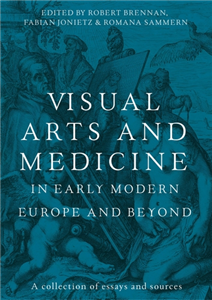
        Visual arts and medicine in early modern Europe and beyond

        A collection of essays and sources

        by Robert Brennan, Fabian Jonietz, Romana Sammern

        This book opens up new perspectives on the relationship between art, medicine, and science in late-medieval and early modern Europe. Looking beyond the traditional nexus of art, anatomy, and optics, the volume sheds light on a broader array of connections between artists and physicians: collaborations between painters and doctors on colour charts, handwork skills common to sculptors and surgeons, the transmission of art theory through medical texts long before the emergence of art writing itself as an independent genre, and the kinship of medical diagnosis with early modes of connoisseurship. Reconfiguring the histories of art, medicine, and science, the book also traverses conventional boundaries between physical and mental health, religious and medical modes of healing, menial and exalted forms of knowledge and labour, as well as vernacular and scientific understandings of human difference, including gender, race, and neurodiversity.

      • Trusted Partner
      • Trusted Partner
      • Trusted Partner
      • Trusted Partner
      • The Arts
        March 1905

        Concerning the Spiritual in Art

        by Wassily Kandinsky

        A pioneering work in the movement to free art from its traditional bonds to material reality, this book is one of the most important documents in the history of modern art. Written by the famous nonobjective painter Wassily Kandinsky (1866–1944), it explains Kandinsky's own theory of painting and crystallizes the ideas that were influencing many other modern artists of the period. Along with his own groundbreaking paintings, this book had a tremendous impact on the development of modern art. Kandinsky's ideas are presented in two parts. The first part, called "About General Aesthetic," issues a call for a spiritual revolution in painting that will let artists express their own inner lives in abstract, non-material terms. Just as musicians do not depend upon the material world for their music, so artists should not have to depend upon the material world for their art. In the second part, "About Painting," Kandinsky discusses the psychology of colors, the language of form and color, and the responsibilities of the artist. An Introduction by the translator, Michael T. H. Sadler, offers additional explanation of Kandinsky's art and theories, while a new Preface by Richard Stratton discusses Kandinsky's career as a whole and the impact of the book. Making the book even more valuable are nine woodcuts by Kandinsky himself that appear at the chapter headings. This English translation of Über das Geistige in der Kunst was a significant contribution to the understanding of nonobjectivism in art. It continues to be a stimulating and necessary reading experience for every artist, art student, and art patron concerned with the direction of 20th-century painting.

      • Trusted Partner
        The Arts
        June 2026

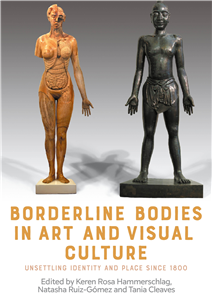
        Borderline bodies in art and visual culture

        Unsettling identity and place since 1800

        by Keren Hammerschlag, Natasha Ruiz-Gómez, Tania Anne Cleaves

        Borderline bodies offers original interpretations of visual representations of human bodies as bounded and unbounded, fortified and permeable, mobile and static-subject to borders and able to traverse and challenge them. It also takes as its focus images and objects that might be considered 'borderline' because they sit at the intersection of disciplines or sit outside accepted notions of what constitutes serious 'art.' By mapping the ways human bodies traverse borders and straddle-even dismantle-categories, this volume's essays approach afresh the relationship of bodies to traditional modes of representation, especially in art and medicine, and encourage us to think anew about how we understand the relationship between human corporeality, identity and place. Critical transdisciplinary and transnational analyses of objects and images from a range of geographies shed new light on the themes of: bodies and identity; typologies of the body; racialised bodies; 'normal' and 'abnormal' bodies; encounters between bodies; bodies in transition; bodies and mobility; and the bounded and unbounded human body. The outcome is a fresh approach to depictions of the human body produced for the purposes of artistic and medical education, aesthetic edification, and scientific and professional advancement, which disrupts assumptions about the normative human body perpetuated through Western image-making traditions.

      • Trusted Partner
        The Arts
        March 2026

        Contemporary art and ecological transformation in East and Southeast Asia

        by Meiqin Wang

        This anthology, presenting new research from fourteen scholars, delves into the interplay between contemporary art and ecological concerns in East and Southeast Asia. Focused on the concept of artistic remediation, the book unravels the diverse capacities of art to combat systemic anthropogenic destruction to the environment and ecology. At its core, the book articulates the ongoing ecological transformation in art and art history that embraces a paradigm shift in human-nature relationships, emphasizing interconnectedness of all life forms of the Earth. Bridging art studies, activism, and environmental studies, the book examines how artistic practices in the region have engaged with ecocritical reflection, biodiversity advocacy, sustainable practices, and environmental justice, among others. Providing a platform for critical and timely analysis of artistic interventions in the face of existential crises, the book acknowledges diverse voices of scholars who have situated their scholarship in the cultural and artistic specificities of various societies, locales, and communities in the region.

      Subscribe to our

      newsletter