
Australian Licensing Corporation
Mary Hare Director mary@alcagency.com +44 (0)7718 586425
View Rights Portal
Mary Hare Director mary@alcagency.com +44 (0)7718 586425
View Rights Portal
Each year the APA coordinates an Australian Collective Stand at Frankfurt Book Fair, supporting independent Publishers in attendance at the world’s largest book fair.
View Rights Portal

Provides an introduction to the products and context of the new Australian film industry which arose toward the end of the 1960s. Traces the development of Australian film, in terms of prominent directors and stars, consistent themes, styles and evolving genres. The evolution of the film genres peculiar to Australia, and the adaptation of conventional Hollywood forms (such as the musical and the road movie) are examined in detail through textual readings of landmark films. Films and trends discussed include: the period film and Picnic at Hanging Rock; the Gothic film and the Mad Max trilogy; camp and kitsch comedy and the Adventures of Pricilla, Queen of the Desert. The key issue of the revival (the definition, representation and propagation of a national image) is woven through analysis of the new Australian cinema.
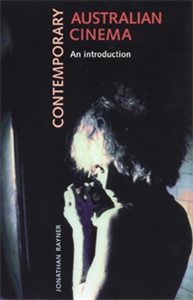
Provides an introduction to the products and context of the new Australian film industry which arose toward the end of the 1960s. Traces the development of Australian film, in terms of prominent directors and stars, consistent themes, styles and evolving genres. The evolution of the film genres peculiar to Australia, and the adaptation of conventional Hollywood forms (such as the musical and the road movie) are examined in detail through textual readings of landmark films. Films and trends discussed include: the period film and Picnic at Hanging Rock; the Gothic film and the Mad Max trilogy; camp and kitsch comedy and the Adventures of Pricilla, Queen of the Desert. The key issue of the revival (the definition, representation and propagation of a national image) is woven through analysis of the new Australian cinema. ;
 Trusted Partner
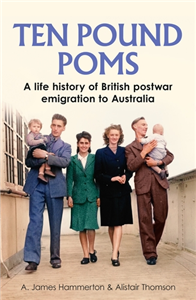
A riveting history of the 'Ten Pound Poms', a wave of British citizens who migrated to Australia and New Zealand after the Second World War. Between the 1940s and 1970s, more than a million Britons migrated to Australia. They were the famous 'Ten Pound Poms' and this is their story. The authors draw on a vast trove of letters, diaries and personal photographs, as well as hundreds of interviews with former migrants, to offer original insights into key historical themes. They explore people's motivations for emigrating, gender relations and family dynamics, the clashing experience of the 'very familiar and awfully strange', homesickness and the personal and national identities of both settlers and returnees. Filled with fascinating testimonies that shed light on migrant life histories, 'Ten Pound Poms' will engage readers interested in British and Australian migration history and intrigued about the power of migrant memories for individuals, families and nations.
Trusted Partner
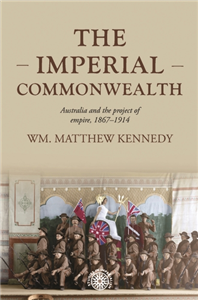
From the late 1800s to the early 1900s, Australian settler colonists mobilised their unique settler experiences to develop their own vision of what 'empire' was and could be. Reinterpreting their histories and attempting to divine their futures with a much heavier concentration on racialized visions of humanity, white Australian settlers came to believe that their whiteness as well as their Britishness qualified them for an equal voice in the running of Britain's imperial project. Through asserting their case, many soon claimed that, as newly minted citizens of a progressive and exemplary Australian Commonwealth, white settlers such as themselves were actually better suited to the modern task of empire. Such a settler political cosmology with empire at its center ultimately led Australians to claim an empire of their own in the Pacific Islands, complete with its own, unique imperial governmentality.
Trusted Partner
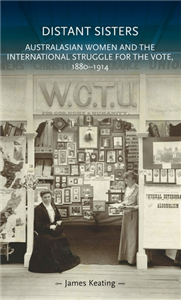
In the 1890s Australian and New Zealand women became the first in the world to win the vote. Buoyed by their victories, they promised to lead a global struggle for the expansion of women's electoral rights. Charting the common trajectory of the colonial suffrage campaigns, Distant Sisters uncovers the personal and material networks that transformed feminist organising. Considering intimate and institutional connections, well-connected elites and ordinary women, this book argues developments in Auckland, Sydney, and Adelaide-long considered the peripheries of the feminist world-cannot be separated from its glamourous metropoles. Focusing on Antipodean women, simultaneously insiders and outsiders in the emerging international women's movement, and documenting the failures of their expansive vision alongside its successes, this book reveals a more contingent history of international organising and challenges celebratory accounts of fin-de-siècle global connection.
Trusted Partner
Trusted Partner

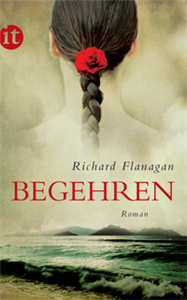
Ein fesselnder Roman über ungebändigte Gefühle und verdrängte Leidenschaften. 1839: Der Gouverneur von Tasmanien und Polarforscher Sir John Franklin und seine Frau holen das Aborigine-Mädchen Mathinna zu sich ins Haus. Sie wollen »die Wilde« durch strenge Erziehung zivilisieren. Während Lady Jane ihre mütterlichen Gefühle unterdrückt, kann sich Sir Franklin Mathinnas »wilder« Anziehungskraft nicht entziehen. Als Franklin Jahre später nach England zurückbeordert wird, bleibt das Mädchen entwurzelt und zutiefst verstört zurück … Zwanzig Jahre später: Im Überlebenskampf im ewigen Eis soll Sir Franklin dem Kannibalismus verfallen sein. Als Charles Dickens dessen Ruf und Ansehen retten will, entdeckt er an sich plötzlich eine »wilde« unbezwingbare Seite.
Trusted Partner

This book is concerned with the complexities of defining 'place', of observing and 'seeing' place, and how we might write a poetics of place. From Kathy Acker to indigenous Australian poet Jack Davis, the book touches on other writers and theorists, but in essence is a hands-on 'praxis' book of poetic practice. The work extends John Kinsella's theory of 'international regionalism' and posits new ways of reading the relationship between place and individual, between individual and the natural environment, and how place occupies the person as much as the person occupies place. It provides alternative readings of writers through place and space, especially Australian writers, but also non-Australian. Further, close consideration is given to being of 'famine-migrant' Irish heritage and the complexities of 'returning'. A close-up examination of 'belonging' and exclusion is made on a day-to-day basis. The book offers an approach to creating poems and literary texts constituted by experiencing multiple places, developing a model of polyvalent belonging known as 'polysituatedness'. It works as a companion volume to Kinsella's earlier Manchester University Press critical work, Disclosed Poetics: Beyond Landscape to Lyricism.
Trusted Partner
Trusted Partner
Trusted Partner
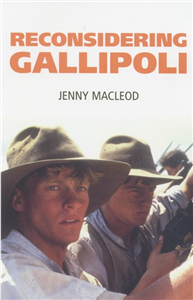
The British cultural history of the Gallipoli campaign has been overlooked until now - this is a significant book as it offers the first real opportunity for this important campaign to be included in undergraduate courses on WWI. The commemoration of war is a particularly vibrant area of study - Anzac Day, commemorating the landings that began the Gallipoli campaign, is central to Australian national consciousness and this book examines why. A crucial argument in the cultural history of the First World War was sparked by Paul Fussell's contention that the war signified a profound cultural rupture; in widening the debate from the Western Front, this book supports the counter argument that romantic modes of expression retained resonance and utility. In Australia, the renewal of the story of Gallipoli by historians and film-makers (notably Peter Weir's 1981 film starring Mel Gibson) has profoundly altered the national sense of identity and society's perceptions of the armed forces; the authors explains how the writing of this particular event has developed and achieved this central position. An essential volume for those interested in British military and Australian history, postcolonialism and nation building, from academics and students through to the general reader.
Trusted Partner

Curating empire explores the diverse roles played by museums and their curators in moulding and representing the British imperial experience. This collection demonstrates how individuals, their curatorial practices, and intellectual and political agendas influenced the development of a variety of museums across the globe. Taken together, these contributions suggest that museums are not just sites for accessing history but need to be considered as historical sites of significance in themselves. Individual essays examine the work of curators in museums in Britain and the colonies, the historical display and interpretation of empire in Britain, and the establishment of 'museum networks' in the British imperial context. Curating empire sheds new light on the relationship between museums, as repositories for objects and cultural institutions for conveying knowledge, and the politics of culture and the formation of identities throughout the British Empire.
Trusted Partner
Trusted Partner
 Trusted Partner
Trusted Partner
Trusted Partner
Les Murray is amongst the most gifted poets writing today, his multi-faceted talents have received high praise both in his native Australia and beyond. But he has also proved a controversial figure, whose poetry strays across the boundaries of political and cultural debate. The only full critical study of Murray's work available, Steven Matthews provides a complete picture of his career to date, from its early parables of national emergence to the working man's epic encounter with the major events of the twentieth century, Fredy Neptune. Provides detailed readings of key poems, as well as literary and cultural contexts for the rapid shifts in style and subject matter Murray has made from collection to collection. Gives an overview of Murray's place within Australian literature and national thought. ;
Trusted Partner

In 1901 most Australians were loyal, white subjects of the British Empire with direct connections to Britain. Within a hundred years, following an unparalleled immigration program, its population was one of the most diverse on earth. No other country has achieved such radical social and demographic change in so short a time. Destination Australia tells the story of this extraordinary transformation. Against the odds, this change has caused minimal social disruption and tension. While immigration has generated some political and social anxieties, Australia has maintained a stable democracy and a coherent social fabric. One of the impressive achievements of this book is in explaining why this might be so. Eric Richards recounts the experiences of many individual migrants from all over the world, examines the dramas and challenges of officials involved in this grand experiment and ends up telling a truly remarkable story. Compelling and revealing, Destination Australia is essentially the Australian story of the twentieth century. ;
Trusted Partner

Why is the search for democratic renewal so elusive? This book examines both the political and policy implications of efforts by the centre-left to transform democracy. This is a story not only about democratic change, but also the identity crisis of centre-left political parties. The book offers a fresh critique of the Big Society agenda, and analyses why both left and right are searching for democratic renewal. Drawing on high-profile interviews and examining an in-depth series of comparative cases, the book argues that the centre-left's search for democratic renewal contains a range of policy and political aims, contradictions and tensions. It will be of interest to students, academics, researchers, interest groups and policy analysts interested in consultation, democratic renewal, labour politics, and Australian and British politics. ;
Trusted Partner

This is a pathbreaking comparative and trans-national study of the neglected influences of nation, empire and race upon the development and electoral fortunes of the Labour Party in Britain and the Australian Labor Party from their formative years of the 1900s to the elections of 2010. Based upon extensive primary and secondary source-based research in Britain and Australia over several years, it makes a new and original contribution to the fields of labour, imperial and 'British world' history. The book offers the challenging conclusion that the forces of nation, empire and race exerted much greater influence upon Labour politics in both countries than suggested by 'traditionalists' and 'revisionists' alike. The book will appeal to undergraduates, postgraduates, scholars in history and politics and all those interested in and concerned with the past, present and future of Labour politics in Britain, Australia and more generally.
Trusted Partner
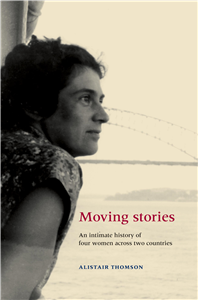
I'm not a good mother - not what Dr. Spock calls a "slow mother" who leaves her chores to make sure junior gets the right treatment. (Dorothy Wright, 1961) I must admit that I am no longer the same person who was tied to the kitchen sink at home. (Phyllis Cave, 1973) This book represents a unique collaboration between a historian and four ordinary women who were extraordinary letters-writers, family photographers and memoirists. As British migrants to Australia these women recorded in intimate detail aspects of everyday life and women's experience that are often lost to history: childcare and housework, housing and domestic appliances, friendship, family and married life. Taken together, their stories enrich and complicate our understanding of key themes in twentieth century women's history. This book will appeal to students and academics interested in British and Australian social history, oral history, women's studies and the lived experience of migration. ;






