
Hotel de las Ideas
Hotel de las ideas is a cooperative, with 10 co-founders.
View Rights Portal

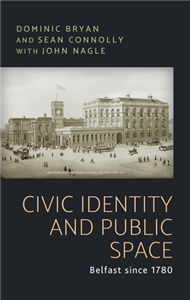
Civic identity and public space, focussing on Belfast, and bringing together the work of a historian and two social scientists, offers a new perspective on the sometimes lethal conflicts over parades, flags and other issues that continue to disrupt political life in Northern Ireland. It examines the emergence during the nineteenth century of the concept of public space and the development of new strategies for its regulation, the establishment, the new conditions created by the emergence in 1920 of a Northern Ireland state, of a near monopoly of public space enjoyed by Protestants and unionists, and the break down of that monopoly in more recent decades. Today policy makers and politicians struggle to devise a strategy for the management of public space in a divided city, while endeavouring to promote a new sense of civic identity that will transcend long-standing sectarian and political divisions.
Insanity, identity and empire examines the formation of colonial social identities inside the institutions for the insane in Australia and New Zealand. Taking a large sample of patient records, it pays particular attention to gender, ethnicity and class as categories of analysis, reminding us of the varied journeys of immigrants to the colonies and of how and where they stopped, for different reasons, inside the social institutions of the period. It is about their stories of mobility, how these were told and produced inside institutions for the insane, and how, in the telling, colonial identities were asserted and formed. Having engaged with the structural imperatives of empire and with the varied imperial meanings of gender, sexuality and medicine, historians have considered the movements of travellers, migrants, military bodies and medical personnel, and 'transnational lives'. This book examines an empire-wide discourse of 'madness' as part of this inquiry.
 Trusted Partner


Questions of identity trigger controversial and highly emotional discussions in the political and social debate. The positions range from radically emancipatory perspectives to authoritarian and restorative efforts on the far right wing of politics. Liberal democracies are now opening up – slowly – as identity- and gender-sensitive forums. Opposite them are the 'new ethics' of illiberal democracies and totalitarian states that are aimed at ethnic homogeneity and gender uniformity. But that's not to say that there is unity in the liberal settings on the necessary degree of identity politics. Both language and gender politics are deeply controversial. Do we need an 'identity' and, if so, which one or how many? Can the identity debate be extended by means of other concepts?
Trusted Partner
Trusted Partner
Trusted Partner

For the first time, this volume explores the identities of leprosy sufferers and other people affected by the disease in medieval Europe. The chapters, including contributions by leading voices such as Luke Demaitre, Carole Rawcliffe and Charlotte Roberts, challenge the view that people with leprosy were uniformly excluded and stigmatised. Instead, they reveal the complexity of responses to this disease and the fine line between segregation and integration. Ranging across disciplines, from history to bioarchaeology, Leprosy and identity in the Middle Ages encompasses post-medieval perspectives as well as the attitudes and responses of contemporaries. Subjects include hospital care, diet, sanctity, miraculous healing, diagnosis, iconography and public health regulation. This richly illustrated collection presents previously unpublished archival and material sources from England to the Mediterranean.
Trusted Partner
 Trusted Partner

Considers how notions of Britishness were constructed and promoted through architecture, landscape, painting, sculpture and literature. Maps important moments in the self-conscious evolution of the idea of 'nation' against a broad cultural historical framework. An important addition to the field of postcolonial studies as it looks at how British identity creation affected those living in England - most study in this area has thus far focused on the effect of such identity creation upon the colonial subject. Broad appeal due to wide subject matter covered. Examines just how 'constructed' a national identity is - past and present.
Trusted Partner
 Trusted Partner

How do people seek security in relation to their sense of 'who they are'? How can one make sense of insecurity at the intersection of competing identity claims? Based on the voices of Mayan women, Stern critically re-considers the connections between security, subjectivity and identity. By engaging in a careful reading of how Mayan women 'speak' security in relation to the different contexts that inform their lives, she explores the multiplicity of both identity and security, and questions the main story of security imbedded in the modern 'paradox of sovereignty.' Her provocative analysis thus raises vital questions about what might constitute 'security', and the 'insecurity' that is its inevitable supplement. Her study also offers an innovative methodology that bridges many different disciplines and substantively develops the method of 'reading' politics as a 'textual practice'. It will be essential reading for students of security, identity politics, feminism, and Latin American studies.
Trusted Partner

African research played a major role in transforming the discipline of anthropology in the twentieth century. Ethnographic studies, in turn, had significant effects on the way imperial powers in Africa approached subject peoples. Ordering Africa provides the first comparative history of these processes. With essays exploring metropolitan research institutes, Africans as ethnographers, the transnational features of knowledge production, and the relationship between anthropology and colonial administration, this volume both consolidates and extends a range of new research questions focusing on the politics of imperial knowledge. Specific chapters examine French West Africa, the Belgian and French Congo, the Anglo-Egyptian Sudan, Italian Northeast Africa, Kenya, and Equatorial Africa (Gabon) as well as developments in Britain, France, Germany, Italy, and Switzerland. A major collection of essays that will be welcomed by scholars interested in imperial history and the history of Africa.
Trusted Partner
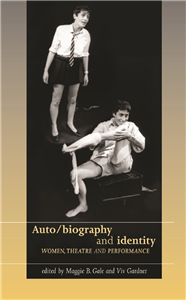
This groundbreaking book shows how female performers - one of the first groups of professional women - used and still use autobiography and performance as both a means of expression and control of their private and public selves, the 'face and the mask'. It looks at how a range of women in the theatre - actors, managers, writers and live artists - have done this on the page and on the stage from the late eighteenth-century to the present day, testing the boundaries between gender, theatre and autobiographical form. This paperback edition facilitates connections - between texts and performances, past and present practitioners, professional and private selves, individuals and communities, all of which have in some way renegotiated identity through autobiography and the creative act. 'Auto/biography and identity' is a landmark in theatre history and performance analysis, in gender and cultural theory, and autobiographical studies. ;
Trusted Partner

This book probes the causes of and conditions for the preference of the members of the British-Bangladeshi community for a religion-based identity vis-à-vis ethnicity-based identity, and the influence of Islamists in shaping the discourse. The first book-length study to examine identity politics among the Bangladeshi diaspora delves into the micro-level dynamics, the internal and external factors and the role of the state and locates these within the broad framework of Muslim identity and Islamism, citizenship and the future of multiculturalism in Europe. Empirically grounded but enriched with in-depth analysis, and written in an accessible language this study is an invaluable reference for academics, policy makers and community activists. Students and researchers of British politics, ethnic/migration/diaspora studies, cultural studies, and political Islam will find the book extremely useful. ;
Trusted Partner
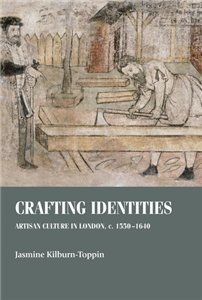
Crafting identities explores artisanal identity and culture in early modern London. It demonstrates that the social, intellectual and political status of London's crafts and craftsmen were embedded in particular material and spatial contexts. Through examination of a wide range of manuscript, visual and material culture sources, the book investigates for the first time how London's artisans physically shaped the built environment of the city and how the experience of negotiating urban spaces impacted directly on their distinctive individual and collective identities. Applying an innovative and interdisciplinary methodology to the examination of artisanal cultures, the book engages with the fields of social and cultural history and the histories of art, design and architecture. It will appeal to scholars of early modern social, cultural and urban history, as well as those interested in design and architectural history.
Trusted Partner
European citizenship, identity and immigration are constitutive issues facing the European polity and have important consequences for domestic political systems. There has been a great deal published about citizenship within the setting of the nation-state and comparative immigration policies, but relatively little has been written on their theorisation in a post-national, post-statist context, such as the EU, and on alternative European institutional designs. Now available in paperback, this volume blends normative political theory with European integration, and develops an original theoretical framework for European Union citizenship, identity and immigration as well as a set of policy proposals for institutional reform. Challenging the conventionally held views in these areas, the author argues that a constructive model of European citizenship and identity is vital to the construction of a democratic, heterogeneous and inclusive European polity. The book will appeal to academics and political actors concerned with issues of European governance as well as to undergraduate and postgraduate students of European politics, European integration, European Union Law, political theory and sociology.
Trusted Partner
At every level of human interaction new levels of identity-based tension are in evidence. Contributors to this book explore facets of fragmentation processes within systems of state and interstate organisation, how they influence the use of negotiation, and how negotiation might be used to effect renewed coherence. Following Anstey's (Ch1) introductory chapter framing the nature and shape of fragmentation dynamics, Zartman (Ch 2) argues that the use of negotiation as a process of conflict resolution is deeply shaped by identity groups whose internal coherence is dependent on sustaining a negative identity of others. International relations are no longer solely the realm of experienced diplomats but are shaped as Meerts (Ch3) points out by politicians seeking to be responsive to voting publics rather than wider concerns. Anstey digs into problems of fragmentation (Ch. 4) and Troitskiy (Ch 5) points out how a reluctant acceptance of the power of 'the other' can lead to a form of strategic stability in relations. Anstey and Meerts (Ch 6) point out in their analysis of the Israeli-Palestinian case as an identity conflict turned very bad. Guggenbuhl (Ch 7 ) reveals how structures and processes have been designed within the EU to prevent, contain and regulate conflicts to limit risks of confrontation and fragmentation. Schuessler (Ch 8) to advocates a shift away from a template or roadmap approach to EU membership to a cohesion based on non-dominance. There is still a strong desire on the part of some states, like Northern Macedonia, to become EU members, as reflected in Manton's (Ch 9). Paula Garzon and Frans Schram explain the success of the Colombia Peace Negotiations (Ch 10), while Odigie and da Rocha (Ch 11) analyse the struggle faced by ECOWAS to influence coup leaders in Mali to return to constitutional government and changes of government by constitutional means. Liang (Ch12) discusses how the internet as the modern vehicle of inter-state, inter-group and interpersonal communication has become weaponised. In Ch 13 Anstey draws some lessons from contributions to the compilation.
Trusted Partner
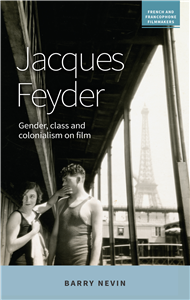
This is the first English-language book on Jacques Feyder, one of the Golden Age of French cinema's most prolific directors. Although once hailed as a major filmmaker, Feyder's reputation waned in the decades following his death, and scholars tend to underestimate his contributions to cinema. This study argues that a fuller understanding of Feyder's style involves exploring his provocative portrayals of gender, class and colonialism across his body of work, including films he directed in France, Hollywood, Germany, England and elsewhere. In doing so, the book reveals an ambitious director who took cinema in new aesthetic directions and often crafted provocative reflections on social inequalities in French society.
Trusted Partner

Examining the ways in which the BBC constructed and disseminated British national identity during the second quarter of the twentieth century, this book is the first study that focuses in a comprehensive way on how the BBC, through its radio programs, tried to represent what it meant to be British. The BBC and national identity in Britain offers a revision of histories of regional broadcasting in Britain that interpret it as a form of cultural imperialism. The regional organization of the BBC, and the news and creative programming designed specifically for regional listeners, reinforced the cultural and historical distinctiveness of Scotland, Wales, and Northern Ireland. The BBC anticipated, and perhaps encouraged, the development of the hybrid "dual identities" characteristic of contemporary Britain.
Trusted Partner
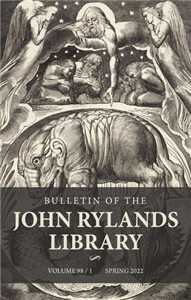
This special issue of the Bulletin of the John Rylands Library is devoted to William Blake. It explores the British and European reception of Blake's work from the late nineteenth century to the present day, with a particular focus on the counterculture. Opening with two articles by the late Michael Horovitz, an important figure in the 'Blake Renaissance' of the 1960s, the issue goes on to investigate the ideological struggle over Blake in the early part of the twentieth century, with particular reference to W. B. Yeats. This is followed by articles on the artistic avant-garde and underground of the 1960s and on Blake's significance for science fiction authors of the 1970s. The issue closes with an article on the contemporary Belgian art collective maelstrÖm reEvolution.
Trusted Partner
This volume is the first collection of essays to focus specifically on how Reformed theology and ecclesiology related to one of the most consequential issues between the Elizabethan Settlement (1559) and the Hanoverian Succession (1714), namely conformity to the Church of England. This volume enriches scholarly understandings of how Reformed identity was understood in the Tudor and Stuart periods, and how it influenced both clerical and lay attitudes towards the English Church's government, liturgy and doctrine. In a reflection of how established religion pervaded all aspects of civic life in the early modern world and was sharply contested within both ecclesiastical and political spheres, this volume includes chapters that focus variously on the ecclesio-political, liturgical, and doctrinal aspects of conformity.



