
Your Search Results


-
Promoted Content

 Humanities & Social SciencesJune 2026
Letter writing in the Northumbrian Kingdom, 625–786
by Peter Darby
Letter writing in the Northumbrian Kingdom offers the first comprehensive study of Northumbria's vibrant epistolary culture in the seventh and eighth centuries. Through a close examination of more than fifty surviving Latin letters-many written by or to figures such as Bede, Acca of Hexham, Ælfflæd of Whitby, and Alcuin -this book uncovers the literary, political, and spiritual dimensions of early medieval correspondence. From royal diplomacy to theological debate, these letters reveal a world where communication was both a practical necessity and a refined art. Drawing on previously underexamined texts and placing Northumbria in its broader European context, this groundbreaking study sheds new light on the role of letter writing in shaping a Christian kingdom's identity, influence, and intellectual legacy.
-
Promoted Content

 November 1988
Über Deutschland reden
by Martin Walser
Seit zehn Jahren beschäftigt sich Martin Waiser mit einem Thema, das in der öffentlichen Meinung, bei den Politikern und bei den Intellektuellen als obsolet gilt: Deutschland. Und er beharrt darauf, daß das Wort Deutschland nicht nur im Wetterbericht Verwendung findet. Für Waiser bezeichnet dieses Wort vielmehr ein Fehlendes, das nicht dadurch einfach zu beseitigen ist, daß man es als geschichtlich notwendig ansieht, als verdientes, zu bejahendes Resultat der Geschichte. Eine solche Auffasssung ist für Waiser gerade unhistorisch - versperrt sie doch von vornherein die Möglichkeiten jedweden historischen Prozesses.
-
 Trusted Partner
 Literature & Literary StudiesJanuary 2013
Eleventh-century Germany
The Swabian chronicles
by I. Robinson
Three of the most important chronicles of eleventh-century Germany were composed in the south-western duchy of Swabia. The chronicles reveal how between 1049 and 1100 the centripetal attraction of the reform papacy became the dominant fact of intellectual life in German reformed monastic circles. In the abbey of Reichenau Herman 'the Lame' composed a chronicle of the reign of Emperor Henry III (1039-56). His pupil, Berthold of Reichenau, continued his master's work, composing a detailed account of 1076-1079 in Germany. Bernold, a clergyman of Constance, continued the work of Herman and Berthold in a text containing the fullest extant account of 1080-1100. Herman's waning enthusiasm for the monarchy and growing interest in the newly reformed papacy were intensified in Berthold's chronicle, and writing in the new context of the reformed monasteries of south-western Germany, Bernold preached total obedience to the Gregorian papacy. The Swabian chronicles are an indispensable resource to the student of the changing loyalties and conflicts of eleventh-century Germany.
-
Trusted Partner
 Humanities & Social SciencesDecember 2025
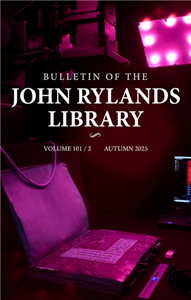
Bulletin of the John Rylands Library 101/2
Imaging Heritage Science Initiatives at The John Rylands Research Institute and Library
by Stefan Hanß, James Robinson
The John Rylands Library houses one of the finest collections of rare books, manuscripts and archives in the world. The collections span five millennia, have a global reach and cover a wide range of subjects, including art and archaeology; economic, social, political, religious and military history; literature, drama and music; science and medicine; theology and philosophy; travel and exploration. For over a century, the Bulletin of the John Rylands Library has published research that complements the Library's special collections. An electronic edition of this issue is freely available under a Creative Commons (CC BY-NC-ND) licence.
-
Trusted Partner
 July 2018
Deutschland und Israel
by Amos Oz, Lydia Böhmer, Norbert Lammert
Als Kind im Jerusalem der 40er Jahre erlebt Amos Oz den Hass auf Deutschland als etwas Absolutes, Unverrückbares. Die Deutschen sind Mörder, ihre Sprache, ihre Produkte geächtet, das Wiedergutmachungsabkommen von 1952 noch als Schande verschrien. Und in jedem Pass des jungen Landes steht "Gültig für alle Länder – mit Ausnahme von Deutschland". Doch dann sind da die Bücher, die Literatur, dann liest er und das ganze Land Lenz, Böll, Grass, und ein Wandel vollzieht sich, im Kleinen wie im Großen, in ihm wie im Staate Israel … Amos Oz kombiniert persönliche Erfahrungen mit historisch-politischem Nachdenken. Auf diese Weise liefert er eine beeindruckende Bestandsaufnahme des alles andere als normalen Verhältnisses zweier Nationen. Ein Buch über Deutschland, über Israel, über den mehr als sechzig Jahre währenden Prozess der Verständigung. Und zur gleichen Zeit ein Plädoyer für die brückenschlagende Kraft des Erzählens.
-
Trusted Partner

 February 1992
Über Juden in Deutschland
by Gert Mattenklott
Der Schriftsteller und Literaturwissenschaftler Gert Mattenklott schaut hinter die großen Linien historischer Darstellung, fragt nach dem Innenleben, den Erfahrungen von Juden in Deutschland. Hier ist der Plural genau zu nehmen: Mattenklott zeichnet eine Vielzahl jüdischer Lebensgeschichten nach, die alle zu der einen Geschichte von Juden in Deutschland und zu deren tiefem Einschnitt nach 1933, der Entrechtung, Vertreibung und dem Völkermord, gehören. Am Leitfaden von Korrespondenzen zeichnet Gert Mattenklott nach, wie sich jüdisches Bewußtsein äußert. Das Spektrum reicht von unbekannten Kaufleuten der frühen Neuzeit bis zu den großen Briefschreibern des 19. und 20. Jahrhunderts. Die Gegenwart ist nicht durch Briefe, sondern durch Gespräche dargestellt, die Gert Mattenklott geführt hat.
-
Trusted Partner
 December 1995
Das nationalsozialistische Deutschland
1933–1945. Die Entfesselung der Gewalt: Rassismus und Krieg
by Ludolf Herbst, Hans-Ulrich Wehler
Das vorliegende Buch von Ludolf Herbst macht es sich zur Aufgabe, diese Prozesse zu untersuchen. Dabei stehen Krieg und Rassenpolitik im Mittelpunkt. Sie werden jedoch nicht isoliert betrachtet, sondern mit wesentlichen innenpolitischen und gesellschaftlichen Entwicklungen verknüpft. Dies geschieht in der Annahme, daß die außerordentliche Dynamik, mit der das nationalsozialistische Deutschland in der Außen- und Rassepolitik agierte, wesentlich von diesen korrespondierenden Bereichen mitgeprägt wurde.
-
Trusted Partner

 Society & culture: general
A TIME OF WOLVES: GERMANY AND THE GERMANS 1945 - 1955
by Harald Jähner
A dance among the ruins: Harald Jähner’s major new portrait of Germany’s post-war societyCountless former soldiers drift through the towns and cities; countless children grow up without a father. The old order has been destroyed and although the streets seem eerily empty, the traditional annual street carnivals are soon back in full swing, jazz can be heard among the ruins, intellectuals rekindle a culture of discussion and debate.Harald Jähner’s book is the first history of Germany’s national mentality in the immediate post-war period. It focusses on the German people in all their diversity: the “re-educators” Alfred Döblin and Rudolf Herrnstadt, who tried in two different zones of occupation to win the trust of their fellow Germans; Beate Uhse, owner of a mail order company for “marital hygiene”, who questioned the old moral code governing what was deemed proper; the many nameless black market traders, pockets stuffed with Lucky Strike cigarettes; stylish housewives sitting at kidney-shaped coffee tables that were to become emblematic for a freer and affordable world. Using major political developments as a backdrop, this book weaves a series of life stories into a nuanced panorama that makes the monumental changes affecting the nation tangible for its readers. 1945 to 1955 was a raw, wild decade poised between two eras, portrayed here as a period that proved decisive for Germany’s future development – and one starkly different to how most Germans imagine it today.
-
Trusted Partner

 April 2022
Corona Chaos. Confessions from a pharmacist
by Simon Krivec
More than two years of pandemic is more than two years of corona clutter. Only a staggering level of helpfulness, improvisation and flexibility prevented the healthcare system from collapsing completely. In this highly topical book, pharmacist Simon Krivec tells of his incredible experiences and the stormy ups and downs of pandemic madness, missing masks and disinfectants, and the feeling of having been totally abandoned by a helpless state. We learn, for instance, of the short-term procurement of large quantities of ethanol and the transportation of the highly flammable substance, and just what lured the author – and 71,400 euros in cash – to visit the port of Neuss at night.
-
Trusted Partner
 August 2009
Ich, John
Roman
by Peter Murphy, Karsten Kredel
John Devine würde am liebsten abhauen. Raus aus Kilcody, dem irischen Provinznest, weg von seiner ewig besorgten, kettenrauchenden Mutter Lily, die ihn mit morbiden Bibelsprüchen erzieht. Doch dann tritt Jamey Corboy in sein Leben, ein Jahr älter, mehr Stil als ganz Kilcody zusammen, Rimbaud in der Manteltasche und gute Beziehungen zu finsteren lokalen Gangstern. Mit einem Mal ist Johns Leben voller Möglichkeiten – und voller Abgründe. Ich, John kombiniert einen hypnotischen Erzählstrom mit der unheimlichen Stimmung eines Tim-Burton-Films. - Coming of Age in der märchenhaften Atmosphäre der irischen Landschaft - Lesereise von Peter Murphy in Deutschland - „So erfrischend und originell, so aufwühlend und mutig! Ein absolut wunderbares Buch.“ Colm Tóibín
-
Trusted Partner

 September 2022
Right-Wing Judges in Germany
AfD judges, prosecutors and jurors: a danger to democracy?
by Joachim Wagner
— How politics are increasingly influencing the rule of law in Germany — Systematic failures of democracy to protect itself — Based on numerous interviews with different members of Germany's legal system Ever since the right-wing party “Alternative for Germany” (AfD) secured representation in the Bundestag and in all state parliaments, Germany’s judiciary is facing a new challenge for which it is unprepared: AfD-affiliated judges and public prosecutors are attracting attention through right-wing biased decisions and investigations. Other members of the legal system cause further damage by ignoring the right-wing extremist and anti-Semitic background of crimes and thus punishing offenders too leniently or not at all. Both the judiciary and policy-makers have so far underestimated the new danger from the right. As a result protection against the appointment of right-wing legal professionals has been insufficient. Joachim Wagner systematically analyses numerous examples from German courts in recent years. He calls on the democratic judiciary to remember the principles of a well-fortified democracy.
-
Trusted Partner
 Literature & Literary StudiesMay 2018
David and Bathsheba
By George Peele
by Mathew R. Martin, David Bevington
David and Bathsheba presents a modernised edition of George Peele's explosive biblical drama about the tangled lives, deadly liaisons, and twisted histories of Ancient Israel's royal family. Martin's critical edition is the first modern single-volume edition of the play since 1912 and opens up this unduly neglected gem of English Renaissance drama to student and scholar alike. The introduction examines such topics as the play's treatment of its biblical and poetic sources, its engagement with Elizabethan politics, and its forceful representations of religious fanaticism, genocide, and sexual violence. Its commentary notes clarify the text's meaning and staging, guide the reader through the play's dramatisation of the turbulent Davidic period of Ancient Israel's history, and place the play in its broader cultural and artistic milieu. Martin's edition aims to encourage new contemporary critical study of Peele's powerful and disturbing drama.
-
Trusted Partner

 December 2008
Literarischer Führer Deutschland
by Fred Oberhauser, Axel Kahrs, Detlef Ignasiak, Peter Neumann, Gerd Holzheimer, Günter Bruyn
Jeder kennt den Literarischen Führer durch Deutschland, das erfolgreiche Standardwerk für alle Deutschlandreisenden und Literaturliebhaber. Ort für Ort geleitet er zu den Häusern der Schriftsteller, zu den Straßen und Stadtteilen, die sie prägten, er führt zu den Schauplätzen berühmter Romane und Dramen und zu den Landschaftspanoramen der Lyrik. Grundlegend neu gestaltet und aktualisiert, bezieht er nun, knapp 20 Jahre nach dem Mauerfall, auch die neuen Bundesländer ein und vernetzt die deutsche Literatur aus Ost und West. Er ist damit der erste und einzige gesamtdeutsche Literaturführer. Wer weiß, daß Jena einmal Hauptstadt war – der Romantik? Daß der Harz nicht nur von Goethe und Heine, sondern auch vom Dresdener Dichter Thomas Rosenlöcher besungen wurde, und die Loreley auch von Apollinaire und Juliette Gréco? Daß der Lübecker Thomas Mann den Namen „Buddenbrook“ aus dem Roman Effi Briest des Neuruppiner Theodor Fontane entlieh? Daß Marcel Prousts Erinnerungen an zwei Kuraufenthalte in Bad Kreuznach Literatur geworden sind, daß Samuel Beckett in München Karl Valentin traf und sich durch dessen „Panoptikum“ führen ließ? Daß Marie Luise Kaschnitz mit ihrer Beschreibung eines Dorfes die Familienheimat Bollschweil im Breisgau meinte? Daß Joseph Roth in Berlin in „Mampes Guter Stube“ am Kurfürstendamm seinen Roman Radetzkymarsch vollendete? Und daß man auf Uwe Johnsons Spuren nicht nur in Güstrow, Rostock, Anklam und Klütz, sondern auch in Berlin und Frankfurt am Main wandeln kann? Von Aachen bis Zittau, vom Kap Arkona bis zum Rheinfall von Schaffhausen: Deutschland wird mit diesem Literaturführer neu kartographiert. Orte und Landschaften erscheinen in neuem Licht, ihre Spiegelung in der Literatur, ihr Einfluß auf Leben und Werk der Dichter wird anschaulich. Er ist ein unerschöpfliches Reservoir an Hinweisen, Anregungen, vielfältigen Zitaten (auch ausländischer Schriftsteller, die Deutschland bereisten), an historischen und aktuellen Fotos, Bildern, Grafi
-
Trusted Partner
 March 2006
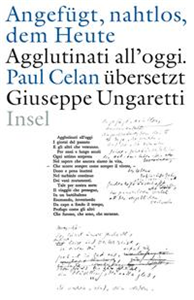
»Angefügt, nahtlos, dem Heute« / »Agglutinati all'oggi«. Paul Celan übersetzt Giuseppe Ungaretti
Zweisprachige Ausgabe. Italienisch / deutsch. Handschriften. Erstdruck. Dokumente
by Paul Celan, Giuseppe Ungaretti, Peter Goßens
Die Fragilität der Dinge, die Bedrohtheit der Existenz und, als ihr Begrenzendes, das Unermeßliche, aus dem Alles aufsteigt, flüchtig aufglänzt, in dem es wieder versinkt – das ist die Erfahrung, aus der heraus Ungaretti nach dem Ersten Weltkrieg zu dichten begonnen hat. Sie ist der Grundriß seines Dichtens geblieben.« Mit dieser Ankündigung erschien 1968 Paul Celans übersetzung von Giuseppe Ungarettis La terra promessa (1950) und Il taccuino del vecchio (1960) in einer zweisprachigen Ausgabe im Insel Verlag. Nach Ingeborg Bachmanns nur wenige Jahre älterer übersetzung (1961) trug Paul Celans Engagement entscheidend zur besonderen Stellung Giuseppe Ungarettis in Deutschland bei. Celans Übertragung ist in Ungarettis Werk auf besondere Weise eingegangen. In die Originalausgaben der Zyklen hat er, mit Ausnahme weniger eigenständiger Seiten, seine übersetzung hineingeschrieben, den gedruckten Text mit seiner handschriftlichen Arbeit unmittelbar konfrontiert. Den Faksimiles folgen Celans Übertragung nach dem Text der Erstausgabe, sein Briefwechsel mit der Lektorin des Insel Verlages, Anneliese Botond, die ganz unterschiedlich akzentuierten Pressestimmen und ein Nachwort, in dem die Geschichte der Übertragung dokumentiert und Celans übersetzungskonzept analysiert und bewertet wird. Die Genese der Übertragung, die »tangentiale« Berührung von übersetzung und Original, wird in der neuen Ausgabe vollständig als Faksimile abgebildet. »Diese Dichtung hatte das Glück, von Ihnen meisterhaft gedeutet zu werden.« Giuseppe Ungaretti über Paul Celans Übertragungen seiner Lyrik
-
Trusted Partner
 December 2012
Deutschland. Ein Wintermärchen
by Heinrich Heine, Thomas Rosenlöcher
Im Herbst 1843 reist Heinrich Heine von Paris nach Hamburg. Unzufrieden mit den politischen Zuständen in seiner Heimat und seiner persönlichen Situation als Deutscher und Jude, verfasst er eine Anklageschrift gegen Zensur, Militarismus und Restauration, die 1844 im Verlag Hoffmann & Campe erscheint. Schon im gleichen Jahr wird »Deutschland. Ein Wintermärchen« in Preußen verboten und beschlagnahmt – doch umso höher schlugen die Wellen. Dass Heines »Wintermärchen« Bedeutung bis in die Gegenwart hat, stellt Thomas Rosenlöcher in seinem hochgelobten Nachwort fest, denn: »Heines Gedicht weiß mehr, als Heine ahnen konnte.«
-
Trusted Partner
 Literature & Literary StudiesAugust 2022
David and Bathsheba
George Peele
by Mathew R. Martin
David and Bathsheba presents a modernised edition of George Peele's explosive biblical drama about the tangled lives, deadly liaisons, and twisted histories of Ancient Israel's royal family. Martin's critical edition is the first modern single-volume edition of the play since 1912 and opens up this unduly neglected gem of English Renaissance drama to student and scholar alike. The introduction examines such topics as the play's treatment of its biblical and poetic sources, its engagement with Elizabethan politics, and its forceful representations of religious fanaticism, genocide, and sexual violence. Its commentary notes clarify the text's meaning and staging, guide the reader through the play's dramatisation of the turbulent Davidic period of Ancient Israel's history, and place the play in its broader cultural and artistic milieu. Martin's edition aims to encourage new contemporary critical study of Peele's powerful and disturbing drama.
-
Trusted Partner

 November 2007
Kinder in Deutschland 2007
1. World Vision Kinderstudie
by Herausgegeben von World Vision Deutschland e.V.
-
Trusted Partner
 June 2010
Kinder in Deutschland 2010
2. World Vision Kinderstudie
by Herausgegeben von World Vision Deutschland e.V., World
-
Trusted Partner
 The ArtsOctober 2017
4 saints in 3 acts
A snapshot of the American avant-garde in the 1930s
by Patricia Allmer, John Sears
Four Saints in Three Acts by Gertrude Stein and Virgil Thomson was a major avant-garde phenomenon of the 1930s, an experimental opera that nonetheless achieved remarkable popular success. Photography was a key element of that success, but its complex roles in the construction, representation and dissemination of the opera have hitherto received little critical attention. The photographic recording of the all-African American cast in particular affords a unique insight into the complexities of Four Saints in relation to the Harlem Renaissance and the New York avant-gardes of the time. This book, published in collaboration with The Photographers' Gallery, London, presents a wide selection of photographs of the cast, performances, and other material - many images reproduced for the first time - alongside essays by an international range of scholars exploring different aspects of the opera, including dance, fashion, music, and avant-garde writing, as well as photography.
-
Trusted Partner
 July 1990
Das zweischneidige Schwert
Herrschaft und Widerspruch im Württemberg der Frühen Neuzeit
by David Warren Sabean, Brigitte Luchesi
Die Herrschaftsverhältnisse im Deutschland der frühen Neuzeit werden nirgends differenzierter sichtbar als auf der Ebene dörflicher und kleinstädtischer Gesellschaften. In den Quellen erscheinen Sprach-, Vorstellungs- und Handlungsstrukturen der »einfachen« Bevölkerung jedoch fast ausschließlich durch den Filter staatlicher oder kirchlicher Untersuchungsprotokolle. Wie solche Akten als Zeugnisse einer vergangenen Volkskultur erschlossen werden können, haben u. a. die großen Arbeiten von Emmanuel Le Roy Ladurie und Carlo Ginzburg gezeigt. David Sabean verbindet hier die Analyse bäuerlicher Handlungs- und Vorstellungsstrukturen mit der Untersuchung politischer und ökonomischer Herrschaftsformen und liefert damit einen wesentlichen Beitrag zur Debatte um die Volkskultur.

