Teacher Created Materials
Teacher Created Materials publishes innovative, imaginative, and award-winning resources for teachers, parents, and students in all subjects for ages 4-18 worldwide.
View Rights Portal
Teacher Created Materials publishes innovative, imaginative, and award-winning resources for teachers, parents, and students in all subjects for ages 4-18 worldwide.
View Rights Portal

 Trusted Partner
 Trusted Partner
Trusted Partner
Trusted Partner


Cozy StickerspaßSehnst du dich nach einer kreativen und gemütlichen Auszeit? Dann ist dieses Stickerbuch perfekt für dich! Hier kannst du mit Stickern kleine Räume gestalten: Füll die Buchhandlung mit zauberhaften Büchern, stell die schönsten Kleider im Modeladen zur Schau oder bring die Gärtnerei mit bunten Blumen zum Blühen. So kannst du dich wunderbar entspannen und dem Alltagsstress entfliehen. Der Social-Media-Trend „3D House Stickers” jetzt als Buch! 10 niedliche Stickerbilder mit 3D-Effekt Beruhigende und kreative Auszeit Perfekt für alle Fans von Cozy Coloring
Trusted Partner

Cozy Stickerspaß Sehnst du dich nach einer kreativen und gemütlichen Auszeit? Dann ist dieses Stickerbuch perfekt für dich! Hier kannst du mit Stickern kleine Räume gestalten: Füll die Buchhandlung mit zauberhaften Büchern, stell die schönsten Kleider im Modeladen zur Schau oder bring die Gärtnerei mit bunten Blumen zum Blühen. So kannst du dich wunderbar entspannen und dem Alltagsstress entfliehen. Der Social-Media-Trend „ 3D House Stickers ” jetzt als Buch! 10 niedliche Stickerbilder mit 3D-Effekt Beruhigende und kreative Auszeit Perfekt für alle Fans von Cozy Coloring
Trusted Partner
Trusted Partner


The Conservative Party and the Constitution examines the profound influence on Britain's constitutional framework over nearly two centuries. Through rigorous analysis, it traces how Tory leaders navigated parliamentary reform, devolution, and Brexit, balancing tradition with pragmatic adaptation. Drawing on exclusive interviews, archival records, and historical sources, the book reveals the Party's statecraft and offers fresh insights into the Conservatives' role in shaping modern governance. Essential for historians, political scientists, and those engaged with British politics, this study illuminates the dynamic interplay of power, ideology, and constitutional change, making it a vital contribution to understanding Britain's constitutional history.
Trusted Partner
The labour movement in Lebanon: Power on hold narrates the history of the Lebanese labour movement from the early twentieth century to today. Bou Khater demonstrates that trade unionism in the country has largely been a failure, for reasons including state interference, tactical co-optation, and the strategic use of sectarianism by an oligarchic elite, together with the structural weakness of a service-based laissez-faire economy. Drawing on a vast body of Arabic-language primary sources and difficult-to-access archives, the book's conclusions are significant not only for trade unionism, but also for new forms of workers' organisations and social movements in Lebanon and beyond. The Lebanese case study presented here holds significant implications for the wider Arab world and for comparative studies of labour. This authoritative history of the labour movement in Lebanon is vital reading for scholars of trade unionism, Lebanese politics, and political economy.
Trusted Partner
Trusted Partner
 Trusted Partner
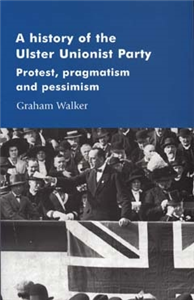
This is the first substantial history to trace the political development of the Ulster Unionist Party through the years of protest and opposition to Irish Home Rule to the half-century as a governing party within Northern Ireland, and beyond to the current attempts to bring peace to the Province. It demonstrates why the Party is so central to efforts to reach a political settlement, and explains why it has for so long been the main political voice of the pro-Union electorate in Northern Ireland. An important and scholarly work based on extensive primary source research, it brings to light forgotten historical episodes of contemporary political significance, and provides new angles on old controversies and debates. The book discusses the evolution of the Ulster Unionist Party with reference to competing ideological currents, class and social tensions within the Unionist movement, and the role of leadership figures and maverick personalities. This is a book that maps the party's historical journey from the dramatic days of Carson to the current predicaments of Trimble. ;
Trusted Partner

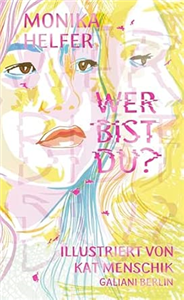
Wunderschön und abgründig – In Monika Helfers Novelle erzählen zwei Frauen um ihr Leben. Denn wer erzählt, hat Macht. Monika Helfers meisterhafte Geschichte über die Begegnung zwischen zwei Frauen erzählt von Nähe und Einsamkeit, Liebe und Lebenslügen, von Angst – und von der Macht des Erzählens selbst. Eines Tages steht ein Mädchen vor der Tür der Erzählerin, mit einem 1000-Schilling-Schein in der Hand und einer unglaubwürdigen Geschichte dazu. Als das Mädchen wenig später vermisst wird, sucht die Erzählerin vergeblich nach ihr. Jahre später taucht eine junge Frau auf, die behauptet, das Mädchen von damals zu sein, und die sich in ihr Leben drängt. Die Beziehung der beiden Frauen wird zu einem lauernden Tanz, bei dem jede die andere belügt – oder nicht? Wer erzählt wem was? Wer ist wer? Monika Helfers Geschichte ist ein doppelbödiges Spiel, spannend und abgründig bis zum Schluss. Kat Menschik hat sie mit beunruhigend schwebenden, irisierenden Bildern versehen. Ein großes Lesevergnügen!
Trusted Partner
 Trusted Partner

Charting a collaborative art-based project using carpet-making skills and the industrial heritage of the region, the book investigates how a cleaved ex-industrial community used arts methodologies as a cohesion strategy. Drawing on images from the company's archives, the book mines the history of Firths Carpets Limited, a firm that carpeted interiors across the globe from the mid-1800s. Women's labour and tastes were business critical to the production and sale of Firths carpets. Drawing on the author's personal connection to the village, an ethnographic sensibility and novel research techniques, ex-worker responses to a village radically altered by ruination are explored. Ex-workers felt nostalgia for the dignity of work and a sense of homesickness in a village ghosted by industrial spectres of the past. Threads of Labour argues that left-behind deindustrialised places require acts of social re-making if their communities are to survive.
Trusted Partner
 Trusted Partner
Trusted Partner
Trusted Partner
Trusted Partner
Trusted Partner


Otto de Kat, 1946 geboren, studierte niederländische Literatur an der Universität Leiden. 1986 gründete er mit Uitgeverij Balans seinen eigenen Verlag; seither lebt er als Verleger und Autor in Amsterdam. Sein Roman Sehnsucht nach Kapstadt war nominiert für den größten belgischen Literaturpreis für Niederländisch schreibende Autoren, De Golden Owl 2005, und wurde ausgezeichnet mit dem niederländischen Halewijn-Literaturpreis.
Trusted Partner

This book considers the most electorally successful political party in Spain, the Spanish Socialist Workers' Party (PSOE), which was in government for two of the three decades since it won office under Felipe González in 1982. Providing rich historical background, the book's main focus is on the period since General Franco's death in 1975. It charts Spain's modernisation under the PSOE, with a particular focus on the role played by European integration in this process. Covering events including the 2011 general election, the book is one of the most up-to-date works available in English and will be of great interest to academics and undergraduate and postgraduate students in the field of Spanish and European studies. ;