
Your Search Results
-

-

Iron Bridge Publishing
Iron Bridge Publishing is a new independent & hybrid publisher with a mission to spread positive and constructive ideas.
View Rights Portal
-
Promoted Content

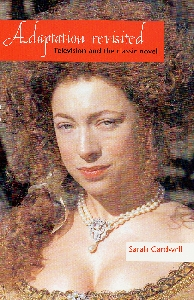 TelevisionAugust 2002
Adaptation revisited
Television and the classic novel
by Sarah Cardwell
Offers a critical reappraisal of a prolific and popular genre, as well as bringing new material into the broader field of Television Studies. Surveys the traditional discourses about adaptation, unearthing the unspoken assumptions and common misconceptions that underlie them and explores the problems inherent in previous approaches, developing an original perspective that considers the particularly televisual nature of this genre. Examines four major British serials: 'Brideshead Revisited', 'Pride and Prejudice', 'Moll Flanders', and 'The Tenant of Wildfell Hall' revealing the genre's importance in constituting and moderating our understanding of the past and of television itself. The first sustained and coherent book on the subject in almost a decade.
-
Promoted Content
 The ArtsJanuary 2027
Out of the box
How queer TV raised a generation
by Emily Garside
A celebration of queer TV's past, present and exciting future. In Out of the box, Emily Garside takes the reader on a tour through the colourful, complicated world of queer television - where representation is never just entertainment. Examining a wide array of programmes, from Queer as Folk and Buffy the Vampire Slayer to Schitt's Creek and Heartstopper, she explores how queer viewers find themselves in the stories TV tells. Part I dives into the genres that have shaped queer visibility on screen, from the closeted tensions of TV drama to the evolving landscape of sitcoms, musicals, sci-fi and period pieces. Whether it's gay aliens, campy dance numbers or the queerness hidden in historical narratives, these chapters reveal how genre both limits and liberates LGBTQ+ storytelling. Part II turns to the stories themselves: queer teens navigating first love, coming-out arcs, the thorny politics of sex on screen and the lasting need for AIDS narratives. The book also tackles the negative sides of queer TV, from queerbaiting to the 'bury your gays' trope, and looks at how fans push back through creativity and fanfiction.
-
 Trusted Partner

 June 2014
Total Recall Revisited
Die besten Stories
by Dick, Philip K. / Nachwort von Steinaecker, Thomas von
-
Trusted Partner
 Film theory & criticismFebruary 2014
The Encyclopedia of British Film
Fourth edition
by Edited by Brian McFarlane
With well over 6,300 articles, including over 500 new entries, this fourth edition of The Encyclopedia of British Film is a fully updated invaluable reference guide to the British film industry. It is the most authoritative volume yet, stretching from the inception of the industry to the present day, with detailed listings of the producers, directors, actors and studios behind a century or so of great British cinema. Brian McFarlane's meticulously researched guide is the definitive companion for anyone interested in the world of film. Previous editions have sold many thousands of copies and this fourth edition will be an essential work of reference for enthusiasts interested in the history of British cinema, and for universities and libraries.
-
Trusted Partner

 October 2000
Hannah Arendt Revisited: »Eichmann in Jerusalem« und die Folgen
by Gary Smith, Elke Hentschel, Reinhard Kaiser, Hans Günter Holl, Vincent Wroblewsky, Bernd Samland
Die Kontroverse um Hannah Arendts »Bericht von der Banalität des Bösen«, der 1963 die Diskussion um die Verantwortung des einzelnen während der Nazidiktatur zum Sieden brachte, ist in ihrer Schärfe ohne Beispiel - und sie ist, wie u.a. die sogenannte Goldhagen-Debatte zeigt, nicht weniger aktuell als damals. Indem die Autoren dieses Bandes die Ursachen dieser Kontroverse von verschiedenen Positionen aus nachzeichnen, geben sie zugleich ein intellektuelles Porträt einer der bedeutendsten Denkerinnen des 20. Jahrhunderts.
-
Trusted Partner
-
Trusted Partner
 April 2021
Postdemokratie revisited
by Colin Crouch, Frank Jakubzik
Mit seinem Buch Postdemokratie sorgte Colin Crouch 2008 in Deutschland für Furore. In seiner so pointierten wie scharfsinnigen Analyse konstatiert er, dass die Demokratie in den westlichen Gesellschaften im Begriff sei, zur bloßen Hülle zu werden: demokratische Wahlen und Institutionen würden zwar aufrechterhalten, politische Entscheidungen jedoch de facto in den Chefetagen der Wirtschaft getroffen. Das Buch wurde zum Überraschungserfolg. Colin Crouch hatte eine Debatte um den Verfall der repräsentativen Demokratie losgetreten und ihr mit ›Postdemokratie‹ einen Namen gegeben.Jetzt legt Crouch eine Bestandsaufnahme seiner Thesen vor: Wie gut haben verschiedene Demokratien die Corona-Pandemie bewältigt? Wie hat der Aufstieg des Rechtspopulismus demokratische Erosionsprozesse beeinflusst? Und welche Rolle spielen feministische Forderungen im Kampf gegen die Postdemokratie?
-
Trusted Partner
-
Trusted Partner
 Humanities & Social SciencesFebruary 2009
The political interests of gender revisited
by Edited by Anna Jonasdottir and Kathleen Jones
-
Trusted Partner
Humanities & Social SciencesFebruary 2009
The political interests of gender revisited
by Anna Jonasdottir, Kathleen Jones
-
Trusted Partner
 Business, Economics & LawOctober 2008
Terrorism and democratic stability revisited
by Jennifer S. Holmes
Can terrorism and state violence cause democratic breakdown? Although the origins of violence have been studied, only rarely are its consequences examined. In this detailed comparative study of Uruguay, Spain, and Peru, Holmes claims that to understand the consequences of violence on democratic stability, terrorism and state responses to terrorism must be studied together. This extensively revised and expanded second edition takes advantage of new historical sources, an extended time span, and new theories that have emerged since the original publication. In addition to adding new data sources in the Peruvian and Spanish cases, the time period covered has been expanded from the late 1990s to early 2007, allowing a more comprehensive treatment of the consequences of state and non-state violence on democratic stability and the prospects for stability. The literature reviews have been significantly revised and updated and an entirely new chapter covers the special case of Spain, which faces both a domestic and an international threat. ;
-
Trusted Partner
-
Trusted Partner
 First World WarNovember 2015
The silent morning
Culture and memory after the Armistice
by Edited by Trudi Tate and Kate Kennedy
Now available in paperback, this study of the cultural impact of the Armistice of 11 November 1918 contains fourteen new essays from scholars working in literature, music, art history and military history. The Armistice brought hopes for a better future, as well as sadness, disappointment and rage. Many people in all the combatant nations asked hard questions about the purpose of the war. These questions are explored in complex and nuanced ways in the literature, music and art of the period. This book revisits the silence of the Armistice and asks how its effect was to echo into the following decades. The essays are genuinely interdisciplinary and are written in a clear, accessible style.
-
Trusted Partner
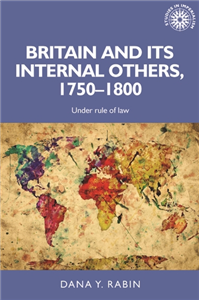 Humanities & Social SciencesAugust 2022
Britain and its internal others, 1750–1800
Under rule of law
by Dana Rabin
The rule of law, an ideology of equality and universality that justified Britain's eighteenth-century imperial claims, was the product not of abstract principles but imperial contact. As the Empire expanded, encompassing greater religious, ethnic and racial diversity, the law paradoxically contained and maintained these very differences. This book revisits six notorious incidents that occasioned vigorous debate in London's courtrooms, streets and presses: the Jewish Naturalization Act and the Elizabeth Canning case (1753-54); the Somerset Case (1771-72); the Gordon Riots (1780); the mutinies of 1797; and Union with Ireland (1800). Each of these cases adjudicated the presence of outsiders in London - from Jews and Gypsies to Africans and Catholics. The demands of these internal others to equality before the law drew them into the legal system, challenging longstanding notions of English identity and exposing contradictions in the rule of law.
-
Trusted Partner
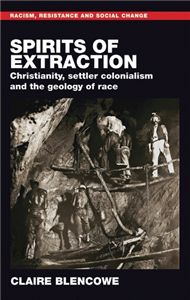 Humanities & Social SciencesMarch 2025
Spirits of extraction
Christianity, settler colonialism and the geology of race
by Claire Blencowe
Spirits of extraction revisits the troubling history of socially reformist, ostensibly anti-racist, Christianity and its role in the expansion of the extractive industries, British imperialism, and settler colonialism. The book explores key moments in the history of Methodism and the evangelical movement. Colonial fears, and the attempt to 'civilise savages', were crucial to the movement's foundation in eighteenth-century industrialising Bristol, England. Through the culture of the Cornish mining diaspora of the nineteenth century, Methodism enmeshed with all the complexity of race and labour-structures of the British empire. At the same time, in Anishinaabewaki/Upper Canda/Ontario, Methodist missionaries laid the foundation of abusive education and racialised ideas of redemption that both enable and sacralise the mining industry. Through these histories of our present, the book theorises the relation of religion and education to racism, modernity, biopower, extractivism, and the geology of race.
-
Trusted Partner
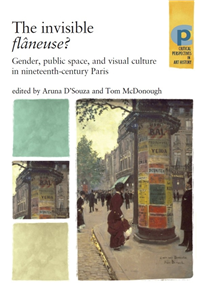 Human figures depicted in artApril 2008
The invisible flâneuse?
Gender, public space and visual culture in nineteenth century Paris
by Edited by Aruna D'Souza and Tom McDonough
This collection of essays revisits gender and urban modernity in nineteenth-century Paris in the wake of changes to the fabric of the city and social life. In rethinking the figure of the flâneur, the contributors apply the most current thinking in literature and urban studies to an examination of visual culture of the period, including painting, caricature, illustrated magazines, and posters. Using a variety of approaches, the collection re-examines the long-held belief that life in Paris was divided according to strict gender norms, with men free to roam in public space while women were restricted to the privacy of the domestic sphere. Framed by essays by Janet Wolff and Linda Nochlin - two scholars whose work has been central to the investigation of gender and representation in the nineteenth century - this collection brings together new methods of looking at visual culture with a more nuanced way of picturing city life.
-
Trusted Partner
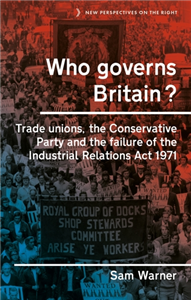 Humanities & Social SciencesApril 2023
Who governs Britain?
Trade unions, the Conservative Party and the failure of the Industrial Relations Act 1971
by Sam Warner
Providing fresh insights from the archival record, Who governs Britain? revisits the 1970-74 Conservative government to explain why the Party tried - and failed - to reform the system of industrial relations. Designed to tackle Britain's strike problem and perceived disorder in collective bargaining, the Industrial Relations Act 1971 established a formal legal framework to counteract trade union power. As the state attempted to disengage from and 'depoliticise' collective bargaining practices, trade union leaders and employers were instructed to discipline industry. In just three-and-a-half years, the Act contributed to a crisis of the British state as industrial unrest engulfed industry and risked undermining the rule of law. Warner explores the power dynamics, strategic errors and industrial battles that destroyed this attempt to tame trade unions and ultimately brought down a government, and that shape Conservative attitudes towards trade unions to this day.
-
Trusted Partner
 Humanities & Social SciencesApril 2007
The politics of Englishness
by Arthur Aughey, Martin Hargreaves
The politics of Englishness provides a digest of the debates about England and Englishness and a unique perspective on those debates. Not only does the book provide readers with ready access to and interpretation of the significant literature on the English Question, it also enables them to make sense of the political, historical and cultural factors which constitute that question. The book addresses the condition of England in three interrelated parts. The first looks at traditional narratives of the English polity and reads them as variations of a legend of political Englishness, of England as the exemplary exception, exceptional in its constitutional tradition and exemplary in its political stability. The second considers how the decay of that legend has encouraged anxieties about English political identity and about how English identity can be recognised within the new complexity of British governance. The third revisits these narratives and anxieties, examining them in terms of actual and metaphorical 'locations' of Englishness: the regional, the European and the British. ;
-
Trusted Partner
 Literature & Literary StudiesJuly 2010
Harriet Martineau
Authorship, society and empire
by Ella Dzelzainis, Cora Kaplan
Harriet Martineau responds to the strong revival of interest in her life and writing, exploring Martineau's controversial views through her innovative use of popular cultural forms-journalism, travel writing, didactic fiction, novels, translation, autobiography and history. This is the first collection of essays to revisit and reassess Martineau's leading place in Victorian culture and in the development of nineteenth-century liberalism. Distinguished contributors-including Isobel Armstrong, Lauren Goodlad, Catherine Hall, Deborah Logan and Linda Peterson-offer critical analyses of her trailblazing career as a professional 'woman of letters'. The essays collected here move from personal to global concerns in Martineau's oeuvre. The opening essays centre on her bold self-fashioning as a writer, while the second section focuses on the domestic complexities of laissez-faire liberalism in her economic and social vision. Finally, the volume analyses her provocative writings on race, Empire and history - from Atlantic slavery to the Indian Mutiny - demonstrating the international breadth and impact of a remarkable career. ;
-
Trusted Partner
 Humanities & Social SciencesJune 2020
In the shadow of Enoch Powell
Race, locality and resistance
by Shirin Hirsch, John Solomos
Fifty years ago Enoch Powell made national headlines with his 'Rivers of Blood' speech, warning of an immigrant invasion in the once respectable streets of Wolverhampton. This local fixation brought the Black Country town into the national spotlight, yet Powell's unstable relationship with Wolverhampton has since been overlooked. Drawing from interviews and archival material, this book offers a rich local history through which to investigate the speech, bringing to life the racialised dynamics of space during a critical moment in British history. What was going on beneath the surface in Wolverhampton and how did Powell's constituents respond to this dramatic moment? The research traces the ways in which Powell's words reinvented the town and uncovers highly contested local responses. While Powell left Wolverhampton in 1974, the book returns to the city to explore the collective memories of the speech which continue to reverberate. In a contemporary period of new crisis and national divisions, revisiting the shadow of Powell allows us to reflect on racism and resistance from 1968 to today.



