
Your Search Results
-

-

The Endocrine Society
The Endocrine Society is a global organization of 18,000 researchers, educators, and clinicians advancing breakthroughs in hormone science and improving public health.
View Rights Portal
-
Promoted Content

 Humanities & Social SciencesAugust 2010
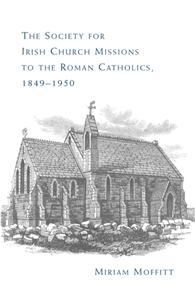
The Society for Irish Church Missions to the Roman Catholics, 1849–1950
by Miriam Moffitt
This work details traces the origins, development and impact of the proselytizing organization, the Society for Irish Church Missions to the Roman Catholics, from its Protestant foundation during the famine of 1845-47 to the early decades of Irish Free State. It argues that the foundation of this ostensibly religious society was also underpinned by social, political, and economic factors and demonstrates that by the mid 1850s the mission operated on a very substantial scale. Moffitt examines the mission's role in the shifting political realities of the late nineteenth and early twentieth centuries. The impact of this inter-faith power struggle and its legacy to the present day are explored by examining contemporary sources, folklore evidence, and the depiction of proselytizing missions in both Catholic and Protestant denomination literature and fictional writings. ;
-
Promoted Content
 Humanities & Social SciencesFebruary 2017
Conflict, Politics and Proselytism
Methodist missionaries in colonial and postcolonial Burma, 1887–1966
by Andrew Thompson, Michael D. Leigh, John M. MacKenzie
This book is a study of the ambitions, activities and achievements of Methodist missionaries in northern Burma from 1887-1966 and the expulsion of the last missionaries by Ne Win. The story is told through painstaking original research in archives which contain thousands of hitherto unpublished documents and eyewitness accounts meticulously recorded by the Methodist missionaries. This accessible study constitutes a significant contribution to a very little-known area of missionary history. Leigh pulls together the themes of conflict, politics and proselytisation in to a fascinating study of great breadth. The historical nuances of the relationship between religion and governance in Burma are traced in an accessible style. This book will appeal to those teaching or studying colonial and postcolonial history, Burmese politics, and the history of missionary work.
-
 Trusted Partner
 Humanities & Social SciencesApril 2026
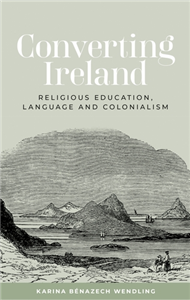
Converting Ireland
Religious education, language and colonialism
by Karina Bénazech Wendling
Karina Bénazech Wendling offers a re-assessment of 'souperism'-the long-debated claim that food was used to convert Irish Catholics to Protestantism during the Great Famine. Focusing on the Irish Society for Promoting the Education of the Native Irish through their Own Language, the first group labeled 'soupers' in 1841, she uncovers a more complex picture. Rather than a mere tool of British cultural imperialism, the Society had a deep engagement with the Irish language and Bible translation, while also encouraging religious conversions in the West. The book explores the Society's role in Ireland's religious and political landscape, the rise of Catholic counter-missions, and nationalist resistance. Offering fresh insights into Ireland's religious history and global missionary movements, this book is essential for scholars of Irish studies, interdenominational relations, and education in Ireland.
-
Trusted Partner
 Humanities & Social SciencesJanuary 2026
Protestant missionary children's lives, c.1870-1950
by Hugh Morrison
-
Trusted Partner
 Humanities & Social SciencesJanuary 2020
Church polity and politics in the British Atlantic world, c. 1635–66
by Elliot Vernon, Hunter Powell, Anthony Milton
-
Trusted Partner
 Humanities & Social SciencesDecember 2014
The Protestant Orphan Society and its social significance in Ireland 1828–1940
by June Cooper
The Protestant Orphan Society, founded in Dublin in 1828, managed a carefully-regulated boarding-out and apprenticeship scheme. This book examines its origins, its forward-thinking policies, and particularly its investment in children's health, the part women played in the charity, opposition to its work and the development of local Protestant Orphan Societies. It argues that by the 1860s the parent body in Dublin had become one of the most well-respected nineteenth-century Protestant charities and an authority in the field of boarding out. The author uses individual case histories to explore the ways in which the charity shaped the orphans' lives and assisted widows, including the sister of Sean O'Casey, the renowned playwright, and identifies the prominent figures who supported its work such as Douglas Hyde, the first President of Ireland. This book makes valuable contributions to the history of child welfare, foster care, the family and the study of Irish Protestantism. ;
-
Trusted Partner
Humanities & Social SciencesSeptember 2023
Missionaries and modernity
Education in the British Empire, 1830-1910
by Felicity Jensz
Many missionary societies established mission schools in the nineteenth century in the British Empire as a means to convert non-Europeans to Christianity. Although the details, differed in various colonial contexts, the driving ideology behind mission schools was that Christian morality was highest form of civilisation needed for non-Europeans to be useful members of colonies under British rule. This comprehensive survey of multi-colonial sites over the long time span clearly describes the missionary paradox that to draw in pupils they needed to provide secular education, but that secular education was seen to lead both to a moral crisis and to anti-British sentiments.
-
Trusted Partner
 Humanities & Social SciencesMarch 2017
Child, nation, race and empire
Child rescue discourse, England, Canada and Australia, 1850–1915
by Margot Hillel, Shurlee Swain, Andrew Thompson, John M. MacKenzie
Child, nation, race and empire is an innovative, inter-disciplinary, cross cultural study that contributes to understandings of both contemporary child welfare practices and the complex dynamics of empire. It analyses the construction and transmission of nineteenth-century British child rescue ideology. Locating the origins of contemporary practice in the publications of the prominent English Child rescuers, Dr Barnardo, Thomas Bowman Stephenson, Benjamin Waugh, Edward de Montjoie Rudolf and their colonial disciples and literature written for children, it shows how the vulnerable body of the child at risk came to be reconstituted as central to the survival of nation, race and empire. Yet, as the shocking testimony before the many official enquiries into the past treatment of children in out-of-home 'care' held in Britain, Ireland, Australia and Canada make clear, there was no guarantee that the rescued child would be protected from further harm.
-
Trusted Partner

 2019
2019History of the Throw-Away Society
The drawback of consumption
by Wolfgang König
Sooner or later everything is thrown away. In the consumer society, however, usable and serviceable products that may be as good as new are also thrown away. Such behaviour is the result of a long-term process that has developed over a period of one-and-a-half centuries. The change was led by the USA, and the Federal Republic of Germany followed. It started at the turn of the last century with personal hygiene: articles such as toilet paper, sanitary towels, nappies and paper handkerchiefs. After the Second World War, a large number of other disposable articles were soon added, such as paper cups and plastic dishes, nylon stockings and pens, razor blades, beverage cans and much more besides. Wolfgang König shows how business and consumers have together made throwing things away perfectly normal – and discusses how the throwaway society may be overcome.
-

 Business, Economics & LawApril 1905
The Acquisitive Society
by R.H. Tawney
This 1926 survey, written by a distinguished social and economic historian, examines the role of religion in the rise of capitalism. Arguing that material acquisitiveness is morally wrong and a corrupting social influence, the author draws upon his profound knowledge of labor and politics to show how concentrated wealth distorts economic policies. Colorful but credible, this study offers a timeless vision of alternative means toward a just economic, social, and intellectual order.
-
Trusted Partner
 Humanities & Social SciencesJanuary 2013
Crime, Law and Society in the Later Middle Ages
by Anthony Musson, Edward Powell
This book provides an accessible collection of translated legal sources through which the exploits of criminals and developments in the English criminal justice system (c.1215-1485) can be studied. Drawing on the wealth of archival material and an array of contemporary literary texts, it guides readers towards an understanding of prevailing notions of law and justice and expectations of the law and legal institutions. Tensions are shown emerging between theoretical ideals of justice and the practical realities of administering the law during an era profoundly affected by periodic bouts of war, political in-fighting, social dislocation and economic disaster. Introductions and notes provide both the specific and wider legal, social and political contexts in addition to offering an overview of the existing secondary literature and historiographical trends. This collection affords a valuable insight into the character of medieval governance as well as revealing the complex nexus of interests, attitudes and relationships prevailing in society during the later Middle Ages.
-
Trusted Partner

 February 2023
We're Staying!
Why women won't be driven out of the Catholic Church
by Elisabeth Zoll (ed.)
— The book beyond the synodal path — Leaving is not an option for the authors of this book — 17 credible examples of consistency and daring Can the Catholic Church still be saved? There have been huge numbers of resignations; the reasons for them are well known. And yet! Committed Catholics from the worlds of politics, business, culture and society oppose this. They share how, despite their disappointments, even their anger, they are still able to find their way in the Church, walking tall and with inner freedom. These are encouraging examples of decidedly critical women who assert themselves – and who are not going anywhere: "Now, more than ever before, we need women – and men – who are prepared to confess their faith with confidence." Not out of nostalgia or any diffuse incense feelings, but out of conviction, because their faith means a lot to them.
-
Trusted Partner
 2025
2025Why Be a Christian Today?
by Elisabeth Zoll / Thomas Seiterich (eds.)
The exciting texts and reports by professing Christians offer a fresh perspective for all those who have cultivated a Christian spirituality for many years. However, the book also provides easy access for those who are newly interested in the Christian faith. There are probably as many professions of Christian faith as there are believers in the world. But what do Christians think and how have they been moulded? Elisabeth Zoll and Thomas Seiterich have compiled very personal ideas about the Christian faith in this book. When selecting the contributors, the editors deliberately chose not to include people with church offices or specialised theologians. Irrespective of church policy issues and church scandals, the contributors have provided insights into their path to faith.
-
Trusted Partner
-
Trusted Partner

 September 1983
Okonkwo oder Das Alte stürzt
by Chinua Achebe, Dagmar Heusler, Dagmar Heusler, Evelin Petzold
Chinua Achebe wurde am 15. November 1930 als Albert Chinualumogu Achebe in Ogidi im Osten Nigerias als Sohn eines Katechisten und Lehrers der Church Missionary Society aus dem Volk der Ibo (eine der drei großen Ethnien Nigerias) geboren. Er besuchte die Missionsschule in Ogidi. Von 1944 bis 1947 besuchte er das Government College in Umuhia. Danach studierte er Anglistik, Geschichte und Theologie am University College von Ibadan. 1958 schrieb er seinen ersten Roman Things Fall Apart, der ihn zum Klassiker der afrikanischen Gegenwartsliteratur werden ließ. 1983 erschien er im Suhrkamp Verlag unter dem Titel Okonkwo oder das Alte stürzt. Nach einem schweren Verkehrsunfall im Jahr 1990 in Nigeria war Achebe auf einen Rollstuhl angewiesen. Seitdem lebte er in Annandale-On-Hudson im Staat New York und lehrte dort am Bard College. Er ist am 22. März 2013 in Boston gestorben.
-
Trusted Partner
 Humanities & Social SciencesJanuary 2018
Noble society
Five lives from twelfth-century Germany
by Jonathan R. Lyon
This book provides scholars and students alike with a set of texts that can deepen their understanding of the culture and society of the twelfth-century German kingdom. The sources translated here bring to life the activities of five noblemen and noblewomen from Rome to the Baltic coast and from the Rhine River to the Alpine valleys of Austria. To read these five sources together is to appreciate how interconnected political, military, economic, religious and spiritual interests could be for some of the leading members of medieval German society-and for the authors who wrote about them. Whether fighting for the emperor in Italy, bringing Christianity to pagans in what is today northern Poland, or founding, reforming and governing monastic communities in the heartland of the German kingdom, the subjects of these texts call attention to some of the many ways that noble life shaped the world of central medieval Europe.
-
Trusted Partner
 Humanities & Social SciencesJanuary 2013
The Jews in western Europe, 1400–1600
by John Edwards
As European politics, society, economy and religion underwent epoch-making changes between 1400 and 1600, the treatment of Europe's Jews by the non-Jewish majority was, then as in later periods, a symptom of social problems and tensions in the Continent as a whole. Through a broad-ranging collection of documents, John Edwards sets out to present a vivid picture of the Jewish presence in European life during this vital and turbulent period. Subjects covered include the Jews' own economic presence and culture, social relations between Jews and Christians, the policies and actions of Christian authorities in Church and State. He also draws upon original source material to convey ordinary people's prejudices about Jews, including myths about Jewish 'devilishness', money-grabbing, and 'ritual murder' of Christian children. Full introductory and explanatory material makes accessible the historical context of the subject and highlights the insights offered by the documents as well as the pitfalls to be avoided in this area of historical enquiry. This volume aims to provide a coherent working collection of texts for lecturers, teachers and students who wish to understand the experience of Jewish Europeans in this period.
-
Trusted Partner
 Literature & Literary StudiesSeptember 2020
God's only daughter
Spenser's Una as the invisible Church
by J. B. Lethbridge, Kathryn Walls
In this study, Kathryn Walls challenges the standard identification of Una with the post-Reformation English Church, arguing that she is, rather, Augustine's City of God - the invisible Church, whose membership is known only to God. Una's story (its Tudor resonances notwithstanding) therefore embraces that of the Synagogue before the Incarnation as well as that of the Church in the time of Christ and thereafter. It also allegorises the redemptive process that sustains the true Church. Una is fallible in canto I. Subsequently, however, she comes to embody divine perfection. Her transformation depends upon the intervention of the lion as Christ. Convinced of the consistency and coherence of Spenser's allegory, Walls offers fresh interpretations of Abessa (as Synagoga), of the fauns and satyrs (the Gentiles), and of Una's dwarf (adiaphoric forms of worship). She also reinterprets Spenser's marriage metaphor, clarifying the significance of Red Cross as Una's spouse in the final canto.
-
Trusted Partner

 July 2025
Fia & die Herzensbande 1. Mission Spielstraße
by Christian Wunderlich, Anne Grobe
Freunde fürs Leben Hey, ich bin Fia! Mit meiner Familie und meinem Huhn Gluck bin ich vom Dorf in die Stadt gezogen. Und wisst ihr was? Unsere Straße ist nur zum Spielen da - wie toll ist das denn?! Hier hab ich auch meine neuen Freunde kennengelernt: Feuerwehrmädchen Mona, Detektiv Pippo, Superheldin Hanna und ihren Erfinder-Bruder Ben. Zusammen sind wir die Herzensbande und erleben unglaubliche Abenteuer: Wir nehmen es mit Waldpiraten auf, malen einen Regenbogen neu an, bringen Vogelküken das Fliegen bei und erkunden die geheimnisvolle Dracheninsel am Badesee. Unsere Mission? Gutes tun. Denn, zum Donnergrimm, Gutes tun macht ein richtig glückliches Gefühl im Bauch. Fia & die Herzensbande 1. Mission Spielstraße: Eine Freundschaftsgeschichte mit viel Humor und Fantasie Beste Freunde: Fantasievolle Abenteuergeschichte über eine außergewöhnliche Kinderbande für junge Leser*innen ab 5 Jahren. Liebenswerte Charaktere: Fia und ihre Clique wollen Gutes tun und anderen helfen. Starke Botschaften: Das lustige Kinderbuch vermittelt wichtige Werte wie Hilfsbereitschaft, Diversität und Inklusion. Mit Herz und Humor: Christian Wunderlich erzählt eine charmante Geschichte über die Freundschaft für Kinder ab 5 Jahren, die fantasievolle Abenteuer lieben. Christian Wunderlich ist Schauspieler, Synchronsprecher, Songwriter und Schriftsteller. Er spielte Hauptrollen in erfolgreichen TV-Serien wie „Nesthocker“ und „Verbotene Liebe“. Seine große Liebe gilt der Literatur.
-
Trusted Partner
 Humanities & Social SciencesMarch 2017
Exhibiting the Empire
Cultures of display and the British Empire
by John McAleer, John M. MacKenzie
Exhibiting the empire considers how a whole range of cultural products - from paintings, prints, photographs, panoramas and 'popular' texts to ephemera, newspapers and the press, theatre and music, exhibitions, institutions and architecture - were used to record, celebrate and question the development of the British Empire. It represents a significant and original contribution to our understanding of the relationship between culture and empire. Written by leading scholars from a range of disciplinary backgrounds, individual chapters bring fresh perspectives to the interpretation of media, material culture and display, and their interaction with history. Taken together, this collection suggests that the history of empire needs to be, in part at least, a history of display and of reception. This book will be essential reading for scholars and students interested in British history, the history of empire, art history and the history of museums and collecting.


