Your Search Results

      • Kawmiah distributing company

        The National Company for Distribution (Kawmiah distributing company) is one of the national press institutions working in the field of publishing, distribution, printing and journalism, and it has many cultural and intellectual publications through Dar Al Shaab and Dar Al Taawon, and it is of great importance in the paper book market in Egypt and the Arab world with its capabilities in the fields of publishing, distribution and printing And from promising cadres capable of presenting the best publications in various cultural and intellectual fields.

        View Rights Portal
      • Hudhud Publishing & Distribution

        Founded on the steadfast belief that a good book has a positive and lasting impact on the development of children, families and socities, Al Hudhud is a pioneering Emirati publishing and distribution

        View Rights Portal
      • Trusted Partner
      • Trusted Partner
        Humanities & Social Sciences
        July 2026

        Unruly subjects

        Migration, solidarity and resistance in Greece

        by Ludek Stavinoha

        Unruly Subjects takes readers to the epicentre of Europe's intensifying border struggles-the Aegean islands in Greece, where thousands of 'undesirable' migrants have been warehoused and violently abandoned in EU-funded refugee camps. Drawing on nearly a decade of research, Ludek Stavinoha reveals the subterranean corners in which resistance brews and solidarity takes hold, tracing migrants' everyday struggles for dignity and their rights, alongside grassroots volunteers who have built vital infrastructures of support. At the heart of the book are the creative, if precarious and ambivalent, solidarities forged between volunteers and refugees, citizens and non-citizens, as they unsettle racialised boundaries and logics of control, in defiance of state-sanctioned violence, criminalisation, and neglect. Urgent and compelling, Unruly Subjects illuminates how people navigate and subvert Europe's increasingly hostile border regime, and the alternative imaginaries of more just futures their struggles embody.

      • Trusted Partner
        Business, Economics & Law
        March 2026

        Humanitarianism in Civil War

        The Biafra crisis, 1967-1970

        by Marie-Luce Desgrandchamps

        May 1967, in Nigeria, the Republic of Biafra declared its independence. Soon, civil war and famine ravaged the region and gradually entered the European and American media. Photographs of the conflict arouse considerable emotion in the West. The secessionist enclave and the areas taken over by the Nigerian army then became the scene of major relief operations, developed and financed by multiple organizations and governments. Part of a historiography of humanitarianism in full renewal, this book tells the story of the war, its metamorphosis into an international crisis and the responses that were provided. Based on a large body of sources from French, British, Swiss, Nigerian and American archives, it offers an insight into the world of humanitarian work at the end of the 1960s. It shows the reconfigurations taking place there. in the postcolonial era by proposing complementary scales of observation - international, national and local. The work also revisits some of the controversies which developed around the conflict regarding the instrumentalization of aid, its links with politics, the reception of relief operations on the ground or even the birth of borderlessness and testimony. It thus returns to the place occupied by the Biafran crisis in the history of humanitarian aid.

      • Trusted Partner
        Humanities & Social Sciences
        June 2021

        Civil war London

        by Jordan S. Downs, Jason Peacey

      • Trusted Partner
        Humanities & Social Sciences
        November 2006

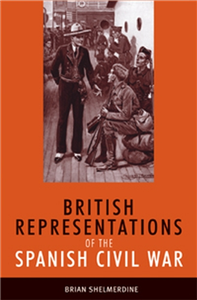
        British representations of the Spanish Civil War

        by Brian Shelmerdine

        This book looks at the reception of the Spanish Civil War in British popular culture, and how supporters of both sides in Britain used the rhetoric and imagery of the conflict to bolster support for their respective causes in the arena of British public opinion. Brian Shelmerdine finds that traditional notions of Spain as a country of bullfighting, bandits and flamenco were pervasive and were significant in shaping wider UK government policy towards Spain. He carefully assesses the different political perceptions of the 1930s Spanish scene, the role of the Catholic Church, the depiction of the two sides in terms of class, race and ethnicity, humanitarian appeals, and the plight of the Basques. The book is fluently written, and should make fascinating and entertaining reading for scholars of British society and culture in the twentieth century, as well as those investigating international impact of the Spanish Civil War. ;

      • Trusted Partner
        Humanities & Social Sciences
        December 1999

        The debate on the American Civil War era

        by Hugh Tulloch, Roger Richardson

        This study is the first to critically survey the changing and highly controversial historical literature surrounding the American Civil War era, from contemporary interpretations up to the present.. The book analyses both historians attitudes and assumptions and suggests that each writer's perspective was partly determined by the dictates of time and place.. The author engages with all aspects of the Civil War era; social, cultural and economic as well as its political dimensions.. Aimed at sixth form colleges and university students. ;

      • Trusted Partner
        Humanities & Social Sciences
        February 1999

        The Irish and the Spanish Civil War, 1936–1939

        by Robert Stradling

        The outbreak of the Spanish Civil War threw Irish politics, north and south of the border, into turmoil. Tragic events in Spain aroused emotive responses across the spectrum of Irish society. In contrast to most other communities of the British Isles, citizens of the Irish Free State were mainly pro-Franco. But many on the left felt a strong identification with the plight of the Republic. Ireland sent large organized bodies of men to fight on opposite sides in the Spanish Civil War. The International Brigade volunteers were led by the IRA warrior, Frank Ryan. Their rivals, who became a battalion of Franco's Foreign Legion were mostly members of the semi-facist Blueshirts, and were commanded by the ex-leader of that movement, General Eoin O'Duffy. In late 1936, two enemy crusades - Communist and Catholic - left Ireland to fight it out in Spain. This book, illuminated by personal histories, tells the story of what happened to those two sides. Starting with their eventful journey to Spain, it follows their footsteps across the battlefields of Spain. ;

      • Trusted Partner
        The Arts
        January 2019

        The war that won't die

        The Spanish Civil War in cinema

        by David Archibald

        The war that won't die charts the changing nature of cinematic depictions of the Spanish Civil War. In 1936, a significant number of artists, filmmakers and writers - from George Orwell and Pablo Picasso to Joris Ivens and Joan Miró - rallied to support the country's democratically-elected Republican government. The arts have played an important role in shaping popular understandings of the Spanish Civil War and this book examines the specific role cinema has played in this process. The book's focus is on fictional feature films produced within Spain and beyond its borders between the 1940s and the early years of the twenty-first century - including Hollywood blockbusters, East European films, the work of the avant garde in Paris and films produced under Franco's censorial dictatorship. The book will appeal to scholars and students of Film, Media and Hispanic Studies, but also to historians and, indeed, anyone interested in why the Spanish Civil War remains such a contested political topic.

      • Trusted Partner
        The Arts
        June 2021

        The war that won't die

        The Spanish Civil War in cinema

        by David Archibald

        The war that won't die charts the changing nature of cinematic depictions of the Spanish Civil War. In 1936, a significant number of artists, filmmakers and writers - from George Orwell and Pablo Picasso to Joris Ivens and Joan Miró - rallied to support the country's democratically-elected Republican government. The arts have played an important role in shaping popular understandings of the Spanish Civil War and this book examines the specific role cinema has played in this process. The book's focus is on fictional feature films produced within Spain and beyond its borders between the 1940s and the early years of the twenty-first century - including Hollywood blockbusters, East European films, the work of the avant garde in Paris and films produced under Franco's censorial dictatorship. The book will appeal to scholars and students of Film, Media and Hispanic Studies, but also to historians and, indeed, anyone interested in why the Spanish Civil War remains such a contested political topic.

      • Trusted Partner
        Biography & True Stories
        July 2026

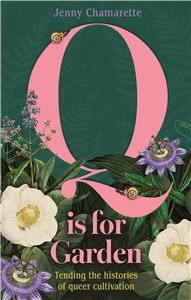
        Q is for garden

        Tending the histories of queer cultivation

        by Jenny Chamarette

        A bold, tender exploration of how queerness and nature entwine - and what happens when we step beyond the binaries that fence us in. There is a Q in garden, but you can't always see it. When Jenny Chamarette faced a devastating health crisis, they found themselves unmoored from the rules of gender, sexuality and productivity. In a small South London garden, Jenny began to imagine another way of living: porous, unruly, rooted in the lessons of soil and plant life. Gardens, like identities, are usually bounded - but what if those limits can be re-drawn? Blending memoir and cultural criticism, this book asks whether the categories we inherit - colonial, patriarchal, conventions of sexuality and gender - still serve us, or whether they confine us. From illness and recovery to queer love and ecological wonder, Q is for garden invites readers to reimagine how we inhabit land, culture and each other. An eloquent work of nature writing and queer thought, Q is for garden digs into the rich history of queer gardeners, botanists, artists and agriculturalists. It offers a hopeful vision of belonging, if we are curious enough to unearth it.


      • Trusted Partner
        Humanities & Social Sciences
        January 2024

        The debate on Black Civil Rights in America

        by Kevern Verney

      • Trusted Partner
      • Trusted Partner
        Humanities & Social Sciences
        January 2026

        Sexual politics in revolutionary England

        by Sam Fullerton

      • Trusted Partner
        Humanities & Social Sciences
        February 2023

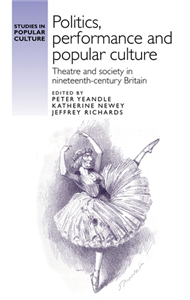
        Politics, performance and popular culture

        Theatre and society in nineteenth-century Britain

        by Peter Yeandle, Katherine Newey, Jeffrey Richards

        This collection brings together studies of popular performance and politics across the nineteenth century, offering a fresh perspective from an archivally grounded research base. It works with the concept that politics is performative and performance is political. The book is organised into three parts in dialogue regarding specific approaches to popular performance and politics. Part I offers a series of conceptual studies using popular culture as an analytical category for social and political history. Part II explores the ways that performance represents and constructs contemporary ideologies of race, nation and empire. Part III investigates the performance techniques of specific politicians - including Robert Peel, Keir Hardie and Henry Hyndman - and analyses the performative elements of collective movements.

      • Trusted Partner
        Humanities & Social Sciences
        February 2017

        Servants of the empire

        The Irish in Punjab 1881–1921

        by Patrick O'Leary, Andrew Thompson, John M. MacKenzie

        Punjab, 'the pride of British India', attracted the cream of the Indian Civil Service, many of the most influential of whom were Irish. Some of these men, along with Irish viceroys, were inspired by their Irish backgrounds to ensure security of tenure for the Punjabi peasant, besides developing vast irrigation schemes which resulted in the province becoming India's most affluent. But similar inspiration contributed to the severity of measures taken against Indian nationalist dissent, culminating in the Amritsar massacre which so catastrophically transformed politics on the sub-continent. Setting the experiences of Irish public servants in Punjab in the context of the Irish diaspora and of linked agrarian problems in Ireland and India, this book descrides the beneficial effects the Irish had on the prosperity of India's most volatile province. Alongside the baleful contribution of some towards a growing Indian antipathy towards British rule. Links are established between policies pursued by Irishmen of the Victorian era and current happenings on the Pakistan-Afghan border and in Punjab.

      • Trusted Partner
        Literature & Literary Studies
        March 2026

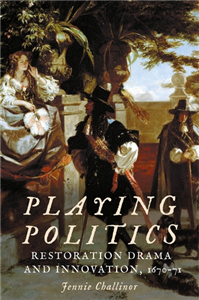
        Playing politics

        Restoration drama and innovation, 1670-71

        by Jennie Challinor

        This study focuses on the 1670-71 season in the Restoration playhouses, an exciting and formative moment in theatrical and political history. The year proved to be difficult and damaging to King Charles II, as political, religious, and personal matters provoked controversy and disquiet, and the country teetered on the brink of major constitutional problems. My research sets drama against this backdrop. Theatrical records for this period are patchy and, for the most part, frustratingly incomplete: this book does not attempt to reconstruct the day-to-day operations of the playhouses, but rather it uses the available evidence of the extant new and revived plays we know (or believe) to have been performed in the 1670-71 theatrical season, and argues that this was the period in which serious and far-reaching political and dramatic questions began to be seriously asked and (tentatively) answered.

      • Trusted Partner
        Humanities & Social Sciences
        June 2024

        Peace and the politics of memory

        by Annika Björkdahl, Susanne Buckley-Zistel, Stefanie Kappler, Johanna Mannergren Selimovic, Timothy Williams

        This important book provides new understandings of how the politics of memory impacts peace in societies transitioning from a violent past. It does so by developing a theoretical approach focusing on the intersection of sites, agency, narratives, and events in memory-making. Drawing on rich empirical studies of mnemonic formations in Cyprus, Bosnia and Herzegovina, Rwanda, South Africa and Cambodia, the book speaks to a broad audience. The in-depth, cross-case analysis shows that inclusivity, pluralism, and dignity in memory politics are key to the construction of a just peace. The book contributes crucial and timely knowledge about societies that grapple with the painful legacies of the past and advances the study of memory and peace.

      • Trusted Partner
        Literature & Literary Studies
        June 2026

        The politics of Middle English parables

        Fiction, theology, and social practice

        by Mary Raschko

        The politics of Middle English parables examines the dynamic intersection of fiction, theology and social practice in late-medieval England. Parables occupy a prominent place in Middle English literature, appearing in dream visions and story collections as well as in lives of Christ and devotional treatises. While most scholarship approaches the translated stories as stable vehicles of Christian teaching, this book highlights the many variations and points of conflict across Middle English renditions of the same story. In parables related to labour, social inequality, charity and penance, the book locates a creative theological discourse through which writers attempted to re-construct Christian belief and practice. Analysis of these diverse retellings reveals not what a given parable meant in a definitive sense but rather how Middle English parables inscribe the ideologies, power structures and cultural debates of late-medieval Christianity.

      Subscribe to our

      newsletter