Rights2 Small Publisher Showcase
The Small Publisher Rights Showcase contains a carefully curated selection of books being published by small and independent publishers from across the UK.
View Rights PortalThe Small Publisher Rights Showcase contains a carefully curated selection of books being published by small and independent publishers from across the UK.
View Rights PortalRights & Brands is a 360 licensing and publishing agency bringing Nordic rights and brands to a global arena. Starting from a strategic base in literature, art and design, R&B’s platform is built on knowledge, passion and people. Using all aspects of character representation and branding, from publishing and PR to licensing, merchandising and digital development, with a worldwide network of sub-agents and over 800 clients, R&B’s international insight and business capacity is unique.
View Rights PortalThis book describes how human rights have given rise to a vision of benevolent governance that, if fully realised, would be antithetical to individual freedom. It describes human rights' evolution into a grand but nebulous project, rooted in compassion, with the overarching aim of improving universal welfare by defining the conditions of human well-being and imposing obligations on the state and other actors to realise them. This gives rise to a form of managerialism, preoccupied with measuring and improving the 'human rights performance' of the state, businesses and so on. The ultimate result is the 'governmentalisation' of a pastoral form of global human rights governance, in which power is exercised for the general good, moulded by a complex regulatory sphere which shapes the field of action for the individual at every turn. This, unsurprisingly, does not appeal to rights-holders themselves.

Stage rights! explores the work and legacy of the first feminist political theatre group of the twentieth century, the Actresses' Franchise League. Formed in 1908 to support the suffrage movement through theatre, the League and its membership opened up new roles for women on stage and off, challenged stereotypes of suffragists and actresses, created new work inspired by the movement and was an integral part of the performative propaganda of the campaign. Introducing new archival material to both suffrage and theatre histories, this book is the first to focus in detail on the Actresses' Franchise League, its membership and its work. The volume is formulated as a historiographically innovative critical biography of the organisation over the fifty years of its activities, and invites a total reassessment of the League within the accepted narratives of the development of political theatre in the UK.
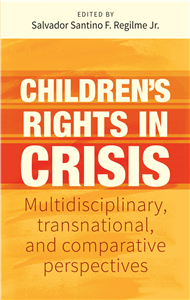
This book rigorously investigates the contemporary state of children's rights and the multifaceted challenges facing children, uncovering the complexities at their core. In 1989, the United Nations introduced the Convention on the Rights of the Child (CRC), ratified by 196 nations, promising a world where children's rights would reign supreme. In practice, however, realising these rights proves intricate and often precarious. Policies may shine on paper, but their implementation grapples with the challenges posed by global governance structures, national strategies, and local factors. Over three decades since the CRC's inception, this book scrutinises the true efficacy of international commitments, shedding light on underexplored issues and revealing shortcomings in both discourse and actions. With diverse, interdisciplinary perspectives, it recognises the profound influence of global and transnational forces in generating outcomes that impact children's rights and welfare.
This book rigorously investigates the contemporary state of children's rights and the multifaceted challenges facing children, uncovering the complexities at their core. In 1989, the United Nations introduced the Convention on the Rights of the Child (CRC), ratified by 196 nations, promising a world where children's rights would reign supreme. In practice, however, realising these rights proves intricate and often precarious. Policies may shine on paper, but their implementation grapples with the challenges posed by global governance structures, national strategies, and local factors. Over three decades since the CRC's inception, this book scrutinises the true efficacy of international commitments, shedding light on underexplored issues and revealing shortcomings in both discourse and actions. With diverse, interdisciplinary perspectives, it recognises the profound influence of global and transnational forces in generating outcomes that impact children's rights and welfare. An electronic edition of this book is freely available under a Creative Commons (CC BY-NC-ND) licence.
The book offers interdisciplinary analyses of the impact of Brexit on the rights of EU27 citizens in the UK, Britons in the UK and the EU, and third-country nationals. It combines a historical examination of citizenship and migration between the UK, Europe and the Commonwealth with the analysis of policies and of the experiences of the different groups impacted by Brexit. The book discusses Brexit within the larger history and dynamics of UK and EU citizenship and migration. The individual chapters look at how Brexit is transforming the citizenship rights of different groups, including issues of loss of citizenship and experiences of naturalisation. They further examine the fears of the groups impacted, and larger issues of belonging, marginalisation, political orientations and mobilisations that cross legal status, nationality, ethnicity, race and class.
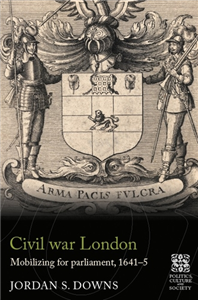
This book looks at London's provision of financial and military support for parliament's war against King Charles I. It explores for the first time a series of episodic, circumstantial and unique mobilisations that spanned from late 1641 to early 1645 and which ultimately led to the establishment of the New Model Army. Based on research from two-dozen archives, Civil war London charts the successes and failures of efforts to move London's vast resources and in the process poses a number of challenges to longstanding notions about the capital's 'parliamentarian' makeup. It reveals interactions between London's Corporation, parochial communities and livery companies, between preachers and parishioners and between agitators, propagandists and common people. Within these tangled webs of political engagement reside the untold stories of the movement of money and men, but also of parliament's eventual success in the English Civil War.
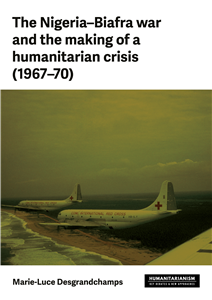
May 1967, in Nigeria, the Republic of Biafra declared its independence. Soon, civil war and famine ravaged the region and gradually entered the European and American media. Photographs of the conflict arouse considerable emotion in the West. The secessionist enclave and the areas taken over by the Nigerian army then became the scene of major relief operations, developed and financed by multiple organizations and governments. Part of a historiography of humanitarianism in full renewal, this book tells the story of the war, its metamorphosis into an international crisis and the responses that were provided. Based on a large body of sources from French, British, Swiss, Nigerian and American archives, it offers an insight into the world of humanitarian work at the end of the 1960s. It shows the reconfigurations taking place there. in the postcolonial era by proposing complementary scales of observation - international, national and local. The work also revisits some of the controversies which developed around the conflict regarding the instrumentalization of aid, its links with politics, the reception of relief operations on the ground or even the birth of borderlessness and testimony. It thus returns to the place occupied by the Biafran crisis in the history of humanitarian aid.
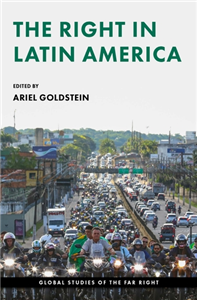
This book provides an in-depth analysis of the rise and influence of both radical and mainstream right-wing movements across Latin America. Through country-specific case studies, it explores the evolution of these groups and their impact on politics, culture, and governance, highlighting key figures and strategies shaping the political landscape in the region.
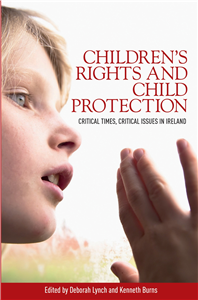
This topical book, now available in paperback, comprehensively draws together diverse perspectives from key leaders in the field to address critical issues for children in relation to their rights, welfare and protection at a critical time in Ireland. The broad array of chapters addresses the changing and complex landscape of policy, practice and law. It discusses the politics of children's rights, the impact of child abuse within the Catholic Church, diverse approaches to service delivery and professional practice, the media and representations of child protection practice and the relationship between research evidence and practice. It offers a critique of governance in children's services and identifies key barriers to fundamental progress in the area of children's rights and the protection of children. This original book fills a gap in publications in this area in Ireland. It is vital reading for academics, practitioners, managers, students and policy-makers, as well as being accessible to individuals with a broad interest in child welfare and protection.
This book critically examines how and why Eastern enlargement has impacted on EU human rights policy. By drawing on the EU's intervention in human rights provision in Romania before 2007, it is demonstrated that the feedback effects of this intervention have led to the emergence of an EU child rights policy. Eastern enlargement has also raised the profile of Roma protection, international adoptions and mental health at the EU level. The impact of these developments has been further reinforced by the constitutional and legal provisions included in the Lisbon Treaty. It is argued that Eastern enlargement has led to the emergence of a more robust and well-defined EU human rights regime in terms of its scope and institutional clout. This book makes a substantial contribution to the scholarship on EU enlargement, Europeanisation and EU human rights policy by providing empirical evidence for the emergence and persistence of EU institutional and policy structures upholding human rights. ;
Negotiating sovereignty and human rights takes the transatlantic conflict over the International Criminal Court as a lens for an enquiry into the normative foundations of international society. The author shows how the way in which actors refer to core norms of the international society such as sovereignty and human rights affect the process and outcome of international negotiations. The book offers an innovative take on the long-standing debate over sovereignty and human rights in international relations. It goes beyond the simple and sometimes ideological duality of sovereignty versus human rights by showing that sovereignty and human rights are not competing principles in international relations, as is often argued, but complement each other. The way in which the two norms and their relationship are understood lies at the core of actors' broader visions of world order. The author shows how competing interpretations of sovereignty and human rights and the different visions of world order that they imply fed into the transatlantic debate over the ICC and transformed this debate into a conflict over the normative foundations of international society. ;
Latin America has been a complex laboratory for the development of international investment law. While some governments and non-state actors have remained true to the Latin American tradition of resistance towards the international investment law regime, other governments and actors have sought to accommodate said regime in the region. Consequently, a profusion of theories and doctrines, too often embedded in clashing narratives, has emerged. In Latin America, the practice of international investment law is the vivid amalgamation of the practice of governments sometimes resisting and sometimes welcoming mainstream approaches; the practice of lawyers assisting foreign investors from outside and within the region; and the practice of civil society, indigenous peoples and other actors in their struggle for human rights and sustainable development. Latin America and international investment law describes the complex roles that governments have played vis-à-vis foreign investors and investments; the refreshing but clashing forces that international organizations, corporations, civil society, and indigenous peoples have brought to the field; and the contribution that Latin America has made to the development of the theory and practice of international investment law, notably in fields in which the Latin American experience has been traumatic: human rights and sustainable development. Latin American scholars have been contributing to the theory of international investment law for over a century; resting on the shoulders of true giants, this volume aims at pushing this contribution a little further.
The United Nations is one of the largest providers of assistance in post-conflict situations in the world. This book considers the human rights standards applicable to the United Nations and applied by the United Nations in post-conflict situations, including East Timor, Kosovo and Afghanistan. It looks at legal principles, peace agreements, support of democracy, human rights protection, development and other forms of reconstruction with which the UN has become involved, including the grandly-named task of "state-building". It deals both with the obligation upon the UN to respect human rights in post-conflict situations, and the obligation upon the UN to ensure that human rights are respected by those in positions of power in post-conflict situations. Written by an internationally renowned list of contributors, this book will be of vital use to anyone studying conflict analysis, international relations, international law and the role of the United Nations on the world stage. ;
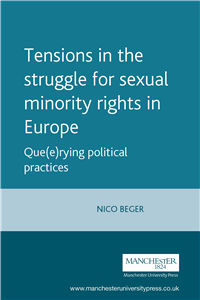
Tensions in the struggle for sexual minority rights in Europe, newly available in paperback, is the first queer and poststructuralist reading of political rights concepts in the specific European transnational context. In the last thirty years Europe has seen the rise of gay, lesbian, bisexual and transgender movements fighting nationally and transnationally for participation rights in society. In addition academic theorists have increasingly paid attention to the epistemological and ontological roles gender and sexuality play in modern politics. However, in the political process of arguing for rights the centrality of those roles is mostly hidden from view in official institutional and movement discourses. This book investigates the conceptual themes of lesbian, gay and transgender rights and lobby politics in Europe and their open and hidden relations to binary and hierarchical orders of dominance. It contributes to an understanding of the conditions upon which politics of inclusion, participation, social justice and equality rest and why struggles for sexual minority rights have been so difficult and slow. It illuminates how the paradigms of political discourse constitute, consolidate and contest the meaning and cultural significance of gender and sexuality on modern, democratic, capitalist European societies. ;
Musicians and Copyright explores the role of Collective Management Organizations (CMOs) in shaping the music industry from the mid-nineteenth century to today. Edited by VéroniquePouillard, Marius Buning, and Mala Loth, the book traces the development of CMOs and their impact on copyright and cultural production. Through historical analysis, it examines the challenges CMOs have faced, from colonial contexts to European integration and the digital age, and shows how CMOs have navigated regulatory changes, technological shifts, and internal politics. Offering a detailed history of these important institutions, Musicians and Copyright is a valuable resource for anyone interested in the intersection of music, law, and the cultural industries.
This is the first book to examine the shifting relationship between humanitarianism and the expansion, consolidation and postcolonial transformation of the Anglophone world across three centuries, from the antislavery campaign of the late eighteenth century to the role of NGOs balancing humanitarianism and human rights in the late twentieth century. Contributors explore the trade-offs between humane concern and the altered context of colonial and postcolonial realpolitik. They also showcase an array of methodologies and sources with which to explore the relationship between humanitarianism and colonialism. These range from the biography of material objects to interviews as well as more conventional archival enquiry. They also include work with and for Indigenous people whose family histories have been defined in large part by 'humanitarian' interventions.
Rethinking Right-Wing Women explores the institutional structures for and the representations, mobilisation, and the political careers of women in the British Conservative Party since the late 19th century. From the Primrose League (est.1883) to Women2Win (est.2005), the party has exploited women's political commitment and their social power from the grass-roots to the heights of the establishment. Yet, although it is the party that extended the equal franchise, had the first woman MP to sit Parliament, and produced the first two women Prime Ministers, the UK Conservative Party has developed political roles for women that jar with feminist and progressive agendas. Conservative women have tended to be more concerned about the fulfilment of women's duties than the realisation of women's rights. This book tackles the ambivalences between women's politicisation and women's emancipation in the history of Britain's most electorally successful and hegemonic political party.