Your Search Results

      • Campus Verlag GmbH

        Founded in 1975 Campus Verlag is one of the most successful, independent German publishers of business books, general non-fiction and academic titles. Campus’ non-fiction titles contribute to the debate on economy, current affairs, history and society. Campus is e.g. the home of authors like Malcolm Gladwell, Michael Lewis, Ian Morris, Jeremy Rifkin, and Paul Krugman. The general list is completed by self-help books for personal development. Here, Campus built a number of German authors who became international bestsellers, e.g. Tiki Küstenmacher with “Simplify your life”, Lothar J. Seiwert or Marco von Münchhausen. Its business titles cover two areas: On one hand general titles on management, strategy, sales & marketing, human resources, on the other hand practical books for professional and career development. Among its most eminent authors you find the winner of the Nobel price for economy Robert J. Shiller, Stephen R. Covey, Peter Drucker and two of Germany’s best-known management authors: Reinhard K. Sprenger and Fredmund Malik. The academic list mostly focuses on sociology and history presenting the latest research findings and providing critical analysis. At Campus Verlag, our publishing program is as diverse as society itself. Our books receive great public attention due to its diverse program which is committed to furthering social change and thinking outside the box.

        View Rights Portal
      • De Vecchi/DVE - Confidential Concepts International Ltd.

        We are from De Vecchi Ediciones / DVE, a publishing house with about 4000 titles in Spanish.

        View Rights Portal
      • Trusted Partner
        Humanities & Social Sciences
        July 2026

        Unruly subjects

        Migration, solidarity and resistance in Greece

        by Ludek Stavinoha

        Unruly Subjects takes readers to the epicentre of Europe's intensifying border struggles-the Aegean islands in Greece, where thousands of 'undesirable' migrants have been warehoused and violently abandoned in EU-funded refugee camps. Drawing on nearly a decade of research, Ludek Stavinoha reveals the subterranean corners in which resistance brews and solidarity takes hold, tracing migrants' everyday struggles for dignity and their rights, alongside grassroots volunteers who have built vital infrastructures of support. At the heart of the book are the creative, if precarious and ambivalent, solidarities forged between volunteers and refugees, citizens and non-citizens, as they unsettle racialised boundaries and logics of control, in defiance of state-sanctioned violence, criminalisation, and neglect. Urgent and compelling, Unruly Subjects illuminates how people navigate and subvert Europe's increasingly hostile border regime, and the alternative imaginaries of more just futures their struggles embody.

      • Trusted Partner
        The Arts
        June 2006

        Mourning becomes...

        Post/memory and commemoration of the concentration camps of the South African War 1899–1902

        by Elizabeth Stanley, Bertrand Taithe, Roger Cooter, Carolyn Steedman

        This fascinating work challenges many of the accepted facts about the concentration camps run by the British during the South African War. The author demonstrates that much of what we have traditionally understood about these camps originates the testimony which was solicited, selected and published by key women activists within Boer proto-nationalist circles. Using detailed archival evidence, she shows that much of the history of the camps results from a deliberate imposition of 'post/memory' - a process by which what was 'remembered' was shaped and reshaped to support the development of a racialised nationalist framework. Many of the camps' occupants died from successive epidemics of measles, typhoid, enteritis and pneumonia rather than deliberate ill-treatment, yet the book shows how mourning for those who died was overridden by state commemorative activities concerned with promoting pan-Boer nationalist aspirations. The innovative and groundbreaking approach of the author invites the reader to step into and explore with her the commemorative sites passed by nationalist land acts, which still powerfully mark the South African landscape. ;

      • Trusted Partner
        Humanities & Social Sciences
        September 2024

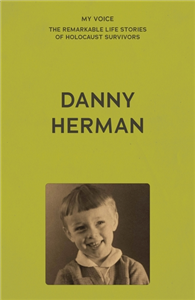
        My Voice: Danny Herman

        by Danny Herman

        Danny Herman was born in 1935 in Königsberg in East Prussia. As the Nazis were rounding up Jews, Danny's father managed to escape to England in July 1939. He travelled to the Kitchener Camp in Kent, which helped refugees secure visas for safer places. Danny and his mother arrived in England just three days before war was declared in 1939, and his father was later sent to an internment camp on the Isle of Man. Danny went on to become a successful runner, competing in many international athletics events and volunteering in many roles, including at the 2002 Commonwealth Games. Danny's detailed memories of arriving in England, initially at the seaside in Kent and then moving to Manchester, create a vivid picture of life-changing events as experienced by a young child. Danny's book is part of the My Voice book collection, a stand-alone project of The Fed, the leading Jewish social care charity in Manchester, dedicated to preserving the life stories of Holocaust survivors and refugees from Nazi persecution who settled in the UK. The oral history, which is recorded and transcribed, captures their entire lives from before, during and after the war years. The books are written in the words of the survivor so that future generations can always hear their voice. The My Voice book collection is a valuable resource for Holocaust awareness and education.

      • Trusted Partner
        Humanities & Social Sciences
        March 2022

        'Adolf Island'

        by Caroline Sturdy Colls, Kevin Colls

      • Trusted Partner
        Literature & Literary Studies
        July 2025

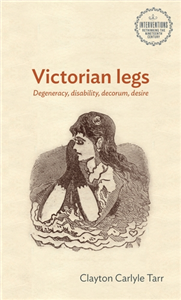
        Victorian legs

        Degeneracy, disability, decorum, desire

        by Clayton Tarr

        Victorian legs is about the science (sometimes spurious) and sexuality (often frivolous) of legs during the Victorian period. The book argues that legs occupy a particularly vexed position in Victorian culture. Strong legs formed the foundation (or the columns) of the civilized subject, but the politics of who could show their legs remained gendered. For the most part, men exhibited and admired, while women concealed and demurred. This book not only joins and advances the lively critical discourse on the Victorian body, but also marks new paths to pursue. While legs made us human, they could also dehumanize.

      • Trusted Partner
        Literature & Literary Studies
        October 2023

        The penny politics of Victorian popular fiction

        by Rob Breton

        Penny politics offers a new way to read early Victorian popular fiction such as Jack Sheppard, Sweeney Todd, and The Mysteries of London. It locates forms of radical discourse in the popular literature that emerged simultaneously with Brittan's longest and most significant people's movement. It listens for echoes of Chartist fiction in popular fiction. The book rethinks the relationship between the popular and political, understanding that radical politics had popular appeal and that the lines separating a genuine radicalism from commercial success are complicated and never absolute. With archival work into Newgate calendars and Chartist periodicals, as well as media history and culture, it brings together histories of the popular and political so as to rewrite the radical canon.

      • Trusted Partner
        Literature & Literary Studies
        June 2017

        Victorian demons

        Medicine, masculinity, and the Gothic at the fin-de-siècle

        by Andrew Smith

        Victorian demons provides the first extensive exploration of largely middle-class masculinities in crisis at the fin de siècle. It analyses how ostensibly controlling models of masculinity became demonised in a variety of literary and medical contexts, revealing the period to be much more ideologically complex than has hitherto been understood, and makes a significant contribution to Gothic scholarship. Andrew Smith demonstrates how a Gothic language of monstrosity, drawn from narratives such as 'The Strange Case of Dr Jekyll and Mr Hyde' and 'Dracula', increasingly influenced a range of medical and cultural contexts, destabilising these apparently dominant masculine scripts. He provides a coherent analysis of a range of examples relating to masculinity drawn from literary, medical, legal and sociological contexts, including Joseph Merrick ('The Elephant Man'), the Whitechapel murders of 1888, Sherlock Holmes's London, the writings and trials of Oscar Wilde, theories of degeneration and medical textbooks on syphilis.

      • Trusted Partner
        April 2024

        Schmerz Camp

        by Patty Kim Hamilton

        Sieben Frauen in einer renommierten, surrealen Schmerzklinik: Im ewigen Kreislauf von Therapien und Gesprächen mit den Ärzt:innen probieren die Patientinnen Medikamente aus, töpfern, meditieren, treiben Sport – der Schmerz aber bleibt. Scheinbar geschieht mit den Frauen in der Klinik nichts und doch ist alles in ständiger, minimaler Bewegung. Zeit vergeht hier anders. Dabei ist der alternde, weiblich gelesene Körper ein zentrales Motiv. Sprache und Dialoge basieren auf realen Gesprächen und Klinikfragebögen – werden bereichert von chorischen Passagen, Lyrik und performativen Naturbildern, die eine neue Dimension aufmachen: Wo finden wir Trost und wie kann ein Weg durch den Schmerz aussehen? Das Theaterstück Schmerz Camp ist ein Plädoyer für das ehrliche Zuhören, für mehr Achtsamkeit und eine solidarische Gemeinschaft. Patty Kim Hamilton sucht darin nach dem Alltäglichen, dem Humor, der Zärtlichkeit, dem Einfachen vor dem dunklen Abgrund und findet dabei eine virtuose Sprache für etwas, das sich mit Worten kaum fassen lässt.

      • Trusted Partner
        Literature & Literary Studies
        March 2004

        Victorian demons

        Medicine, masculinity, and the Gothic at the fin-de-siècle

        by Andrew W. M. Smith

        Victorian demons provides the first extensive exploration of largely middle-class masculinities in crisis at the fin de siècle. It analyses how ostensibly controlling models of masculinity became demonised in a variety of literary and medical contexts, revealing the period to be much more ideologically complex than has hitherto been understood, and makes a significant contribution to Gothic scholarship. Andrew Smith demonstrates how a Gothic language of monstrosity, drawn from narratives such as 'The Strange Case of Dr Jekyll and Mr Hyde' and 'Dracula', increasingly influenced a range of medical and cultural contexts, destabilising these apparently dominant masculine scripts. He provides a coherent analysis of a range of examples relating to masculinity drawn from literary, medical, legal and sociological contexts, including Joseph Merrick ('The Elephant Man'), the Whitechapel murders of 1888, Sherlock Holmes's London, the writings and trials of Oscar Wilde, theories of degeneration and medical textbooks on syphilis. ;

      • Trusted Partner
        Humanities & Social Sciences
        February 2026

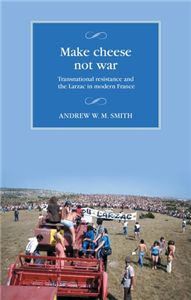
        Make cheese not war

        Transnational resistance and the Larzac in modern France

        by Andrew W. M. Smith

        In 1971, the French government announced a massive extension of its military base on the Larzac plateau in southern France. Land was to be expropriated from 107 farms around the small town of La Cavalerie. Limited resistance was expected, but what happened next exceeded all expectations. Local sheep farmers set up protest camps and occupied the land. They soon attracted an astonishing level of support, pioneering a form of regional radicalism with global implications. Drawing out the international dimensions of the protest, Make cheese not war explores a transnational resistance movement in the 1970s that challenged dominant visions of modernity and became a wellspring of radical alternatives. Exploring previously unconsulted archives in France and elsewhere, the book offers an in-depth analysis of the decade-long peasant movement and its aftermath. Repositioning the Larzac struggle within a wider network of French and international solidarities, from the US to the UK, Germany, Burkina Faso, New Caledonia and Japan, the book retraces political networks of pacifist activism, as well as environmental movements and anti-nuclear protest. It shows how this French peasant campaign became both a platform and a model for popular engagement.

      • Trusted Partner
        Humanities & Social Sciences
        July 2018

        The Victorian soldier in Africa

        by Edward Spiers, Andrew Thompson, John M. MacKenzie

        The Victorian soldier in Africa re-examines the campaign experience of British soldiers in Africa during the period, 1874-1902 - the zenith of the Victorian imperial expansion - and does so from the perspective of the regimental soldier. The book utilises an unprecedented number of letters and diaries, written by regimental officers and other ranks, to allow soldiers to speak for themselves about their experience of colonial warfare. The sources demonstrate the adaptability of the British army in fighting in different climates, over demanding terrain and against a diverse array of enemies. They also uncover soldiers' responses to army reforms of the era as well as the response to the introduction of new technologies of war. Moreover, the book provides commentary on soldiers' views of commanding officers and politicians alongside assessment of war correspondents, colonial auxiliaries and African natives in their roles as bearers, allies and enemies. This book reveals new insights on imperial and racial attitudes within the army, on relations between soldiers and the media and the production of information and knowledge from frontline to homefront. It will make fascinating reading for students, academics and enthusiasts in imperial history, Victorian studies, military history and colonial warfare.

      • Trusted Partner
        African history
        January 2017

        Humanitarian aid, genocide and mass killings

        Médecins Sans Frontières, the Rwandan experience, 1982–97

        by Jean-Hervé Bradol. Series edited by Bertrand Taithe

        Throughout the 1990s, Médecins Sans Frontières (MSF) was forced to face the challenges posed by the genocide of Rwandan Tutsis and a succession of outbreaks of political violence in Rwanda and its neighbouring countries. Humanitarian workers were confronted with the execution of almost one million people, tens of thousands of casualties pouring into health centres, the flight of millions of people who had sought refuge in camps and a series of deadly epidemics. Drawing on various hitherto unpublished private and public archives, this book recounts the experiences of the MSF teams working in the field. It is intended for humanitarian aid practitioners, students, journalists and researchers with an interest in genocide and humanitarian studies and the political sociology of international organisations.

      • Trusted Partner
      • Trusted Partner
      • Trusted Partner
        Literature & Literary Studies
        March 2021

        The Victorian aquarium

        by Silvia Granata, Andrew Smith

      • Trusted Partner
        Science & Mathematics
        November 2017

        Henry Dresser and Victorian ornithology

        by Henry A. McGhie

      • Trusted Partner
        Humanities & Social Sciences
        January 2021

        Displacement

        by Silvia Pasquetti, Romola Sanyal

      • Trusted Partner
        Humanities & Social Sciences
        July 2020

        Victorian literary culture and ancient Egypt

        by Eleanor Dobson

      Subscribe to our

      newsletter