Your Search Results

      • Shanghai Century Publishing Group

        Founded in 1999, Shanghai Century Publishing (Group) Co., Ltd. was the first publishing group in China as well as one of the first pilot units for the reform of the national cultural system. The Group is a comprehensive large-scale publishing media group integrating publication of books and journals, digital publishing, copyright trade, import and export of books, printing, art business, and so on. The Group has been taking a statewide leading position in national key publishing projects, becoming one of the enterprises generating most influential publishing culture and providing most influential content in China.

        View Rights Portal
      • Trusted Partner
      • Trusted Partner
        Humanities & Social Sciences
        August 2008

        Democratising Conservative leadership selection

        From grey suits to grass roots

        by Andrew Denham, Kieron O'Hara

        Democratising Conservative leadership selection traces the effects of democracy on the British Conservative Party, specifically looking at how changes in the ways the Conservatives elect their leaders have altered their mandate to lead. The book includes analysis of the original undemocratic 'system' whereby a leader 'emerged' from a shadowy process of consultation, and of the six elections between 1965 and 1997 where the parliamentary Conservative Party alone chose the Party leader. This historical perspective is followed by in-depth analysis of the three contests since 2001 that have taken place under the 'Hague rules', according to which ordinary Party members have the final say. This is the most comprehensive account yet published of the operation of those rules on the Conservative Party and the legitimacy of its leadership, and of the 2005 election of David Cameron. This book will be essential reading for students, academic specialists and anyone interested in the recent history and contemporary practice of British Conservatism. ;

      • Trusted Partner
        Political parties
        November 2014

        The Conservative Party and the extreme right 1945–1975

        by Mark Pitchford

        This book, newly available in paperback, reveals the Conservative Party's relationship with the extreme right between 1945 and 1975. For the first time, this book shows how the Conservative Party, realising that its well known pre-Second World War connections with the extreme right were now embarrassing, used its bureaucracy to implement a policy of investigating extreme right groups and taking action to minimise their chances of success. The book focuses on the Conservative Party's investigation of right-wing groups, and shows how its perception of their nature determined the party bureaucracy's response. The book draws a comparison between the Conservative Party machine's negative attitude towards the extreme right and its support for progressive groups. It concludes that the Conservative Party acted as a persistent block to the external extreme right in a number of ways, and that the Party bureaucracy persistently denied the extreme right within the party assistance access to funds and representation within party organisations. It reaches a climax with the formulation of a 'plan' threatening its own candidate if he failed to remove the extreme right from the Conservative Monday Club.

      • Trusted Partner
        Humanities & Social Sciences
        November 2025

        The lure of violence

        The Right and the Edwardian crisis in Britain, 1901–14

        by Alessandro Saluppo

        This book provides a comprehensive examination of conservative and right-wing responses to the Edwardian crisis in Britain (1901-1914). It stresses how the upsurge of right-wing extremism within and outside the Conservative party was accompanied by the crystallization of a culture of violence. The preparation, instigation or threatening of violent acts against all those who appeared to threaten the organic nature and vigour of the national community found expression in a myriad of ultra-nationalist organisations, citizen policing groups, private military associations, and paramilitary formations. The book innovatively reconstructs the belief system and the practices of those right-wing actors, which pursued the goals of military preparedness, "racial regeneration" and imperial unity, while defending the amorphous goals of authority, order and 'national efficiency' against the forces of radicalism and socialism. The book helps to cast light on the bellicose and authoritarian reflexes that traversed British conservatism in the turbulent prewar years.

      • Trusted Partner
        Literature & Literary Studies
        January 2013

        The Papal Reform of the Eleventh Century

        Lives of Pope Leo IX and Pope Gregory VII

        by I. Robinson

        The eleventh-century papal reform transformed western European Church and society and permanently altered the relations of Church and State in the west. The reform was inaugurated by Pope Leo IX (1048-54) and given a controversial change of direction by Pope Gregory VII (1073-85). This book contains the earliest biographies of both popes, presented here for the first time in English translation with detailed commentaries. The biographers of Leo IX were inspired by his universally acknowledged sanctity, whereas the biographers of Gregory VII wrote to defend his reputation against the hostility generated by his reforming methods and his conflict with King Henry IV. Also included is a translation of Book to a Friend, written by Bishop Bonizo of Sutri soon after the death of Gregory VII, as well as an extract from the violently anti-Gregorian polemic of Bishop Benzo of Alba (1085) and the short biography of Leo IX composed in the papal curia in the 1090s by Bishop Bruno of Segni. These fascinating narrative sources bear witness to the startling impact of the papal reform and of the 'Investiture Contest', the conflict of empire and papacy that was one of its consequences. An essential collection of translated texts for students of medieval history.

      • Trusted Partner
        Literature & Literary Studies
        June 2025

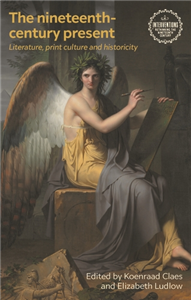
        The nineteenth-century present

        Literature, print culture and historicity

        by Koenraad Claes, Elizabeth Ludlow

        The Nineteenth-Century Present explores the multiple ways in which history was understood, structured, and reassessed in literary, theological, and political contexts across the nineteenth century. While the scope of the book is wide, ranging from the representations of geological time and ancient history to the writing of the recent past, and covering the work of writers from Walter Scott to G.K. Chesterton, each chapter reveals how present concerns intrude on and shape every view of history. Ultimately, the collection emphasises that issues raised regarding historicity in recent methodological debates were already concerns in the nineteenth century.

      • Trusted Partner
        Humanities & Social Sciences
        July 2021

        Post-everything

        An intellectual history of post-concepts

        by Herman Paul, Adriaan van Veldhuizen

        Postmodern, postcolonial and post-truth are broadly used terms. But where do they come from? When and why did the habit of interpreting the world in post-terms emerge? And who exactly were the 'post boys' responsible for this? Post-everything examines why post-Christian, post-industrial and post-bourgeois were terms that resonated, not only among academics, but also in the popular press. It delves into the historical roots of postmodern and poststructuralist, while also subjecting more recent post-constructions (posthumanist, postfeminist) to critical scrutiny. This study is the first to offer a comprehensive history of post-concepts. In tracing how these concepts found their way into a broad range of genres and disciplines, Post-everything contributes to a rapprochement between the history of the humanities and the history of the social sciences.

      • Trusted Partner
        Literature & Literary Studies
        October 2025

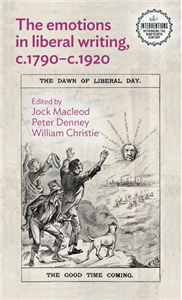
        The emotions in liberal writing, c.1790–c.1920

        by Jock Macleod, Peter Denney, William Christie

        This volume of essays from a selection of distinguished international scholars is the first of its kind to explore in depth the emotional dimensions of liberal writing in Britain over the long nineteenth century. Addressing liberal writing in the public sphere rather than high political or parliamentary liberalism, it comprises a clear, context-setting introduction and eleven substantive chapters. The chapters analyse key texts and figures from the 1790s through to the 1920s and offer several different approaches to the central concern with the emotions and liberalism. These include examining the place of the emotions in the 'good life'; the social and political function of the emotions; emotional rhetoric in liberal writing; and liberal theories of the emotions. Both individually and as a collection, the essays provide an essential foundation for further scholarly work in this emerging field.

      • Trusted Partner
        Literature & Literary Studies
        January 2013

        Eleventh-century Germany

        The Swabian chronicles

        by I. Robinson

        Three of the most important chronicles of eleventh-century Germany were composed in the south-western duchy of Swabia. The chronicles reveal how between 1049 and 1100 the centripetal attraction of the reform papacy became the dominant fact of intellectual life in German reformed monastic circles. In the abbey of Reichenau Herman 'the Lame' composed a chronicle of the reign of Emperor Henry III (1039-56). His pupil, Berthold of Reichenau, continued his master's work, composing a detailed account of 1076-1079 in Germany. Bernold, a clergyman of Constance, continued the work of Herman and Berthold in a text containing the fullest extant account of 1080-1100. Herman's waning enthusiasm for the monarchy and growing interest in the newly reformed papacy were intensified in Berthold's chronicle, and writing in the new context of the reformed monasteries of south-western Germany, Bernold preached total obedience to the Gregorian papacy. The Swabian chronicles are an indispensable resource to the student of the changing loyalties and conflicts of eleventh-century Germany.

      • Trusted Partner
        Literature & Literary Studies
        September 2022

        Three sixteenth-century dietaries

        by Joan Fitzpatrick, Susan Cerasano

      • Trusted Partner
      • Trusted Partner
      • Trusted Partner
      • Trusted Partner
        Literature & Literary Studies
        April 2026

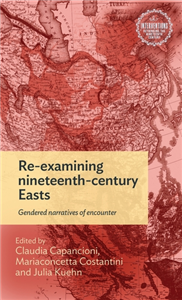
        Re-examining nineteenth-century Easts

        Gendered narratives of encounter

        by Claudia Capancioni, Julia Kuehn, Mariaconcetta Costantini

        Re-examining nineteenth-century Eastscontributes novel approaches to gendered and gendering fictions and travel writing in and of the cultural-geographical-ideological contexts surrounding nineteenth-century Easts. It examines underexplored stories of travel and narratives of encounter to reconsider the western allure of travelling to the Easts - from the Balkans to the Middle and Far East, through a range of diverse critical approaches. It discusses writers - travellers, novelists, and short-story writers - who authored texts based on their varied experiences in eastern lands. It also analyses how views of eastern places became a rich source of material for identity formations related to Empire but also discussions about masculinity and femininity at 'home'.

      • Trusted Partner
        Humanities & Social Sciences
        May 2020

        Spain in the nineteenth century

        New essays on experiences of culture and society

        by Andrew Ginger, Geraldine Lawless

        The nineteenth-century Hispanic world was shattered to its core by war, civil war, and revolution. At the same time, it confronted a new period of European and North-American expansion and development. In these essays, authors explore major, dynamic ways that people in Spain envisaged how they would adapt and change, or simply continue as they were. Each chapter title begins with the words "How to...", and examines the ways in which Spaniards conceived or undertook major activities that shaped their lives. These range from telling the time to being a man. Adaptability, paradox, and inconsistency come to the fore in many of the essays. We find before us a human quest for opportunity and survival in a complex and changing world. This wide-ranging book contains chapters by leading scholars from the United States, United Kingdom, and Spain.

      • Trusted Partner
        Humanities & Social Sciences
        March 2017

        The language of empire

        Myths and metaphors of popular imperialism, 1880-1918

        by Robert Macdonald

        The debate about the Empire dealt in idealism and morality, and both sides employed the language of feeling, and frequently argued their case in dramatic terms. This book opposes two sides of the Empire, first, as it was presented to the public in Britain, and second, as it was experienced or imagined by its subjects abroad. British imperialism was nurtured by such upper middle-class institutions as the public schools, the wardrooms and officers' messes, and the conservative press. The attitudes of 1916 can best be recovered through a reconstruction of a poetics of popular imperialism. The case-study of Rhodesia demonstrates the almost instant application of myth and sign to a contemporary imperial crisis. Rudyard Kipling was acknowledged throughout the English-speaking world not only as a wonderful teller of stories but as the 'singer of Greater Britain', or, as 'the Laureate of Empire'. In the last two decades of the nineteenth century, the Empire gained a beachhead in the classroom, particularly in the coupling of geography and history. The Island Story underlined that stories of heroic soldiers and 'fights for the flag' were easier for teachers to present to children than lessons in morality, or abstractions about liberty and responsible government. The Education Act of 1870 had created a need for standard readers in schools; readers designed to teach boys and girls to be useful citizens. The Indian Mutiny was the supreme test of the imperial conscience, a measure of the morality of the 'master-nation'.

      • Trusted Partner
        September 1975

        The Best of H. C. Artmann

        by H. C. Artmann, Klaus Reichert

        Von allen deutschen Autoren, die nach 1945 zu schreiben begannen, ist Artmann ohne jeden Zweifel der vielseitigste, originellste und erfinderischste. So wie Artmann in fast allen Gattungen gearbeitet hat, auch den angeblich antiquierten, und ohne sich um die Tagesparolen der mal reine Dichtung betreibenden, mal engagierten, mal die Literatur totsagenden Kollegen zu kümmern, so hat er seine Quellen, seine Herkunft überall: in der Artusepik, in barocker Schäferpoesie, in den Wörterbüchern und Grammatiken von gut zwei Dutzend Sprachen, in Irland und im England des Sherlock Holmes, bei Villon und dem Wiener Vorstadtdialekt, Lorca, Gomez de la Serna, den Surrealisten und Dadaisten, in den Detektivheftchen der 20er Jahre und den Comic strips von damals bis heute. Unsere Auswahl versucht, nicht nur einen repräsentativen Querschnitt durch das Werk Artmanns zu geben, sondern gleichzeitig Verstreutes, an entlegensten Orten Publiziertes zu sammeln.

      • Trusted Partner
        June 2021

        Best of Lem

        by Stanisław Lem, Jan-Erik Strasser

        Stanisław Lem gilt vielen als der Science-Fiction-Autor schlechthin. Und doch ist hier noch ein ganzer literarischer Kosmos zu entdecken: Lem der Philosoph, der streitlustige Kritiker, Erfinder neuer Genres, Sprachkünstler und Romancier von Weltrang. Best of Lem versammelt Erzählungen und Kostproben sowohl der berühmten, vielfach verfilmten und millionenfach gelesenen und geliebten Bücher als auch unbekanntere, aber ebenso aufregende Glanzlichter aus den 50 Jahren Lem‘schen Schaffens. Nicht nur Fans von Philip K. Dick, Ursula K. Le Guin oder Cixin Liu kommen dabei voll auf ihre Kosten. Angesichts einer Gegenwart, die mehr und mehr von Künstlicher Intelligenz und menschlicher Dummheit geprägt zu sein scheint, ist der große Misanthrop und Utopist Lem zu seinem 100. Geburtstag unbedingt wieder neu zu lesen.

      Subscribe to our

      newsletter