
All Things Women
Find your focus and strengths in times of crisis.
View Rights Portal

Ruth Tellis and Clare Hodder founded Rights2 to offer a unique consultancy service, bringing their collective experience of over 35 years in Rights management to provide practical, no-nonsense solutions to real-world rights issues for publishers of all sizes. They manage rights sales on behalf of Practical Inspiration Publishing (www.practicalinspiration.com) in addition to running the Small Publisher Rights Showcase with the UK's Department for International Trade (https://rightsshowcase.wordpress.com).
View Rights Portal
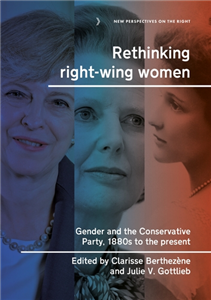
Rethinking Right-Wing Women explores the institutional structures for and the representations, mobilisation, and the political careers of women in the British Conservative Party since the late 19th century. From the Primrose League (est.1883) to Women2Win (est.2005), the party has exploited women's political commitment and their social power from the grass-roots to the heights of the establishment. Yet, although it is the party that extended the equal franchise, had the first woman MP to sit Parliament, and produced the first two women Prime Ministers, the UK Conservative Party has developed political roles for women that jar with feminist and progressive agendas. Conservative women have tended to be more concerned about the fulfilment of women's duties than the realisation of women's rights. This book tackles the ambivalences between women's politicisation and women's emancipation in the history of Britain's most electorally successful and hegemonic political party.

The Conservative Party and the Constitution examines the profound influence on Britain's constitutional framework over nearly two centuries. Through rigorous analysis, it traces how Tory leaders navigated parliamentary reform, devolution, and Brexit, balancing tradition with pragmatic adaptation. Drawing on exclusive interviews, archival records, and historical sources, the book reveals the Party's statecraft and offers fresh insights into the Conservatives' role in shaping modern governance. Essential for historians, political scientists, and those engaged with British politics, this study illuminates the dynamic interplay of power, ideology, and constitutional change, making it a vital contribution to understanding Britain's constitutional history.
 Trusted Partner

This book outlines and evaluates the political thought of the Conservative Party through a detailed examination of its principal thinkers from Harold Macmillan to the present. Traditionally, the Conservative Party has been regarded as a vote-gathering machine rather than a vehicle for ideas. This book redresses the balance through a series of biographical essays examining the thought of those who have contributed most to the development of ideas within the party. The chapters benefit from archival research and interviews with leading Conservatives. The recent revival of Conservative fortunes makes the book particularly timely. The book begins with an introductory chapter explaining the role of ideology in the Conservative Party. It then traces the political thought of the Conservative Party through its principal theorists since the 1930s. These are Harold Macmillan, R. A. Butler, Quintin Hogg, Enoch Powell, Angus Maude, Keith Joseph, the 'traditionalists' (Maurice Cowling, T. E. 'Peter' Utley, Peregrine Worsthorne, Shirley Letwin and Roger Scruton), Ian Gilmour, John Redwood and David Willetts. The book concludes with an overall assessment of the political thought of the Conservative Party and the relevance of past debates for contemporary Conservatism. The book will be of considerable interest to academics and non-academics alike; for those who have a special interest in the Conservative Party but also for any student of contemporary British Politics. ;
Trusted Partner
 Trusted Partner

Democratising Conservative leadership selection traces the effects of democracy on the British Conservative Party, specifically looking at how changes in the ways the Conservatives elect their leaders have altered their mandate to lead. The book includes analysis of the original undemocratic 'system' whereby a leader 'emerged' from a shadowy process of consultation, and of the six elections between 1965 and 1997 where the parliamentary Conservative Party alone chose the Party leader. This historical perspective is followed by in-depth analysis of the three contests since 2001 that have taken place under the 'Hague rules', according to which ordinary Party members have the final say. This is the most comprehensive account yet published of the operation of those rules on the Conservative Party and the legitimacy of its leadership, and of the 2005 election of David Cameron. This book will be essential reading for students, academic specialists and anyone interested in the recent history and contemporary practice of British Conservatism. ;
Trusted Partner

This book, newly available in paperback, reveals the Conservative Party's relationship with the extreme right between 1945 and 1975. For the first time, this book shows how the Conservative Party, realising that its well known pre-Second World War connections with the extreme right were now embarrassing, used its bureaucracy to implement a policy of investigating extreme right groups and taking action to minimise their chances of success. The book focuses on the Conservative Party's investigation of right-wing groups, and shows how its perception of their nature determined the party bureaucracy's response. The book draws a comparison between the Conservative Party machine's negative attitude towards the extreme right and its support for progressive groups. It concludes that the Conservative Party acted as a persistent block to the external extreme right in a number of ways, and that the Party bureaucracy persistently denied the extreme right within the party assistance access to funds and representation within party organisations. It reaches a climax with the formulation of a 'plan' threatening its own candidate if he failed to remove the extreme right from the Conservative Monday Club.
Trusted Partner
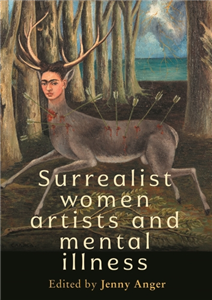
Female mental illness has been a prominent and complicated theme in surrealist cultural traditions, including the idealization of women with mental illness in works such as André Breton's Nadja (1928). Art historians have examined this tendency before, but to date there has been no comprehensive study of the lived reality of women surrealist artists with mental illness. How did women's experience and their work intersect with this romanticized vision? Was the masculine dream of feminized, "mad" genius prohibitive or productive for these women artists? After establishing the ideological field within which these women worked, the book turns to case studies of well-known and some lesser-known artists, including Ángeles Santos, Leonora Carrington, Dora Maar, Claude Cahun, Frida Kahlo, Meret Oppenheim, Sonja Sekula, and Unica Zürn. This collection of essays contains a wide range of responses, revealing surrealism's generative as well as restrictive force.
Trusted Partner
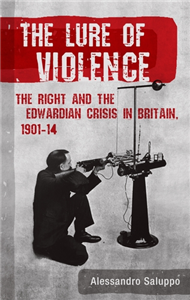
This book provides a comprehensive examination of conservative and right-wing responses to the Edwardian crisis in Britain (1901-1914). It stresses how the upsurge of right-wing extremism within and outside the Conservative party was accompanied by the crystallization of a culture of violence. The preparation, instigation or threatening of violent acts against all those who appeared to threaten the organic nature and vigour of the national community found expression in a myriad of ultra-nationalist organisations, citizen policing groups, private military associations, and paramilitary formations. The book innovatively reconstructs the belief system and the practices of those right-wing actors, which pursued the goals of military preparedness, "racial regeneration" and imperial unity, while defending the amorphous goals of authority, order and 'national efficiency' against the forces of radicalism and socialism. The book helps to cast light on the bellicose and authoritarian reflexes that traversed British conservatism in the turbulent prewar years.
Trusted Partner
This book provides a detailed analysis of women's involvement in litigation and other legal actions within their local communities in late-medieval England. It draws upon the rich records of three English towns - Nottingham, Chester and Winchester - and their courts to bring to life the experiences of hundreds of women within the systems of local justice. Through comparison of the records of three towns, and of women's roles in different types of legal action, the book reveals the complex ways in which individual women's legal status could vary according to their marital status, different types of plea and the town that they lived in. At this lowest level of medieval law, women's status was malleable, making each woman's experience of justice unique.
Trusted Partner

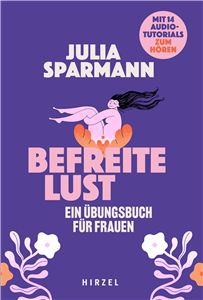
Far too often, everyday stress, pressure to perform or inner blockages spoil our enjoyment of the most beautiful thing in the world: our female sexuality. How can we free ourselves from firmly internalized taboos? What little tricks can we use to get our sex life back on track and keep the imagination in our head running successfully?Experienced sex therapist Julia Sparmann not only offers surprising solutions to typical problems such as loss of libido, communication difficulties or orgasm problems. She also encourages women to deal confidently with their sexuality and develop a positive body image.
Trusted Partner

While there is increasing interest in the lives of medieval women, the documentary evidence for their activities remains little known. This book provides a collection of sources for an important and influential group of women in medieval England, and examines changes in their role and activities between 1066 and 1500. For most noble and gentry-women, early marriage led to responsibilities for family and household, and, in the absence of their husbands, for the family estates and retainers. Widowhood enabled them to take control of their affairs and to play an independent part in the local community and sometimes further afield. Although many women's lives followed a conventional pattern, great variety existed within family relationships, and individuality can also be seen in religious practices and patronage. Piety could take a number of different forms, whether a woman became a nun, a vowess or a noted philanthropist and benefactor to religious institutions. This volume provides a broad-ranging and accessible coverage of the role of noble women in medieval society. It highlights the significant role played by these women within their families, households, estates and communities.
Trusted Partner

Based on the original and authoritative Revels texts, Plays on women brings together four plays which dramatise the lives of women in Shakespeare's England The only available anthology focusing on women and including the four plays most often discussed. . . . ;
Trusted Partner

How has it happened that from being politely ignored or marginalized just half a century ago, women writers in Italy are now at the centre of literary activity? To what extent does writing by women reflect the successes and failures of Italy in the post-war period? What form did the feminist movement in Italy take, and how did this affect what - and how - women wrote? And how are women who write responding to a more fragmented post-modern age? These are just some of the questions asked of the relationship between women and fiction in post-war Italy in this anthology. It includes stories by Cialente, Ginzburg, Ortese, Morante, Romano, Maraini and Duranti as well as Bompiani, Sanvitale, Mizzau, Scaramuzzino, Capriolo and Petrignani. The thirteen stories presented offer a range of style and content indicative of the wealth and diversity of writing by women, and their reading is supported by critical notes and an extensive vocabulary. This is a clear and challenging introduction to the rich field of women and fiction in Italy. ;
Trusted Partner
 Trusted Partner

Iraqi women in Denmark is an ethnographic study of ritual performance and place-making among Shi'a Muslim Iraqi women in Copenhagen. The book explores how Iraqi women construct a sense of belonging to Danish society through ritual performances, and investigates how this process is interrelated with their experiences of inclusion and exclusion in Denmark. The findings refute the all too simplistic assumptions of general debates on Islam and immigration in Europe that tend to frame religious practice as an obstacle to integration in the host society. In sharp contrast to the fact that the Iraqi women's religious activities in many ways contribute to categorising them as outsiders to Danish society, their participation in religious events also localises them in the city. Written in an accessible, narrative style, this book addresses both an academic audience and the general reader interested in Islam in Europe and immigration to Scandinavia. ;
Trusted Partner

This is the first book to consider the difference women MPs make for women constituents in Britain by comparing women parliamentarians' activities, priorities and perceptions to those of their male colleagues. It uncovers complicated gender dynamics that have been neglected in other works because of an exclusive focus on the activities of women MPs, and mounts a systematic challenge to the idea that a critical mass of women is necessary for women's presence to matter. By comparing the representation received by women from a parliament with few women to that received from a parliament with many women, Anna Dionne leads the reader to understand why numbers are not magic. Her empirical research includes interviews with over eighty parliamentarians in London, Scotland, Wales and Northern Ireland, and the amassing of an unprecedented and comprehensive database of representatives' legislative activities. She compares how men and women and different political parties introduce and support bills and motions, ask parliamentary questions, participate in committee and floor debates, and work behind the scenes for cross-party consensus and on constituency casework. The analysis considers gender similarities and differences throughout the policy process and explains the gender dynamics with a new sensitivity to their fluctuation. ;
Trusted Partner


Because of their problems with social interaction it is often presumed that people with an autism spectrum disorder (ASD) cannot have romantic relationships. This is not true; adults with ASD are certainly capable of having long-term relationships. Although some partners are satisfied with their relationship, there are also some who experience problems caused by ASD. Both, the partner with, as the partner without ASD, can feel unhappy and misunderstood in the relationship. This is where this book can be of help. This unique 10 step psychoeducational program helps women, whose partner suffers from an autism spectrum disorder, to understand the condition as well as their partner better. This book also offers tips for daily life that can help improve the relationship between the partners and giving the women more time to herself. Target Group: partners of people with autism, therapists.
Trusted Partner
Trusted Partner
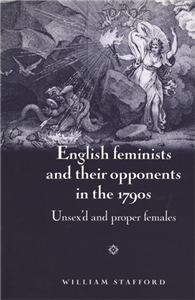
This fascinating book examines what sixteen radical and conservative, famous and notorious British women wrote about their sex in the 1790s. It offers the most comprehensive survey of what they thought about their fellow women with regard to love, sexual desire and marriage; their domestic roles and their engagement in the 'public' sphere; and issues of gender and female abilities including sensibility and genius. How contemporary reviewers divided women writers into 'unsex'd' and 'proper' is investigated, as is the issue of whether they attempted to exclude women from certain kinds of writing. The book reveals the depth of female complaint but contends that women did not passively submit. Conservative and radicals alike sought to extend their sphere of activity, to reform men, challenge gender stereotypes and propose that a woman should be a self for herself and her God rather than for her husband.
Trusted Partner


