
The Endocrine Society
The Endocrine Society is a global organization of 18,000 researchers, educators, and clinicians advancing breakthroughs in hormone science and improving public health.
View Rights Portal
The Endocrine Society is a global organization of 18,000 researchers, educators, and clinicians advancing breakthroughs in hormone science and improving public health.
View Rights Portal

The first in-depth, comprehensive study of Korean cinema offering original insight into the relationships between ideology and the art of cinema from East Asian perspectives. Combines issues of contemporary Korean culture and cinematic representation of the society and people in both North and South Korea. Covers the introduction of motion pictures in 1903, Korean cinema during the Japanese colonial period (1910-45) and the development of North and South Korean cinema up to the 1990s. Introduces the works of Korea's major directors, and analyses the Korean film industry in terms of film production, distribution and reception. Based on this historical analysis, the study investigates ideological constructs in seventeen films, eight from North Korea and nine from South Korea.
 Trusted Partner
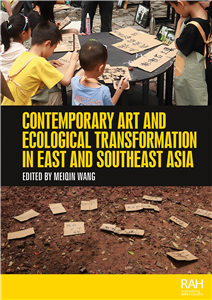
This anthology, presenting new research from fourteen scholars, delves into the interplay between contemporary art and ecological concerns in East and Southeast Asia. Focused on the concept of artistic remediation, the book unravels the diverse capacities of art to combat systemic anthropogenic destruction to the environment and ecology. At its core, the book articulates the ongoing ecological transformation in art and art history that embraces a paradigm shift in human-nature relationships, emphasizing interconnectedness of all life forms of the Earth. Bridging art studies, activism, and environmental studies, the book examines how artistic practices in the region have engaged with ecocritical reflection, biodiversity advocacy, sustainable practices, and environmental justice, among others. Providing a platform for critical and timely analysis of artistic interventions in the face of existential crises, the book acknowledges diverse voices of scholars who have situated their scholarship in the cultural and artistic specificities of various societies, locales, and communities in the region.


This 1926 survey, written by a distinguished social and economic historian, examines the role of religion in the rise of capitalism. Arguing that material acquisitiveness is morally wrong and a corrupting social influence, the author draws upon his profound knowledge of labor and politics to show how concentrated wealth distorts economic policies. Colorful but credible, this study offers a timeless vision of alternative means toward a just economic, social, and intellectual order.
Trusted Partner

This book provides an accessible collection of translated legal sources through which the exploits of criminals and developments in the English criminal justice system (c.1215-1485) can be studied. Drawing on the wealth of archival material and an array of contemporary literary texts, it guides readers towards an understanding of prevailing notions of law and justice and expectations of the law and legal institutions. Tensions are shown emerging between theoretical ideals of justice and the practical realities of administering the law during an era profoundly affected by periodic bouts of war, political in-fighting, social dislocation and economic disaster. Introductions and notes provide both the specific and wider legal, social and political contexts in addition to offering an overview of the existing secondary literature and historiographical trends. This collection affords a valuable insight into the character of medieval governance as well as revealing the complex nexus of interests, attitudes and relationships prevailing in society during the later Middle Ages.
Trusted Partner


Sooner or later everything is thrown away. In the consumer society, however, usable and serviceable products that may be as good as new are also thrown away. Such behaviour is the result of a long-term process that has developed over a period of one-and-a-half centuries. The change was led by the USA, and the Federal Republic of Germany followed. It started at the turn of the last century with personal hygiene: articles such as toilet paper, sanitary towels, nappies and paper handkerchiefs. After the Second World War, a large number of other disposable articles were soon added, such as paper cups and plastic dishes, nylon stockings and pens, razor blades, beverage cans and much more besides. Wolfgang König shows how business and consumers have together made throwing things away perfectly normal – and discusses how the throwaway society may be overcome.
Trusted Partner

Contemporary focus, right up to date with material from 1980s and 90s. Wide-ranging analyses of major directors, themes, genres and issues, including historical film, genre cinema, women in film and autonomies.
Trusted Partner
This book, now available in paperback, explores the development of youth policy and youth work in Ireland from the mid-nineeenth century to the present day. Based on original research, funded by the Irish Research Council for the Humanities and Social Sciences (IRCHSS), it looks at the social construction of youth, the emergence of the early youth movements and the nature and scope of contemporary youth work. Key issues include: the shift from mainstream to targeted provision, the professionalisation of the sector and the increased partnership between the state and voluntary sector. A second major theme is the treatment of young people in industrial and reformatory schools, with particular reference to the findings of the Ryan Report on child abuse (2009). This is the only book which combines an exploration of the history and current scope of youth work and youth policy, and which is based on comprehensive original research. It will be essential reading for lecturers and students in youth work, social sciences, social history and related fields.
Trusted Partner
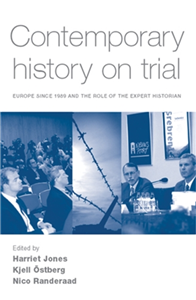
Is it right for historians to serve as 'expert witnesses' to past events? Since the end of the Cold War, a series of heated and politicised debates across Europe have questioned the 'truth' about painful episodes in the twentieth century. From the Holocaust to Srebrenica, inquiries and fact-finding commissions have become a common device employed by governments to deal with the pressure of public opinion. State-sponsored programmes of education and research attempt to encourage a common moral understanding of the lessons we learn from these painful memories. Contemporary historians have increasingly been drawn into these efforts since 1989 - in the courtroom, in the media, on commissions, as advisers. In a series of thoughtful essays, written by leading historians from across Europe, this volume considers the ethics and responsibilities that this new role entails. For anyone concerned with the role of the historian in contemporary society and how we arrive at a public understanding of history, this book is essential reading. ;
Trusted Partner

This volume is the first English-language collection exclusively dedicated to the study of genre in relation to Spanish cinema. Providing a variety of critical perspectives, the collection gives the reader a thorough account of the relationship between Spanish cinema and genre, drawing on case studies of several of the most remarkable Spanish films in recent years. The book analyses the significant changes in the aesthetics, production and reception of Spanish film from 1990 onwards. It brings together European and North American scholars to establish a critical dialogue on the topics under discussion, while providing multiple perspectives on the concepts of national cinemas and genre theory. In recent years film scholarship has attempted to negotiate the tension between the nationally specific and the internationally ubiquitous, discussing how globalisation has influenced film making and surrounding cultural practice. These broader social concerns have prompted scholars to emphasise a redefinition of national cinemas beyond strict national boundaries and to pay attention to the transnational character of any national site of film production and reception. This collection provides a thorough investigation of contemporary Spanish cinema within a transnational framework, by positing cinematic genres as the meeting spaces between a variety of diverse forces that necessarily operate within but also across territorial spaces. Paying close attention to the specifics of the Spanish cinematic and social panorama, the essays investigate the transnational economic, cultural and aesthetic forces at play in shaping Spanish film genres today.
Trusted Partner

This volume is the first English-language collection exclusively dedicated to the study of genre in relation to Spanish cinema. Providing a variety of critical perspectives, the collection gives the reader a thorough account of the relationship between Spanish cinema and genre, drawing on case studies of several of the most remarkable Spanish films in recent years. The book analyses the significant changes in the aesthetics, production and reception of Spanish film from 1990 onwards. It brings together European and North American scholars to establish a critical dialogue on the topics under discussion, while providing multiple perspectives on the concepts of national cinemas and genre theory. In recent years film scholarship has attempted to negotiate the tension between the nationally specific and the internationally ubiquitous, discussing how globalisation has influenced film making and surrounding cultural practice. These broader social concerns have prompted scholars to emphasise a redefinition of national cinemas beyond strict national boundaries and to pay attention to the transnational character of any national site of film production and reception. This collection provides a thorough investigation of contemporary Spanish cinema within a transnational framework, by positing cinematic genres as the meeting spaces between a variety of diverse forces that necessarily operate within but also across territorial spaces. Paying close attention to the specifics of the Spanish cinematic and social panorama, the essays investigate the transnational economic, cultural and aesthetic forces at play in shaping Spanish film genres today.
Trusted Partner
 Trusted Partner
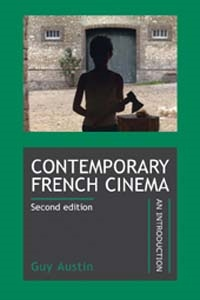
Contemporary French cinema is an essential introduction to popular French film of the last 35 years. It charts recent developments in all genres of French cinema with analyses of over 120 movies, from Les Valseuses to Caché. Reflecting the diversity of French film production since the New Wave, this clear and perceptive study includes chapters on the heritage film, the thriller and the war movie, alongside the 'cinéma du look', representations of sexuality, comedies, the work of women film makers and le jeune cinéma. Each chapter introduces the public reception and critical debates surrounding a given genre, interwoven with detailed accounts of relevant films. Confirmed as a major contribution to both Film Studies and French Studies, this book is a fascinating volume for students and fans of French film alike. ;
Trusted Partner

Contemporary French cinema is an essential introduction to popular French film of the last 35 years. It charts recent developments in all genres of French cinema with analyses of over 120 movies, from Les Valseuses to Caché. Reflecting the diversity of French film production since the New Wave, this clear and perceptive study includes chapters on the heritage film, the thriller and the war movie, alongside the 'cinéma du look', representations of sexuality, comedies, the work of women film makers and le jeune cinéma. Each chapter introduces the public reception and critical debates surrounding a given genre, interwoven with detailed accounts of relevant films. Confirmed as a major contribution to both Film Studies and French Studies, this book is a fascinating volume for students and fans of French film alike.
Trusted Partner

Contemporary French cinema is an essential introduction to popular French film of the last 35 years. It charts recent developments in all genres of French cinema with analyses of over 120 movies, from Les Valseuses to Caché. Reflecting the diversity of French film production since the New Wave, this clear and perceptive study includes chapters on the heritage film, the thriller and the war movie, alongside the 'cinéma du look', representations of sexuality, comedies, the work of women film makers and le jeune cinéma. Each chapter introduces the public reception and critical debates surrounding a given genre, interwoven with detailed accounts of relevant films. Confirmed as a major contribution to both Film Studies and French Studies, this book is a fascinating volume for students and fans of French film alike.
Trusted Partner

In the Western cultural production that puts individual or collective fear at its center, East/Central Europe has been portrayed as an othered space of horror - lawless, frightening zones where anything can happen. Incorporating articles on literature, film, visual arts, video games, music videos, and music festivals, Contemporary Slavic horror across media: Cursed zones is a pioneering anthology of academic essays devoted to Slavic horror fiction. The book focuses on works from the mid-20th century through the present, particularly the post-Soviet period. Assessing current trends in Czech, Polish, Russian, Slovak, Ukrainian, and East/Central European horror media, the book looks at similarities and idiosyncrasies of the genre in its Slavic variant. With this anthology we hope to tame 'the Easterner Other' and start exorcising 'monstrous' East/Central Europe.
Trusted Partner
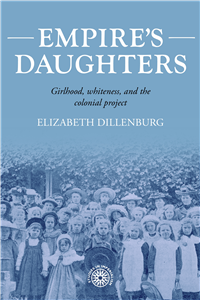
Girlhood and whiteness in the British empire traces the interconnected histories of girlhood, whiteness, and British colonialism in the late nineteenth and early twentieth centuries through the study of the Girls' Friendly Society. The society functioned as both a youth organisation and emigration society, making it especially valuable in examining girls' multifaceted participation with the empire. The book charts the emergence of the organisation during the late Victorian era through its height in the first decade of the twentieth century to its decline in the interwar years. Employing a multi-sited approach and using a range of sources-including correspondences, newsletters, and scrapbooks-the book uncovers the ways in which girls participated in the empire as migrants, settlers, laborers, and creators of colonial knowledge and also how they resisted these prescribed roles and challenged systems of colonial power.
Trusted Partner

This work details traces the origins, development and impact of the proselytizing organization, the Society for Irish Church Missions to the Roman Catholics, from its Protestant foundation during the famine of 1845-47 to the early decades of Irish Free State. It argues that the foundation of this ostensibly religious society was also underpinned by social, political, and economic factors and demonstrates that by the mid 1850s the mission operated on a very substantial scale. Moffitt examines the mission's role in the shifting political realities of the late nineteenth and early twentieth centuries. The impact of this inter-faith power struggle and its legacy to the present day are explored by examining contemporary sources, folklore evidence, and the depiction of proselytizing missions in both Catholic and Protestant denomination literature and fictional writings. ;
Trusted Partner

This collection, dealing with case studies drawn from South Africa, Zimbabwe, Mozambique and Mauritius, examines the relationship between scientific claims and practices, and the exercise of colonial power. It challenges conventional views that portray science as a detached mode of reasoning with the capacity to confer benefits in a more or less even-handed manner. That science has the potential to further the collective good is not fundamentally at issue, but science can also be seen as complicit in processes of colonial domination. Not only did science assist in bolstering aspects of colonial power and exploitation, it also possessed a significant ideological component: it offered a means of legitimating colonial authority by counter-poising Western rationality to native superstition and it served to enhance the self-image of colonial or settler elites in important respects. This innovative volume ranges broadly through topics such as statistics, medicine, eugenics, agriculture, entomology and botany.
Trusted Partner

The first in-depth, comprehensive study of Korean cinema offering original insight into the relationships between ideology and the art of cinema from East Asian perspectives. Combines issues of contemporary Korean culture and cinematic representation of the society and people in both North and South Korea. Covers the introduction of motion pictures in 1903, Korean cinema during the Japanese colonial period (1910-45) and the development of North and South Korean cinema up to the 1990s. Introduces the works of Korea's major directors, and analyses the Korean film industry in terms of film production, distribution and reception. Based on this historical analysis, the study investigates ideological constructs in seventeen films, eight from North Korea and nine from South Korea. ;



