Your Search Results

      • Contrappunto House of Books Literary Agency

        Contrappunto House Of Books accompanies its authors in every aspect of their publishing journey: review and editing of the manuscript, negotiation with potential publishers, promotion, press and communication office. Thanks to its professional staff, the company covers the entire publishing chain, providing authors with a path that combines the creative aspect of writing with editorial and commercial ones. Contrappunto House Of Books goes beyond the traditional concept of a literary agency, working on the development of the Personal Branding of each author. The Agency also works along with publishers on the promotion of their catalogs, enhancing the "mission" of each brand. From the work on the text to that of promotion, from the organization of events to the participation in book fairs, Contrappunto traces an original path for each individual author.

        View Rights Portal
      • Gyeonggi Content Agency

        GCA supports the planning, production, distribution, overseas expansion of contents including videos and films, music, publishing, webtoons and animations, games, etc

        View Rights Portal
      • Trusted Partner
        Teaching, Language & Reference
        May 2025

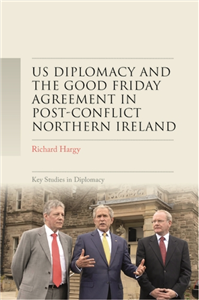
        US diplomacy and the Good Friday Agreement in post-conflict Northern Ireland

        by Richard Hargy

        Richard Haass and Mitchell Reiss, as autonomous diplomats in the George W. Bush State Department, were able to alter US intervention in Northern Ireland and play critical roles in the post-1998 peace process. Their contributions have not been fully appreciated or understood. The restoration of Northern Ireland's power-sharing government in 2007 was made possible by State Department-led intervention in the peace process. There are few references to Northern Ireland in work examining the foreign policy legacy of the George W. Bush presidency. Moreover, the ability to control US foreign policy towards the region brought one of George W. Bush's Northern Ireland special envoys into direct diplomatic conflict with the most senior actors inside the British government. This book will uncover the extent of this fall-out and provide original accounts on how diplomatic relations between these old allies became so fraught.

      • Trusted Partner
        Humanities & Social Sciences
        May 2016

        Northern Ireland and the European Union

        by Mary C. Murphy

      • Trusted Partner
        Business, Economics & Law
        June 2020

        Civilising rural Ireland

        by Patrick Doyle

      • Trusted Partner
        Humanities & Social Sciences
        September 2009

        Transforming Ireland

        Challenges, critiques, resources

        by Debbie Ging, Michael Cronin, Peadar Kirby

        This is the first sustained and broad-ranging critique of the legacies of Ireland's Celtic Tiger boom. Contributors identify the damaging impact that the free market has had on a wide range of areas in public life, including the media and the pharmaceutical industry, and also examine its influence on health, education, state surveillance, immigrants, the welfare state, consumerism and the Irish language. Challenging the notion that there is no alternative for Ireland but the present economic and political dispensation, experts map out an alternative politics that could create spaces for hope and renewal in contemporary Ireland. In a society whose public debates have been largely dominated by the instrumentalist logic of stockbroker economists and the regressive populism of talk-radio shock jocks, Transforming Ireland offers a more substantial and considered analysis, uncovering hidden aspects of everyday Irish life. It reveals that, virtually unnoticed by the media, there exist lively debates in today's Ireland which draw on international insights about globalisation to probe how it is reshaping Irish society. Covering four principal topics - culture and society, media and social change, social control, and power and politics - this impressive volume opens new and hopeful perspectives for students and also the general reader. Though primarily a book about Ireland, it is also a book about today's form of globalisation, offering a rare and accessible analysis of the damage done to society when market forces are given free rein. ;

      • Trusted Partner
        Humanities & Social Sciences
        November 2024

        Ireland in crisis

        by Patrick Little

      • Trusted Partner
        Humanities & Social Sciences
        October 2019

        Ireland in crisis

        by Patrick Little, Micheál Ó Siochrú

      • Trusted Partner
        Humanities & Social Sciences
        April 2026

        Converting Ireland

        Religious education, language and colonialism

        by Karina Bénazech Wendling

        Karina Bénazech Wendling offers a re-assessment of 'souperism'-the long-debated claim that food was used to convert Irish Catholics to Protestantism during the Great Famine. Focusing on the Irish Society for Promoting the Education of the Native Irish through their Own Language, the first group labeled 'soupers' in 1841, she uncovers a more complex picture. Rather than a mere tool of British cultural imperialism, the Society had a deep engagement with the Irish language and Bible translation, while also encouraging religious conversions in the West. The book explores the Society's role in Ireland's religious and political landscape, the rise of Catholic counter-missions, and nationalist resistance. Offering fresh insights into Ireland's religious history and global missionary movements, this book is essential for scholars of Irish studies, interdenominational relations, and education in Ireland.

      • Trusted Partner
        Humanities & Social Sciences
        October 2021

        Ireland and the European Union

        by Michael Holmes, Kathryn Simpson

      • Trusted Partner
        Humanities & Social Sciences
        February 2014

        Ireland during the Second World War

        Farewell to Plato’s Cave

        by Bryce Evans

        In the first book detailing the social and economic history of Ireland during the Second World War, Bryce Evans reveals the real story of the Irish emergency. Revealing just how precarious the Irish state's economic position was at the time, the book examines the consequences of Winston Churchill's economic war against neutral Ireland. It explores how the Irish government coped with the crisis and how ordinary Irish people reacted to emergency state control of the domestic marketplace. A hidden history of black markets, smugglers, rogues and rebels emerges, providing a fascinating slice of real life in Ireland during a crucial period in world history. As the first comparison of economic and social conditions in Ireland with those of the other European neutral states - Spain, Sweden, Switzerland and Portugal - the book will make essential reading for the informed general reader, students and academics alike. ;

      • Trusted Partner
        Humanities & Social Sciences
        September 2024

        Ireland, slavery and the Caribbean

        Interdisciplinary perspectives

        by Finola O'Kane, Ciarán O'Neill

        Ireland, slavery and the Caribbean is a complex and ground-breaking collection of essays. Grounded in history, it integrates perspectives from art historians, architectural and landscape historians, and literary scholars to produce a genuinely interdisciplinary collection that spans from 1620-1830: the high point of European colonialism. By exploring imperial, national and familial relationships from their building blocks of plantation, migration, property and trade, it finds new ways to re-create and question how slavery made the Atlantic world.

      • Trusted Partner
        Teaching, Language & Reference
        August 2024

        The Northern Ireland peace process

        by Eamonn O'Kane

      • Trusted Partner
        Humanities & Social Sciences
        November 2017

        The Hippie Trail

        by Sharif Gemie, Brian Ireland

      • Trusted Partner
        Humanities & Social Sciences
        September 2008

        Northern Ireland after the troubles

        A society in transition

        by Colin Coulter, Michael Murray

        In the last generation, Northern Ireland has undergone a tortuous yet remarkable process of social and political change. This collection of essays aims to capture the complex and shifting realities of a society in the process of transition from war to peace. The book brings together commentators from a range of academic backgrounds and political perspectives. As well as focusing upon those political divisions and disputes that are most readily associated with Northern Ireland, it provides a rather broader focus than is conventionally found in books on the region. It examines the cultural identities and cultural practices that are essential to the formation and understanding of Northern Irish society but are neglected in academic analyses of the six counties. While the contributors often approach issues from rather different angles, they share a common conviction of the need to challenge the self-serving simplifications and choreographed optimism that frequently define both official discourse and media commentary on Northern Ireland. Taken together, the essays offer a comprehensive and critical account of a troubled society in the throes of change. ;

      • Trusted Partner
        Medicine
        March 2026

        Healthcare in Northern Ireland

        Politics, Policies and Management, 1921-72

        by Donnacha Lucey

      • Trusted Partner
        Humanities & Social Sciences
        April 2008

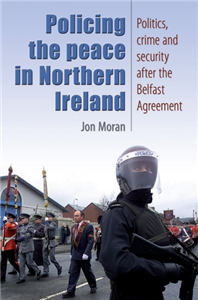
        Policing the peace in Northern Ireland

        Politics, crime and security after the Belfast Agreement

        by Jon Moran

        This timely and controversial book shows how crime, and the authorities' response to crime, became central to the peace process in Northern Ireland. At times, paramilitary activity threatened to destabilise the peace in Northern Ireland after 1998, but crime was central to maintaining capacity should the groups return to war. Over time, the reduction of crime was central to these groups' own attempts to reform and official judgements as to whether they were genuinely demobilising. The state's response to crime added controversy. Police reform produced the Police Service of Northern Ireland (PSNI) and the new Organised Crime Task Force signalled the importance of crime control, but the Assets Recovery Agency, supposedly the 'magic bullet' for organised crime, misfired. Law enforcement was also deeply affected by the British state's response to paramilitary crime. By 2007, peace was apparently secure and paramilitaries were 'de-criminalising', but this often chaotic process was marked with questions about the British state's adherence to the rule of law. Incorporating first-hand research in the PSNI, the book will be of interest to general readers and scholars of Irish Studies, criminology, and British and comparative politics. ;

      • Trusted Partner
        Humanities & Social Sciences
        March 2017

        Britain in China

        by Robert Bickers

        This is a study of Britain's presence in China both at its peak, and during its inter-war dissolution in the face of assertive Chinese nationalism and declining British diplomatic support. Using archival materials from China and records in Britain and the United States, the author paints a portrait of the traders, missionaries, businessmen, diplomats and settlers who constituted "Britain-in-China", challenging our understanding of British imperialism there. Bickers argues that the British presence in China was dominated by urban settlers whose primary allegiance lay not with any grand imperial design, but with their own communities and precarious livelihoods. This brought them into conflict not only with the Chinese population, but with the British imperial government. The book also analyzes the formation and maintenance of settler identities, and then investigates how the British state and its allies brought an end to the reign of freelance, settler imperialism on the China coast. At the same time, other British sectors, missionary and business, renegotiated their own relationship with their Chinese markets and the Chinese state and distanced themselves from the settler British.

      • Trusted Partner
        Humanities & Social Sciences
        September 2024

        Gender and punishment in Ireland

        by Lynsey Black

      • Trusted Partner

      Subscribe to our

      newsletter