
Your Search Results


-
Promoted Content

 The ArtsMay 2024
Adaptation and resilience in the performing arts
The pandemic and beyond
by Pascale Aebischer, Rachael Nicholas
This book offers insights into some of the digital innovations, structural adaptations and analogue solutions that enabled live performance in the UK to survive through the COVID-19 pandemic. It provides evidence of values-led policies and practices that have improved the wellbeing of the creative workforce and have increased access to live performance. Through sections that address digital innovations, workforce resilience and programming live performances outdoors and in community settings, this book provides practical insights into the challenges live performance faced during the pandemic. It shows how, in order to survive, individuals and companies within the sector drew on the creativity and resourcefulness of its workforce, and on new and existing networks. In these accounts, the pandemic functioned as catalyst for technological innovations, stock-taking regarding exploitative industry structures, and a re-valuing of the role of live performance for community-building.
-
Promoted Content
 Humanities & Social SciencesApril 2018
Disability in the Industrial Revolution
Physical impairment in British coalmining, 1780–1880
by David M. Turner, Daniel Blackie, Julie Anderson
An electronic version of this book is also available under a Creative Commons (CC-BY-NC-ND) license, thanks to the support of the Wellcome Trust. The Industrial Revolution produced injury, illness and disablement on a large scale and nowhere was this more visible than in coalmining. Disability in the Industrial Revolution sheds new light on the human cost of industrialisation by examining the lives and experiences of those disabled in an industry that was vital to Britain's economic growth. Although it is commonly assumed that industrialisation led to increasing marginalisation of people with impairments from the workforce, disabled mineworkers were expected to return to work wherever possible, and new medical services developed to assist in this endeavour. This book explores the working lives of disabled miners and analyses the medical, welfare and community responses to disablement in the coalfields. It shows how disability affected industrial relations and shaped the class identity of mineworkers. The book will appeal to students and academics interested in disability, occupational health and social history.
-
 Trusted Partner
-
Trusted Partner
 MedicineMay 2024
Creative approaches to wellbeing
The pandemic and beyond
by Victoria Tischler, Karen Gray
A compilation of case studies illustrating the use of arts, culture and other community assets individuals and communities used to cope and develop resilience during the Covid-19 pandemic, demonstrating valuable lessons that might help us develop resilience in similar future crises.
-
Trusted Partner
 Humanities & Social SciencesJanuary 2020
Disability in industrial Britain
A cultural and literary history of impairment in the coal industry, 1880-1948
by Kirsti Bohata, Alexandra Jones, Mike Mantin, Steven Thompson
This electronic version has been made available under a Creative Commons (BY-NC-ND) open access license. An electronic version of this book is also available under a Creative Commons (CC-BY-NC-ND) license, thanks to the support of the Wellcome Trust. Coalmining was a notoriously dangerous industry and many of its workers experienced injury and disease. However, the experiences of the many disabled people within Britain's most dangerous industry have gone largely unrecognised by historians. This book looks at British coal through the lens of disability, using an interdisciplinary approach to examine the lives of disabled miners and their families. A diverse range of sources are used to examine the economic, social, political and cultural impact of disability in the coal industry, looking beyond formal coal company and union records to include autobiographies, novels and existing oral testimony. It argues that, far from being excluded entirely from British industry, disability and disabled people were central to its development. The book will appeal to students and academics interested in disability history, disability studies, social and cultural history and representations of disability in literature.
-
Trusted Partner
 July 2013
Towns, regions and industries
Urban and Industrial Change in the Midlands, C.1700-1840
by Edited by Jon Stobart
-
Trusted Partner
 Humanities & Social SciencesSeptember 2025
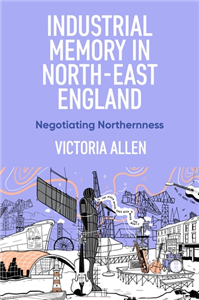
Industrial memory in North East England
Negotiating northernness
by Victoria Allen
Industrial memory in North East England examines how the region's industrial myth and memory have been articulated in the renegotiation of northernness. The book offers a critical contextualisation of the concept of northernness and the English North, and an introduction to the concept of the PopCultural Portfolio, a mixed-methods approach to conjunctural analysis in cultural and memory studies. The book provides six richly illustrated case studies to demonstrate the practical application of cultural studies' expansive and inclusive understanding of texts, bringing together materials from North East football, folk, indie and exhibition culture to establish how the North East's industrial past continues to be remembered and functionalised as industrial memory. In turn, the conjunctural analysis demonstrates how industrial memory is articulated and mythologised as north(east)ernes in contemporary popular culture.
-
Trusted Partner
 Business, Economics & LawMarch 2010
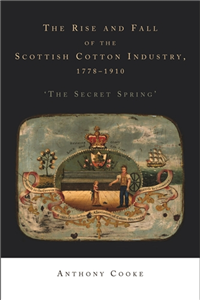
The rise and fall of the Scottish cotton industry, 1778–1914
'The secret spring'
by Anthony Cooke
This is the first full-length history of the Scottish cotton industry, from its beginnings in the late eighteenth century to its premature decline in the years leading up to the First World War. The book examines the industry chronologically and through themes such as precursors, technology, capital and employers, markets, labour and work, placed within their broader economic and scoial contexts. Its account of the cotton industry is set within important historiographical debates such as proto-industrialisation, the speed of industrial change, the diffusion of technology, the labour process, paternalism, workplace control, entrepreneurship and theories of industrial decline. Cotton was Scotland's premier industry during the Industrial Revolution and this book will be wlecomed by specialists, students and interested readers alike. ;
-
Trusted Partner
 Humanities & Social SciencesMarch 2017
Silk and empire
by Brenda King
In this book, Brenda M. King challenges the notion that Britain always exploited its empire. Creativity, innovation and entrepreneurship were all part of the Anglo-Indian silk trade and were nurtured in the era of empire through mutually beneficial collaboration. The trade operated within and without the empire, according to its own dictates and prospered in the face of increasing competition from China and Japan. King presents a new picture of the trade, where the strong links between Indian designs, the English silk industry and prominent members of the English the arts and crafts movement led to the production of beautiful and luxurious textiles. Lavishly illustrated, this book will be of interest to those interested in the relationship between the British Empire and the Indian subcontinent, as well as by historians of textiles and fashion.
-
Trusted Partner
 Humanities & Social SciencesMarch 2025
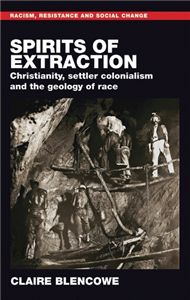
Spirits of extraction
Christianity, settler colonialism and the geology of race
by Claire Blencowe
Spirits of extraction revisits the troubling history of socially reformist, ostensibly anti-racist, Christianity and its role in the expansion of the extractive industries, British imperialism, and settler colonialism. The book explores key moments in the history of Methodism and the evangelical movement. Colonial fears, and the attempt to 'civilise savages', were crucial to the movement's foundation in eighteenth-century industrialising Bristol, England. Through the culture of the Cornish mining diaspora of the nineteenth century, Methodism enmeshed with all the complexity of race and labour-structures of the British empire. At the same time, in Anishinaabewaki/Upper Canda/Ontario, Methodist missionaries laid the foundation of abusive education and racialised ideas of redemption that both enable and sacralise the mining industry. Through these histories of our present, the book theorises the relation of religion and education to racism, modernity, biopower, extractivism, and the geology of race.
-
Trusted Partner
 Humanities & Social SciencesMarch 2026
Creative research communication
by Clare Wilkinson, Emma Weitkamp
-
Trusted Partner
-
Trusted Partner
 Art: Financial Aspects
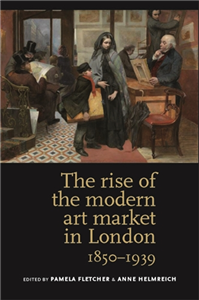
The rise of the modern art market in London
1850–1939
by Edited by Pamela Fletcher and Anne Helmreich
Now available in paperback for the first time, this study of the modern London art market establishes the central importance of London for the development of the modern retail market in fine art. Leading experts track the emergence and development of the structures and practices that have come to characterize the commercial art system, including the commercial art gallery, the professional dealer, the exhibition cycle and its accompanying rhetoric of press coverage and publicity, and an international network for the circulation of goods. This new commercial system involved a massive transformation of the experience of viewing art; of the relationships between artists, dealers, collectors, art objects and audiences; and of the very criteria of aesthetic value itself. Its history is thus a vital part of the history of modern art, and this anthology will be of interest to art historians as well as scholars of Victorian Studies, Museum Studies, and Social History.
-
Trusted Partner
Humanities & Social SciencesApril 2023
An archaeology of innovation
Approaching social and technological change in human society
by Catherine J. Frieman
An archaeology of innovation is the first monograph-length investigation of innovation and the innovation process from an archaeological perspective. It interrogates the idea of innovation that permeates our popular media and our political and scientific discourse, setting this against the long-term perspective that only archaeology can offer. Case studies span the entire breadth of human history, from our earliest hominin ancestors to the contemporary world. The book argues that the present narrow focus on pushing the adoption of technical innovations ignores the complex interplay of social, technological and environmental systems that underlies truly innovative societies; the inherent connections between new technologies, technologists and social structure that give them meaning and make them valuable; and the significance and value of conservative social practices that lead to the frequent rejection of innovations.
-
Trusted Partner
-
Trusted Partner
The ArtsOctober 2024
Secret Cinema and the immersive experience industry
by Sarah Atkinson, Helen W. Kennedy
-
Trusted Partner
 Humanities & Social SciencesDecember 2020
Creativity and resistance in a hostile world
by Sarita Malik, Churnjeet Mahn, Michael Pierse, Ben Rogaly
-
Trusted Partner
 Humanities & Social SciencesNovember 2024
Culture is bad for you
by Orian Brook, Dave O'Brien, Mark Taylor
-
Trusted Partner
 The ArtsDecember 2025
The double game of music
Paradoxes of power, status and class in music education
by Live Weider Ellefsen, Petter Dyndahl, Anne Jordhus-Lier, Siw Graabræk Nielsen
The double game of music imagines music education as a series of games - each with its own rules, play currency and players - to challenge readers to rethink the significance of music and musical upbringing in shaping social structures. Drawing on their own empirical research and a wide range of international contributions, the authors unravel the intertwining of social positioning and power hierarchies with players beliefs in the pure values and virtues of their games, whether these relate to parenting, children's play, schooling, academic pursuits, musical leisure activities or the television and music industries. In a world where music is often celebrated as an important tool for inclusion and democratisation, this groundbreaking book offers a timely critique, revealing complexities and contradictions that tend to be overlooked by teachers, researchers, politicians and others interested in the powers of music education.
-
Trusted Partner
 The ArtsMarch 2018
Art versus industry?
New perspectives on visual and industrial cultures in nineteenth-century Britain
by Christopher Breward, Kate Nichols, Bill Sherman, Rebecca Wade, Gabriel Williams
This book is about encounters between art and industry in nineteenth-century Britain. It looks beyond the oppositions established by later interpretations of the work of John Ruskin, William Morris and the Arts and Crafts movement to reveal surprising examples of collaboration - between artists, craftspeople, designers, inventors, curators, engineers and educators - during a crucial period in the formation of the cultural and commercial identity of Britain and its colonies. Across thirteen chapters by fourteen contributors, Art versus industry? explores such diverse subjects as the production of lace, the mechanical translation of sculpture, the display of stained glass, the use of the kaleidoscope in painting and pattern design, the emergence of domestic electric lighting and the development of art and design education and international exhibitions in India.


