
Your Search Results
-

-

A Walk through History
A Walk Through History is a Russian publishing house specializing in children’s nonfiction. Since 2011 it has created and designed about 50 titles on various periods of history and other subjects such as mathematics, sport, plants and animals.
View Rights Portal
-
Promoted Content

 Humanities & Social SciencesFebruary 2025
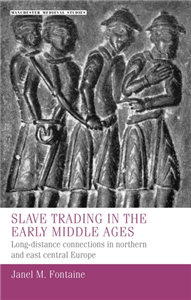
Slave trading in the Early Middle Ages
Long-distance connections in northern and east central Europe
by Janel M. Fontaine
This book examines slave trading in northern and eastern central Europe from the seventh century through the eleventh century, tracing its growth, climax, and decline. Demand from the Islamic world in the ninth and tenth centuries prompted changes in warfare, trade logistics, and administrative responses to slavery in the slaving zones centred on the British Isles and the Czech lands. This study establishes slave trading as a core driver of connectivity and presents a model for this practice in politically fragmented areas of Europe.
-
Promoted Content
 Humanities & Social SciencesApril 2026
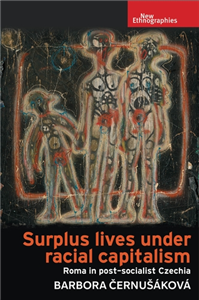
Surplus lives under racial capitalism
Roma in post-socialist Czechia
by Barbora Cernušáková
Surplus lives under racial capitalism is a critical contribution to the study of racial capitalism. It theorises the link between political economy, anti-Roma racism and modern forms of white supremacy in East Central Europe. The book shows how the introduction of capitalism in the 1990s overlapped with the rise of racialised disposability of Roma workers. Since then, their surplusing recurrently comes into sharp relief during the time of crisis. Surplus lives under racial capitalism is built on an investigation of how race and class structure the Czech labour regime and how they form a single site of struggle. One which binds workers across racialised divisions as surplusing continuously expands.
-
 Trusted Partner
 Humanities & Social SciencesFebruary 2025
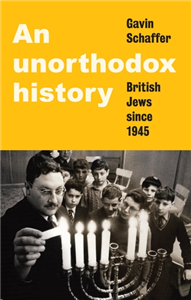
An unorthodox history
British Jews since 1945
by Gavin Schaffer
A bold, new history of British Jewish life since the Second World War. Historian Gavin Schaffer wrestles Jewish history away from the question of what others have thought about Jews, focusing instead on the experiences of Jewish people themselves. Exploring the complexities of inclusion and exclusion, he shines a light on groups that have been marginalised within Jewish history and culture, such as queer Jews, Jews married to non-Jews, Israel-critical Jews and even Messianic Jews, while offering a fresh look at Jewish activism, Jewish religiosity and Zionism. Weaving these stories together, Schaffer argues that there are good reasons to consider Jewish Britons as a unitary whole, even as debates rage about who is entitled to call themselves a Jew. Challenging the idea that British Jewish life is in terminal decline. An unorthodox history demonstrates that Jewish Britain is thriving and that Jewishness is deeply embedded in the country's history and culture.
-
Trusted Partner
-
Trusted Partner
-
Trusted Partner
-
Trusted Partner
-
Trusted Partner
-
Trusted Partner
-
Trusted Partner
-
Trusted Partner
 Humanities & Social SciencesMay 2021
Doing digital history
by Jonathan Blaney, Jane Winters, Sarah Milligan, Martin Steer
-
Trusted Partner
-
Trusted Partner

 April 2015
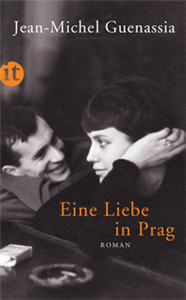
Eine Liebe in Prag
Roman
by Jean-Michel Guenassia, Eva Moldenhauer
Tagsüber studiert er Medizin, des Nachts erobert er die Herzen der Frauen: Josef Kaplan, angehender Arzt, sozialistischer Träumer, begnadeter Tangotänzer, charmanter Herzensbrecher – und Jude. Als er in den 1930er Jahren vor den Nazis ins Exil flieht, führt ihn sein Weg von Prag nach Paris und von dort weiter nach Algerien. In Algier findet er in einer schönen französischen Schauspielerin die Liebe seines Lebens – Christine. Nach dem Krieg kehrt das Paar gemeinsam nach Prag zurück, doch das Glück ist nur von kurzer Dauer …
-
Trusted Partner
 May 2011
Prag
Literarische Spaziergänge
by Wolfgang Dömling
Prag - die goldene Stadt an der Moldau. Seit je wurde hier Geschichte geschrieben. Sei es der Prager Fenstersturz als Auslöser des Dreißigjährigen Krieges, oder die bewegende Rede Genschers im September 1989, die Tausenden DDR-Bürgern die Ausreise in die BRD ermöglichte. Doch in den Gassen entlang des Altstädter Rings gibt es noch einiges mehr zu entdecken als Prager Burg und Karlsbrücke. Wolfgang Dömling führt den Leser auf ausgewählten Spaziergängen vorbei an prachtvollen Palais und Kirchen zu beschaulichen und denkwürdigen Orten, stets auf den Spuren großer Autoren wie Franz Kafka, Bohumil Hrabal, Rainer Maria Rilke u. v. a. Mit Stadtplanauszügen und Serviceteil.
-
Trusted Partner
 The ArtsMarch 2006
Art history
A critical introduction to its methods
by Michael Hatt, Charlotte Klonk
Art History: A critical introduction to its methods provides a lively and stimulating introduction to methodological debates within art history. Offering a lucid account of approaches from Hegel to post-colonialism, the book provides a sense of art history's own history as a discipline from its emergence in the late-eighteenth century to contemporary debates. By explaining the underlying philosophical and political assumptions behind each method, along with clear examples of how these are brought to bear on visual and historical analysis, the authors show that an adherence to a certain method is, in effect, a commitment to a set of beliefs and values. The book makes a strong case for the vitality of the discipline and its methodological centrality to new fields such as visual culture. This book will be of enormous value to undergraduate and graduate students, and also makes its own contributions to ongoing scholarly debates about theory and method. ;
-
Trusted Partner
-
Trusted Partner
 Humanities & Social SciencesMarch 2017
Law, history, colonialism
The reach of empire
by Diane Kirkby, Andrew Thompson, Catharine Coleborne, John M. MacKenzie
Drawing on the latest contemporary research from an internationally acclaimed group of scholars, Law, history, colonialism bring together the disciplines of law, history and postcoloinial studies in a singular exploration of imperialism. In fresh, innovative essays from a range of disciplinary backgrounds, this collection offers exciting new perspectives on the length and breadth of empire. As issues of native title, truth and reconciliation commission, and access to land and natural resources are contested in courtrooms and legislation of former colonies, the disciplines of law and history afford new ways of seeing, hearing and creating knowledge. Issues explored include the judicial construction of racial categories, the gendered definitions of nation-states, the historical construction of citizenship, sovereignty and land rights, the limits to legality and the charting of empire, constructions of madness among colonised peoples, reforming property rights of married women, questions of legal and historical evidence, and the rule of law. This collection will be an indispensable reference work to scholars, students and teachers.
-
Trusted Partner
 Humanities & Social SciencesApril 2010
Law, history, colonialism
The reach of empire
by Diane Kirkby, Andrew Thompson, Catharine Coleborne, John Mackenzie
Drawing on the latest contemporary research from an internationally acclaimed group of scholars, Law, history, colonialism brings together the disciplines of law, history and post-colonial studies in a singular exploration of imperialism. In fresh, innovative essays from a range of disciplinary backgrounds, this collection offers exciting new perspectives on the length and breadth of empire. As issues of native title, truth and reconciliation commissions, and access to land and natural resources are contested in courtrooms and legislation of former colonies, the disciplines of law and history afford new ways of seeing, hearing and creating knowledge. Issues explored include the judicial construction of racial categories, the gendered definitions of nation-states, the historical construction of citizenship, sovereignty and land rights, the limits to legality and the charting of empire, constructions of madness among colonised peoples, reforming property rights of married women, questions of legal and historical evidence, and the rule of law. This collection will be an indispensable reference work to scholars, students and teachers. ;
-
Trusted Partner
-
Trusted Partner
 The ArtsMarch 2026
Abnormal peripheries
Slovak and Czech performance art in the 1960s and 70s
by Sam Cermak
This book traces an early history of performance art from the former Czechoslovakia, which emerged in the 1960s and 1970s in the context of the Prague Spring and the subsequent policy of Normalization that brought on cultural censorship, prosecution, and state violence against artists. The book draws on Czech and Slovak scholarship as well as primary research in archives, interviews, and fieldwork to dispel misreadings of visual and cultural idioms in pre-existing Anglophone scholarship about the region. Although the former Soviet Bloc is often equated with repression and lack of experimental art in public spaces, performance artists within the former Socialist Czechoslovakia often used public, semi-public and clandestine spheres to create their performances. By analysing both works of established artists such as Aktual, Alex Mlynárcik, Petr Stembera, Jan Mlcoch, as well as under-theorised practitioners including Luba Lauffová, Karel Miler, Temporary Society of Intense Living, and Crusaders School of Pure Humour with no Joke, this book analyses how performance can survive and sometimes even thrive on the background of a politically oppressive regime. Cermak tells a unique story of localised resistance to a monolithic public sphere through artistic intervention, a closely knit community, artistic exchange, and agonistic reframing of socialism as a philosophy rather than state ideology.



